Introduction: The State of the Crystal Trade in 2025
The global appetite for crystal and semi-precious stone products has evolved dramatically over the last decade. The market has shifted from generic, mass-produced trinkets to one that demands hyper-customization and artisanal quality.
As we move through 2025, international brands, interior designers, and wellness retailers are finding that their competitive edge relies heavily on their ability to offer unique, proprietary designs rather than off-the-shelf commodities. Whether you are developing a line of high-end rose quartz facial tools or large-scale amethyst home decor, China remains the undisputed epicenter of global crystal manufacturing and processing.
However, the landscape has changed; the “wild west” days of sourcing are over, replaced by a sophisticated ecosystem of specialized manufacturers who offer advanced OEM and ODM capabilities.
For the modern B2B buyer, successfully navigating this landscape requires more than just finding a supplier on a directory. It requires a deep understanding of regional specializations, material sourcing, and the technical language of stone processing.
At JADE MAGO, we have observed that the most successful importers are those who view their Chinese counterparts not merely as vendors, but as technical partners capable of executing complex lapidary tasks. This guide is designed to bridge the gap between your design concepts and the factory floor, providing you with a roadmap to secure high-quality custom crystal products in the current market environment.
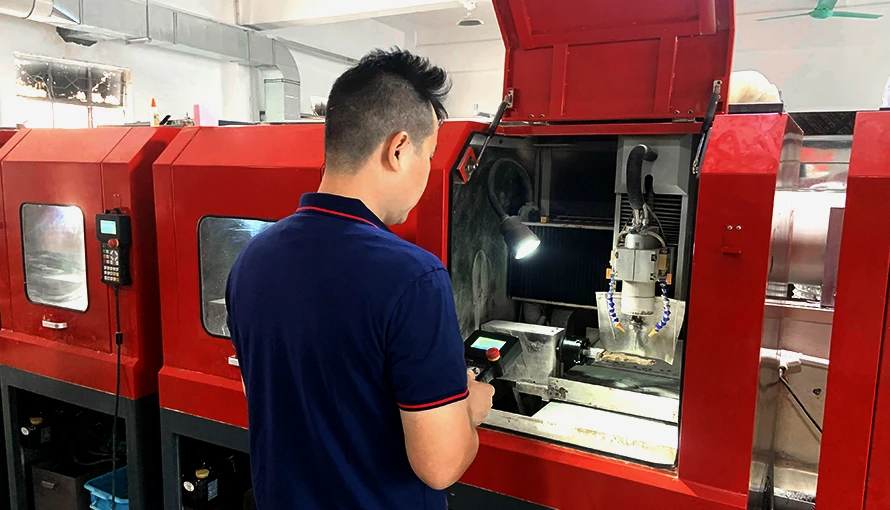
Table of Contents
1: Decoding the Chinese Crystal Supply Chain Ecosystem
Understanding Regional Specialization
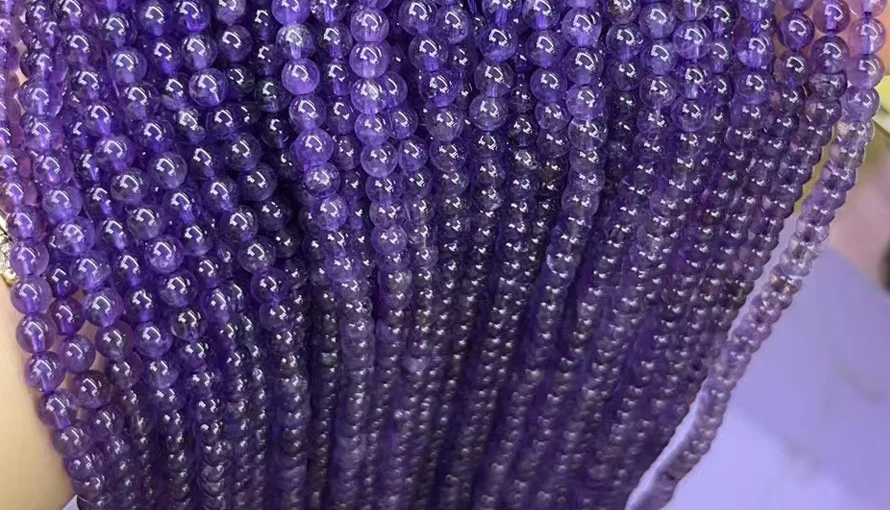
One of the most common mistakes new importers make is assuming that all factories in China are capable of processing all types of stones. In reality, the Chinese crystal and jade industry is highly clustered, with specific regions possessing distinct supply chains, talent pools, and machinery suited for particular materials. For instance, the county of Donghai in Jiangsu Province is globally recognized as the “Crystal Capital,” serving as the primary hub for raw quartz distribution and standard carving. If you are sourcing clear quartz, amethyst, or citrine, the trading networks here are unparalleled in their depth and variety.
However, if your custom project involves harder stones or requires intricate jewelry-grade setting and high-precision faceting, looking towards Guangdong Province—specifically cities like Jieyang or Ketang—is often necessary. These southern hubs have a historical lineage of jadeite processing, which has translated into a workforce with superior skills in handling expensive, high-hardness materials. Understanding this geographical division is crucial because sourcing a complex jade carving from a factory that specializes in mass-market quartz tumblers will inevitably lead to quality control issues. By targeting the correct region for your specific material, you align your project with the inherent strengths of the local supply chain.
The Shift from Mass Production to Flexible Customization
In the past, Chinese manufacturers were infamous for requiring massive Minimum Order Quantities (MOQs) that effectively shut out boutique brands and independent designers. However, the manufacturing paradigm in 2025 has shifted significantly towards “flexible manufacturing.” Driven by the rise of e-commerce and the demand for limited-edition drops, many forward-thinking factories have retooled their production lines to accommodate smaller, highly customized batches. This evolution is particularly relevant for the crystal industry, where the natural variation in stone requires a more hands-on, less automated approach compared to plastic or metal manufacturing.
This shift allows B2B buyers to experiment with new designs without the financial risk of carrying thousands of units in inventory. Manufacturers are now more willing to engage in high-mix, low-volume production, provided the buyer understands the cost structure associated with custom tooling and setup. It is important to note, however, that while MOQs have lowered, the expectation for detailed technical specifications has risen. Factories expect buyers to come prepared with professional requirements, as the efficiency of flexible manufacturing relies heavily on reducing the back-and-forth communication regarding basic design parameters.
2: Technical Preparation for Custom Orders
Moving Beyond Concept Art to Manufacturing Specs
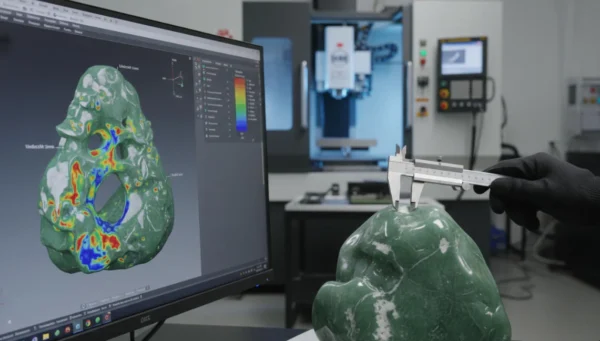
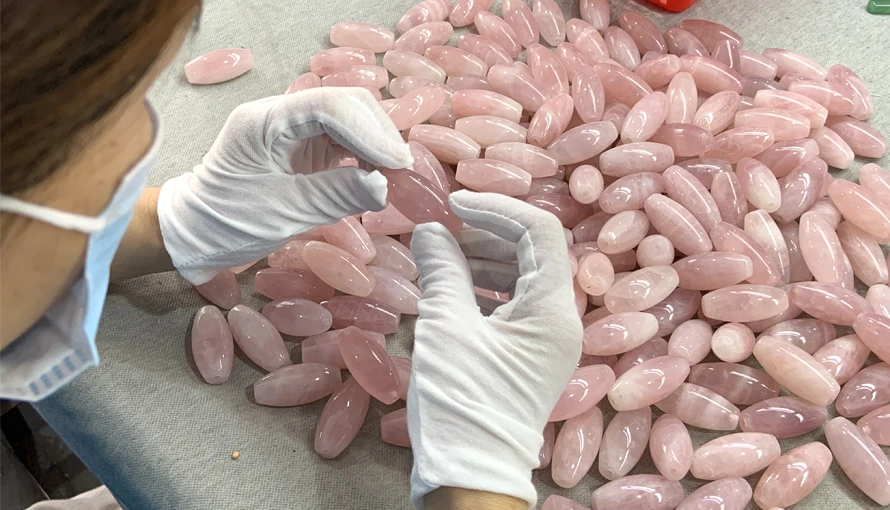
A significant friction point in the crystal importing process occurs when a buyer provides an artistic rendering or a mood board and expects the factory to produce a precise physical replica. Unlike injection molding, where a mold guarantees uniformity, crystal processing involves subtractive manufacturing on natural materials that have internal inclusions, grain directions, and varying hardness levels. To bridge this gap, your “technical pack” must include more than just visual references; it must include specific dimensional tolerances and material grade requirements.
For example, when designing a custom obelisk or a gua sha tool, you must specify the allowable variance in size—typically +/- 1mm to 2mm for larger decor items, but much tighter for jewelry inserts. Furthermore, you must define the “polish level.” In the industry, we distinguish between a “commercial polish” (which is shiny but may have surface undulations) and a “mirror polish” (which is optically flat and free of distortion). Without these specific definitions in your initial inquiry, a factory will often default to the lowest cost processing method to offer a competitive price, resulting in a sample that fails to meet your luxury standards.
The Importance of Material Grading Standards
Perhaps the most complex aspect of importing crystal products is the subjectivity of material quality. Terms like “Grade A,” “AA,” or “AAA” are widely used in the industry, but they lack a standardized, scientifically regulated definition across different suppliers. One factory’s “AAA Grade” Rose Quartz might be another factory’s “A Grade.” This lack of standardization makes price comparison incredibly difficult for the uninitiated buyer, as you may be comparing the price of high-clarity, inclusion-free stone against a lower-grade material full of internal fractures.
To mitigate this risk, successful importers in 2025 establish their own “Reference Samples” or “Golden Samples.” Before authorizing a full production run, it is vital to pay for a set of samples that represent the range of acceptable quality. You should request the factory to provide three distinct samples: the perfect ideal, the average acceptable standard, and the absolute lowest limit of quality you will accept. By physically holding these control samples, you create a tangible contract regarding material quality that supersedes vague alphabetical grading systems. This practice is standard in professional procurement and serves as your primary defense during quality control inspections.
Industry Insight: For more on international standards regarding stone testing and mineralogical definitions, referring to resources like the Gemological Institute of America (GIA) can provide the baseline terminology needed to communicate effectively with suppliers.
3: Vetting and Selecting the Right Manufacturer
Distinguishing Trading Companies from Direct Factories
In the digital age of Alibaba and Global Sources, the line between a trading company and a direct manufacturer is often intentionally blurred. While trading companies have their place—often offering better English communication and product aggregation—they inevitably add a margin to your costs and, more critically, can dilute communication regarding technical custom details. For a brand looking to do serious OEM work, working directly with a factory or a specialized processing brand like JADE MAGO ensures that your technical instructions are not lost in translation between multiple middlemen.
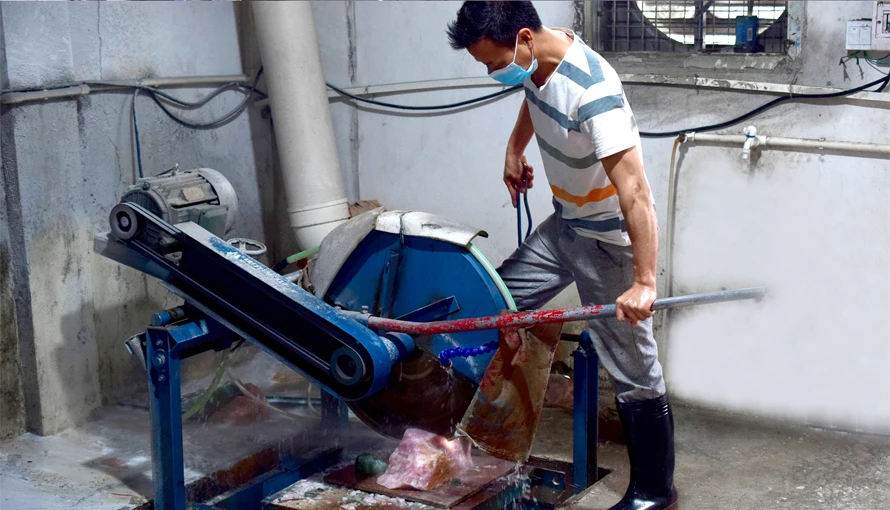
To verify if a supplier is a true manufacturer, ask for a video walkthrough of their workshop during production hours. Legitimate manufacturers will be eager to show off their CNC carving machines, tumbling barrels, and polishing stations. Look for piles of “rough” (raw stone) in the background; a trading company will usually only have finished goods on shelves, whereas a factory will always have a chaotic inventory of raw boulders and stone slices waiting to be cut. Additionally, asking specific technical questions about the RPM (revolutions per minute) used for polishing specific soft stones like Fluorite versus hard stones like Agate can often reveal the depth of their actual processing knowledge.
Assessing Intellectual Property Protection and Ethics
When developing custom shapes or proprietary branded tools, Intellectual Property (IP) theft is a valid concern for Western buyers. In the open markets of Donghai or Guangzhou, it is unfortunately common to see a custom design commissioned by one brand appear in the wholesale stalls of the local market a month later. This usually happens when a buyer works with a factory that lacks strict internal controls or operates purely on a transactional basis without a long-term contract.
To mitigate this, you must explicitly discuss mold ownership and exclusivity clauses before a single dollar is transferred. A reputable OEM partner will charge a mold fee but will agree that the physical mold and the digital CAD files belong to you.
At JADE MAGO, we recommend signing a bilingual NNN Agreement (Non-Use, Non-Disclosure, Non-Circumvention) that is enforceable under Chinese law. While legal action is a last resort, the mere act of signing such a document signals to the factory that you are a serious entity that values its IP.
Furthermore, observe how they treat other clients’ designs. If a supplier eagerly sends you photos of “custom products” they just made for a famous competitor to prove their capability, they will undoubtedly do the same with your designs in the future.
4: The Manufacturing Lifecycle of Custom Stone Products
1: Rough Stone Selection and Yield Estimation
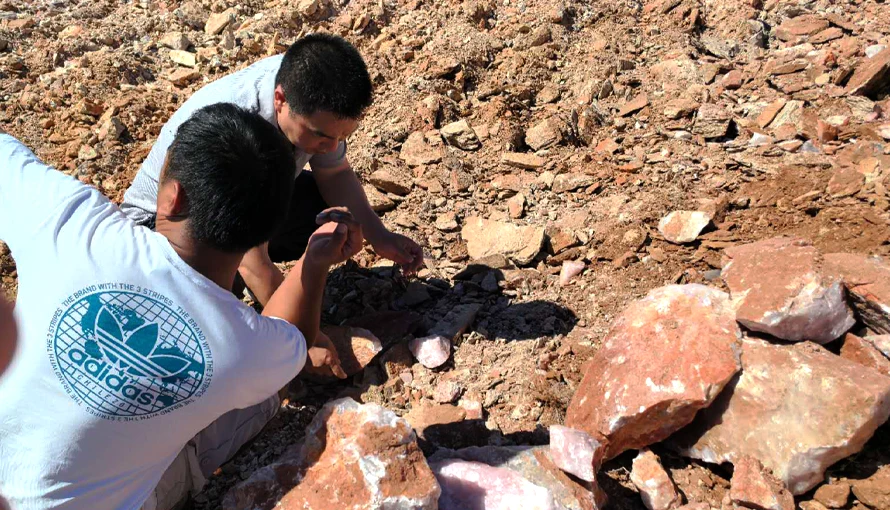
The manufacturing process does not begin with cutting; it begins with the procurement of the “rough” or raw material. This is where the price variance in custom orders is most significant and often misunderstood by buyers. Unlike producing plastic components where the raw material cost is fixed per gram, natural stone varies wildly based on yield. A ton of raw Rose Quartz boulders might only yield 30% usable material after removing outer rinds, severe cracks, and mineral inclusions that compromise the structural integrity of the final piece.
When you place a custom order, the factory must estimate this “yield rate.” If your design requires a very large, flawless surface area—such as a large serving platter or a solid crystal lamp base—the yield will be low, and the cost will be exponentially higher than smaller items like tumbled stones that can be made from the offcuts. Experienced importers will ask the factory about the current availability of specific rough materials before finalizing a design. For instance, if high-grade Lapis Lazuli rough is currently scarce due to mining restrictions in Afghanistan, pushing for a large Lapis order will result in either astronomical prices or the factory using low-grade, dyed material to fulfill the order.
2: Precision Cutting and CNC Carving
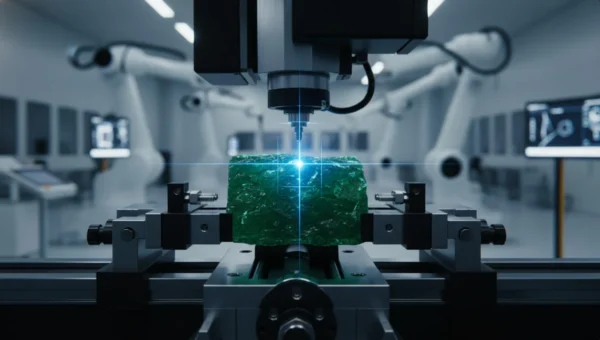
Once the rough is selected, it is sliced into slabs and then preforms. In 2025, the industry relies heavily on Ultrasonic machining and CNC (Computer Numerical Control) carving for custom shapes. This technology allows for intricate designs—such as engraved logos or complex geometric facets—that were previously impossible or too costly to achieve by hand. However, the limitation of CNC in the stone industry is that the drill bits wear down significantly faster than when cutting metal or wood.
For the buyer, this means that “tooling costs” are a recurring reality. If your design has sharp internal corners or deep relief patterns, the factory must change diamond-tipped bits frequently to maintain detail sharpness. A common quality issue in mass production is “soft details,” where the factory tries to extend the life of a worn-out tool, resulting in a logo that looks blurry or edges that are rounded instead of crisp. Your production agreement should specify that tool wear must be monitored, and distinct lines must remain sharp throughout the entire batch, not just the first hundred units.
3: The Art of Polishing (Water vs. Dry)
Polishing is the soul of crystal manufacturing; it dictates the luster and tactile feel of the product. There are generally two methods: vibration tumbling (mass finishing) and hand polishing. For low-cost items, vibration tumbling is used, where thousands of stones are placed in a barrel with abrasive grits for days. This creates a smooth, rounded finish but lacks precise flat surfaces.
For high-end custom goods, hand polishing or flat-lapping is non-negotiable. This process involves a worker pressing the stone against a spinning wheel of increasing grit fineness. The critical distinction here is the final “buffing” stage. Cheaper factories may use a “wax polish” to simulate a high shine, which temporarily fills in microscopic scratches but wears off over time. A true “mirror polish” is achieved mechanically through friction and fine diamond powder, creating a permanent, glass-like surface. You can test this by wiping a sample with alcohol or acetone; if the shine dulls, it was a wax finish. Always specify “Mechanical Mirror Polish” in your purchase order to avoid this shortcut.
5: Quality Control (QC) Specific to Natural Stones
Defining “Defect” vs. “Natural Characteristic”
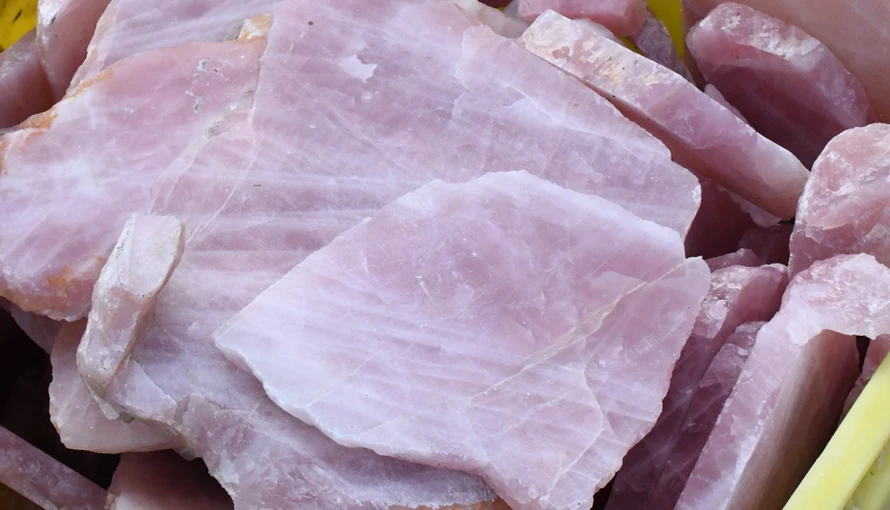
The most contentious disputes between importers and Chinese factories arise during the final inspection. The buyer receives the goods and claims they are “cracked,” while the factory argues they are “natural veins.” In the study of geology, stones like Quartz and Jadeite have internal cleavage planes and mineral inclusions that are inherent to the material. If you reject every stone with a slight internal line, you are essentially asking for glass, not natural crystal.
To avoid this impasse, you must establish an “Acceptable Quality Limit” (AQL) specifically for stone characteristics. You should categorize visual elements into “Critical Defects” (deep surface cracks that catch a fingernail, chips, sharp edges), “Major Defects” (large black spots in a prominent area, wrong dimensions), and “Minor Defects” (internal fog, slight color variation). A “fingernail test” is the industry standard: if your fingernail catches on a line, it is a surface crack (structural defect); if it passes smoothly over, it is likely an internal vein (aesthetic characteristic). Your QC checklist must clearly state that surface cracks are zero-tolerance defects, while internal inclusions are acceptable up to a certain percentage.
On-Site Inspection Protocols
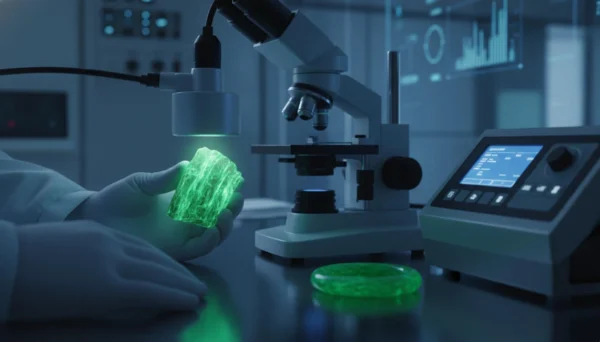
Relying solely on photos sent by the factory is a recipe for disaster. Photos can be edited, or lighting can be manipulated to hide flaws. For orders over $5,000, hiring a third-party inspection agency (like V-Trust or QIMA) or sending a trusted agent to the factory is a worthwhile investment. However, generalist inspectors often lack stone expertise. You must provide them with a specific guide: check the weight (to ensure it’s not plastic or resin), check the cold-to-touch sensation (real stone stays cool), and use a strong backlight to inspect for structural integrity.
Resource: For understanding general trade inspection standards, the International Organization for Standardization (ISO) provides guidelines on AQL sampling methods (ISO 2859-1), which can be adapted for the crystal trade.
6: Logistics, Packaging, and Compliance
Packaging for Heavy, Fragile Goods
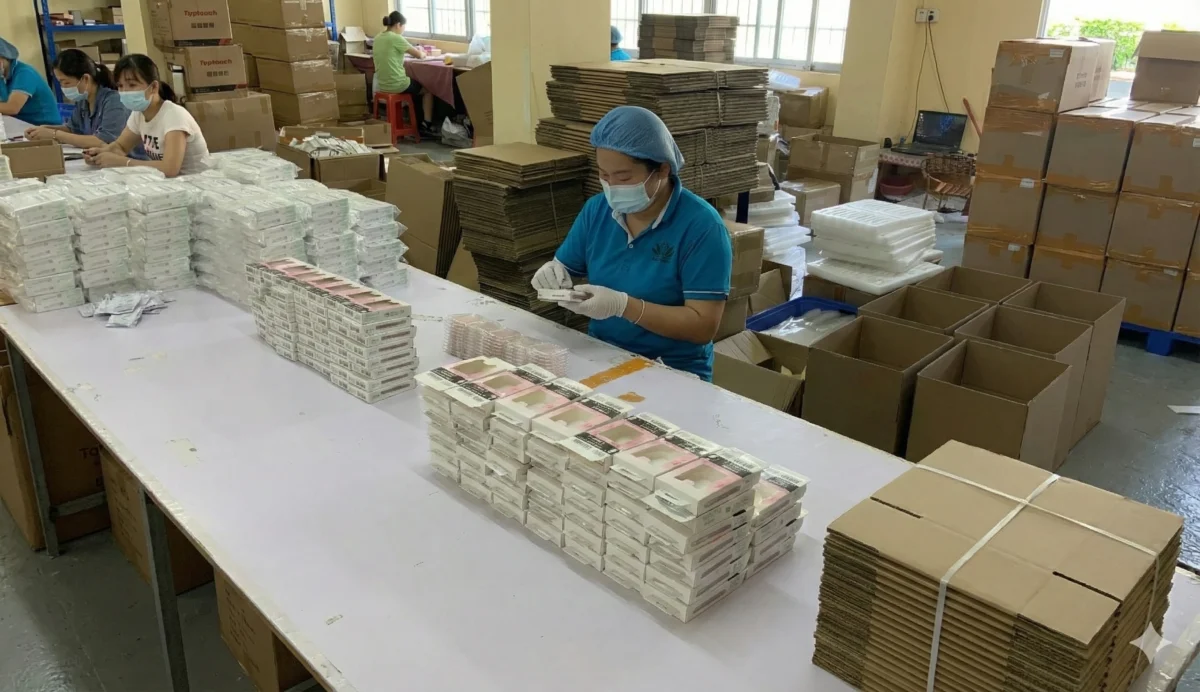
Crystal products are the logistical nightmare of high weight and high fragility. A box of crystal points might look small but can easily weigh 20kg. Standard corrugated cardboard boxes are often insufficient. We strongly advise using “inner boxes” and “master cartons.” Each crystal item should be wrapped in bubble wrap, placed in an individual inner box, and then packed into a master carton that is double-walled or reinforced.
Furthermore, request a “drop test” before shipment. Have the factory pack a sample carton and drop it from waist height (approx. 1 meter) onto a concrete floor. If any item inside breaks, the packaging engineering has failed. It is cheaper to pay an extra $0.50 per unit for better foam and thicker cardboard than to process refunds for 20% of your inventory arriving shattered.
Navigating Customs and H.S. Codes
Importing crystal requires accurate classification to determine duty rates. In the Harmonized System (H.S.), natural semi-precious stones usually fall under Chapter 71. However, the distinction lies in whether the item is “worked” (carved/polished) or “unworked.” Most finished custom products will fall under codes like 7116.20 (Articles of precious or semi-precious stones).
Be very careful not to misclassify functional items. For example, a “Rose Quartz Face Roller” might be classified by some customs agents as a “Massage Tool” (Chapter 90) rather than a stone article, which can attract different duty rates or FDA medical device scrutiny in the United States. Always consult with a customs broker before shipping. Additionally, ensure the factory does not label the boxes simply as “Stone” or “Rock,” which can trigger agricultural inspections for soil contamination. The invoice should clearly state “Polished Crystal Crafts” to facilitate smooth clearance.
Building a Sustainable Partnership
Importing custom crystal products from China in 2025 is a sophisticated endeavor that blends art, geology, and engineering. It is no longer about finding the cheapest vendor on a wholesale directory; it is about cultivating a relationship with a manufacturer who understands your brand’s quality language. The Chinese supply chain offers capabilities that are unmatched globally, from the raw material aggregation in Donghai to the master carvers of Guangdong.
By approaching the process with technical rigor—defining your material grades, respecting the manufacturing limitations of stone, and implementing strict quality controls—you transform the risks of international trade into a strategic asset. At JADE MAGO, we believe that the transparency of this process is what elevates the entire industry. As you embark on your sourcing journey, remember that the most beautiful crystal product is one that is ethically sourced, precisely manufactured, and safely delivered.
FAQ
We are a small brand/designer. What are your MOQ requirements for custom designs?
At Jade Mago, we understand the needs of growing brands. For fully custom designs (OEM), our typical MOQ starts at 300-500 pieces per design, depending on the complexity of the carving and material choice. For semi-custom items (logo engraving on existing shapes), the MOQ can be lower. We aim to support your market testing while maintaining manufacturing efficiency.
I have a design idea but no 3D CAD file. Can you still make it?
Yes, absolutely. Our design team specializes in translating concepts into reality. You can send us a simple sketch, a mood board, or a reference photo. We will create a professional 3D rendering or technical drawing for your approval before we cut a single stone. This ensures the final product matches your vision perfectly.
How can I be sure the crystals I import are genuine and ethically sourced?
We take authenticity seriously. All our raw materials are sourced directly from reputable mines. We provide certificates of authenticity upon request and welcome third-party inspections (such as NGTC or GIA standards) before shipment. Our 65 years of inherited experience means we can distinguish between high-quality natural stone and treated alternatives, ensuring you get exactly what you pay for.