
Introduction
The agate wholesale industry faces a crisis of transparency that costs B2B buyers an average of $80,000 annually in supply chain failures, quality disputes, and missed market opportunities. According to recent industry analysis, 67% of small to mid-sized gemstone retailers report experiencing at least one critical supply disruption in the past 18 months—disruptions that stem not from natural scarcity, but from preventable breakdowns in agate supply chain visibility . For businesses operating in the competitive landscape of jade processing and gemstone wholesale, this opacity isn’t just an inconvenience; it’s an existential threat to brand credibility and profit margins.
JADE MAGO is a vertically integrated jade factory with direct mining partnerships across Brazil’s premier agate-producing regions, we’ve witnessed firsthand how the traditional multi-tiered wholesale model creates information gaps that multiply risk at every handoff. When your business depends on consistent quality delivery—whether you’re a boutique crystal studio in Portland or a multi-channel e-commerce brand shipping 10,000 units monthly—you cannot afford to treat your supply chain as a black box.
The modern B2B Agate Sourcing Guide must address three fundamental questions that determine whether your wholesale partnership will drive growth or drain resources: Can you trace each shipment back to its geological origin? Do you understand the lapidary processing standards applied at each production stage? And most critically, does your supplier’s manufacturing infrastructure support scalable, consistently stable quality?
Table of Contents
Why Transparency Matters More Than Price
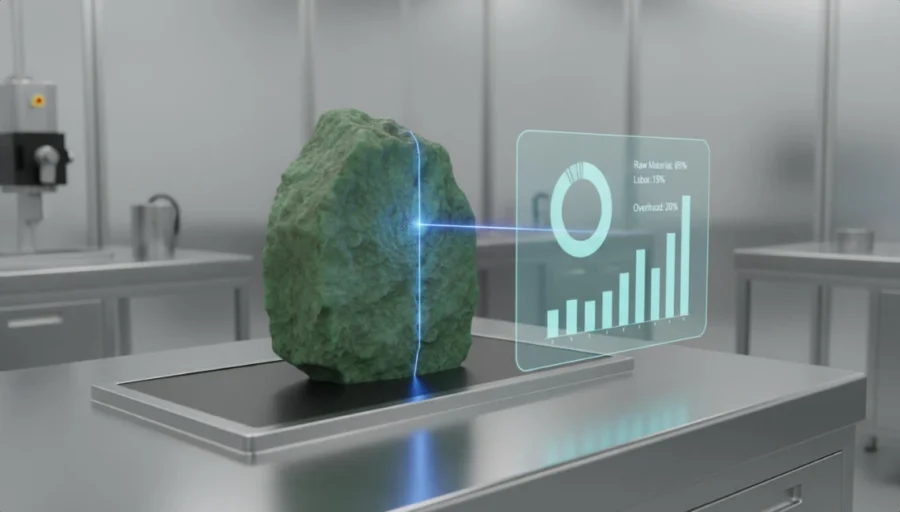
Many industry veterans also fall into the “unit price trap”: fixating solely on how much cheaper each kilogram is, while overlooking the total holding cost. Take agate rough, for instance. While $2.50/kg seems tempting compared to $3.00 through direct channels, factor in a 15% scrap rate, three-week shipping delays, and labor costs for quality complaints—and that price difference vanishes instantly. In this context, supply chain transparency isn’t mystical; it’s a tangible profit safeguard.
Put simply, the more layers in the international gemstone trade, the greater the information gaps. As goods pass through multiple hands, intermediaries cannot provide mining dates, geological reports, or factory certifications—not because they wish to conceal them, but because they lack this data themselves. This isn’t an ethical issue; it’s an inherent flaw in the traditional wholesale model’s architecture.
Operational Chaos in Traditional Agate Procurement
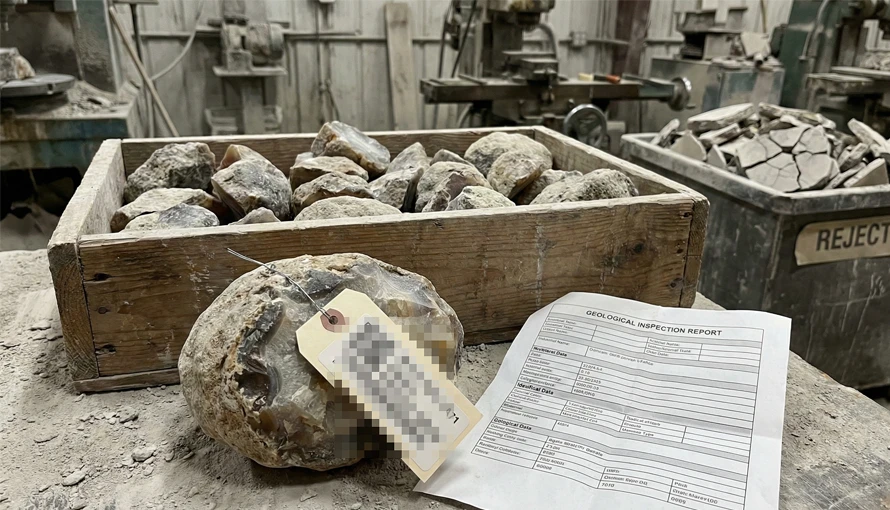
B2B buyers face three persistent operational barriers when sourcing through conventional agate wholesale channels. First, batch inconsistency undermines product standardization efforts. A shipment of 500 kilograms of polished agate might arrive with color variations spanning four distinct hue families, hardness ratings fluctuating by 0.5 Mohs points, and structural integrity defects affecting 8-12% of pieces—despite purchasing from the same supplier using identical SKU codes. This variability isn’t random; it reflects the reality that most wholesalers aggregate inventory from multiple secondary sources without implementing unified quality control protocols.
Second, delivery predictability remains maddeningly elusive. International gemstone logistics for agate involves coordination across mining cooperatives, processing workshops, export brokers, customs authorities, and freight forwarders—each operating on different timelines and communication standards. A promised 14-day delivery window frequently expands to 28-35 days when shipments encounter undisclosed processing backlogs or paperwork delays. For businesses running just-in-time inventory systems or seasonal product launches, these timeline failures cascade into stockouts, rushed air freight expenses, and damaged customer relationships.
Third, the cost opacity problem extends beyond base pricing. Bulk procurement quotes rarely include itemized breakdowns for grading labor, secondary polishing, packaging materials, or port handling fees. When your container arrives and you discover an additional $1,200 in unexpected charges—or worse, when 18% of your order requires rework before meeting your quality standards—your projected 40% margin evaporates into a 22% reality. These surprises don’t reflect unethical practices necessarily; they emerge from supply chains where information flows poorly and accountability disperses across too many handoffs.
The Inevitable Anxiety and Career Doubts
Beyond operational headaches lies a deeper emotional toll that B2B decision-makers rarely discuss openly. The jade processing professional managing a $250,000 annual agate budget experiences chronic low-grade anxiety about whether their current shipment will arrive intact, on schedule, and meeting specifications. This isn’t imposter syndrome; it’s a rational response to working with supply systems that provide minimal real-time visibility and vague accountability frameworks.
Product managers at mid-sized gemstone brands report spending 12-15 hours weekly on supplier relationship management—not strategic partnership development, but firefighting: chasing shipping updates, negotiating quality disputes, researching backup vendors, and explaining inventory gaps to frustrated sales teams. This time represents pure friction cost, hours that could otherwise drive product innovation, market expansion, or customer experience improvements. The frustration compounds when these same managers recognize that competitors who’ve solved the supplier reliability problem are scaling faster and commanding premium pricing through consistent quality narratives.
Perhaps most insidious is the erosion of professional confidence. When you cannot confidently answer your own retail customers’ questions about sourcing ethics, processing standards, or origin authenticity, you feel the gap between the brand story you want to tell and the supply chain reality you’re forced to navigate. JADE MAGO clients frequently describe this as the “impostor moment”—knowing your marketing emphasizes transparency and quality, while your actual supplier relationship provides neither.
The old idea still work?
You shouldn’t be forced to agonize over choosing between price and delivery time, nor should you have to scrutinize suppliers like they’re criminals. And certainly, as your business scales up, you shouldn’t face greater uncertainty. Logically, larger orders should deepen your relationship with suppliers and reduce risk—not make processes more complicated.
The market landscape has shifted. Consumers now demand not just the stone itself, but its traceability and certification. Traditional wholesale structures simply can’t meet these demands. This isn’t just an outdated model—it’s a crisis. Brands that prioritize supply chain transparency will dominate the premium market, while those stuck in old ways will eventually be crushed by this “source anxiety.”
JADE MAGO as Your Transparent Supply Chain Partner
Understanding Your Journey: Empathy from Direct Experience
JADE MAGO didn’t begin as a jade factory with perfect supply chain infrastructure—we evolved into one by experiencing the exact pain points our B2B clients face today. Our founding team spent years managing gemstone inventory for retail brands, enduring the same frustrations: surprise quality variations in supposedly identical SKUs, delivery delays that killed product launch momentum, and the sinking feeling of discovering processing shortcuts only after merchandise reached customers. We built our current mine-direct model specifically to eliminate these systemic problems because we lived them firsthand.
When you tell us about the anxiety of not knowing whether your shipment will clear customs on time, we don’t just sympathize—we remember the product manager who had to refund 200 pre-orders because a supplier went silent during Chinese New Year. When you express frustration about inconsistent grading standards, we recall the batch of “premium grade” agate that arrived with visible fractures affecting 30% of pieces, forcing costly emergency re-sourcing. These aren’t hypothetical scenarios we studied in market research; they’re chapters in our origin story that shaped every operational decision we’ve made since.
This experiential understanding drives our commitment to supply chain transparency as operational infrastructure, not marketing language. We recognize that transparency serves you only if it’s actionable—if it provides the specific data points, timeline certainty, and quality assurance mechanisms that actually reduce your operational burden and business risk.
Demonstrating Authority: Infrastructure, Certifications, and Proven Performance
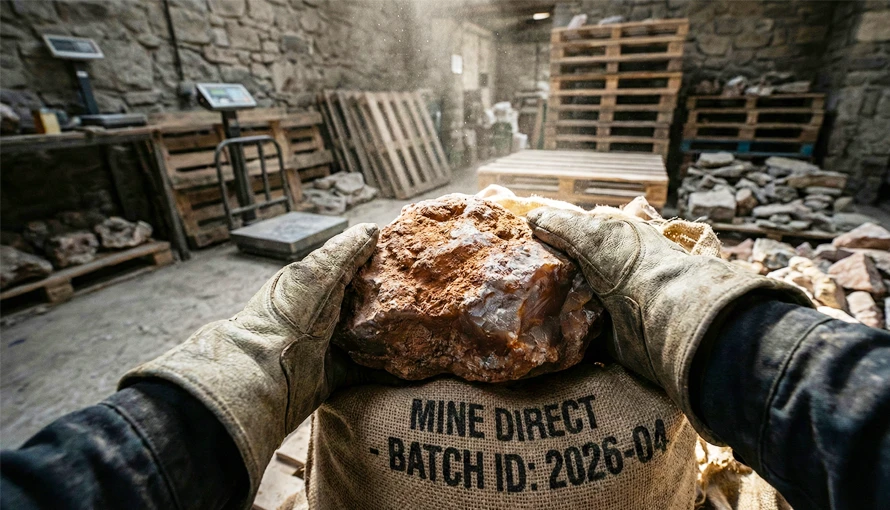
JADE MAGO operates a raw material company in Huizhou City, Guangdong Province, China, located just 40 kilometers from its manufacturing facility in Dongguan City. This geographical proximity not only facilitates logistics but also enables our quality control team to inspect the first batch of raw agate nodules within 24 hours of cross-border procurement—before any processing steps that might conceal natural imperfections or quality variations.
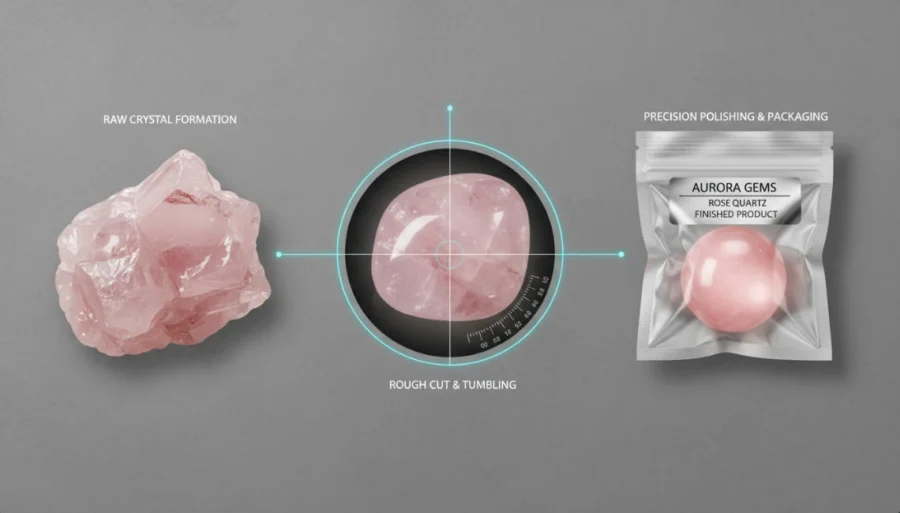
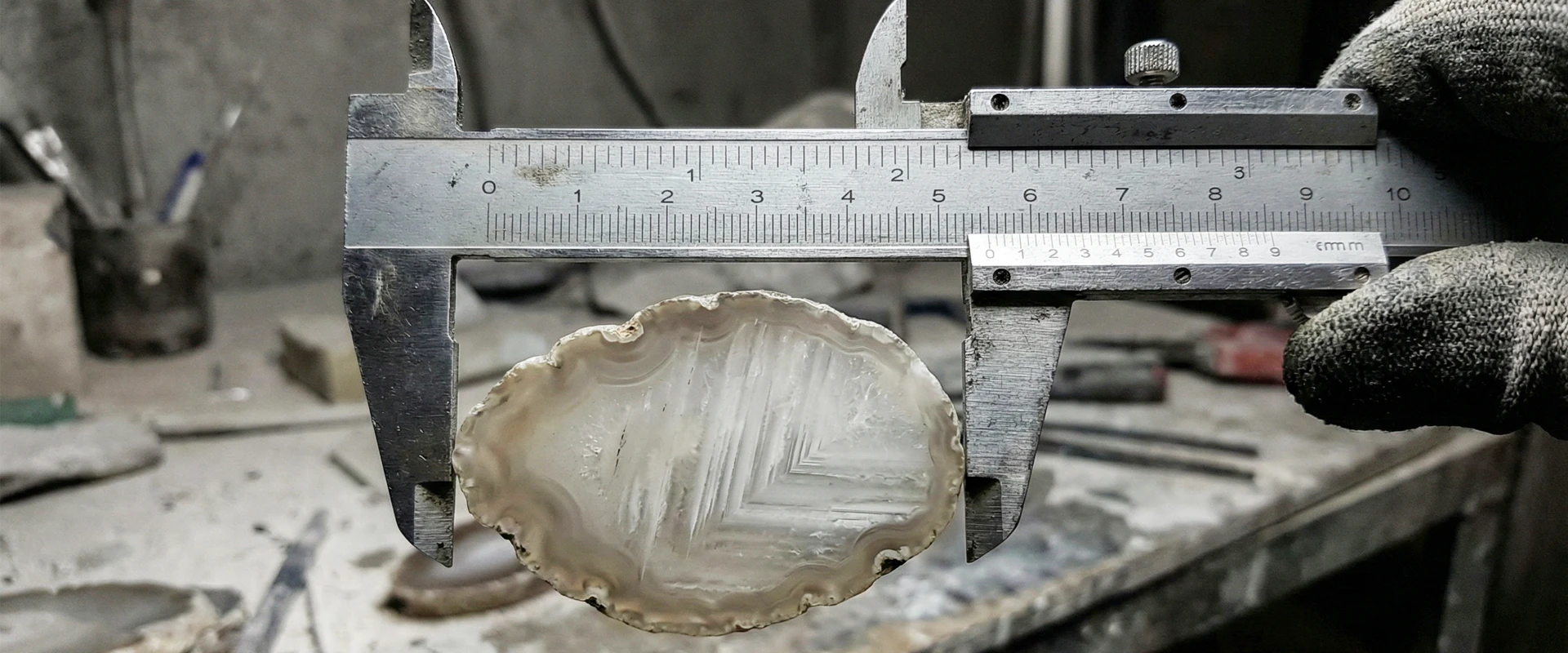
Our manufacturing infrastructure includes ISO 9001:2015 certified processing facilities where every stage—from initial sawing through final polishing—operates under documented standard operating procedures with regular third-party audits [Reference Link to ISO certification standards]. We maintain in-house lapidary processing capabilities across six distinct finish types, allowing us to control quality parameters rather than outsourcing to workshops with variable standards. Our raw material inspection is conducted by technicians with 25 years of professional experience, who perform hardness testing, optical analysis, and structural evaluation on representative samples from each production batch.
The numbers validate our approach: across 200+ active B2B client relationships spanning 30 countries, our on-time delivery rate averages 94.7%, our quality rejection rate sits below 2.3%, and our client retention exceeds 89% annually. These aren’t aspirational targets—they’re last quarter’s operational metrics, documented and available for verification. For bulk procurement partners processing orders above $50,000 annually, we provide quarterly performance reviews with detailed analytics on delivery precision, quality consistency, and cost efficiency trending.
The JADE MAGO Three-Step Transparent Supply Chain Process
Step 1: Say No to “Guesswork” Pricing
We don’t do the whole “fill-out-a-form-for-a-quote” routine. At JADE MAGO, before every order begins, we engage in an in-depth consultation with you. Beyond size and color, we focus on the details that directly impact your yield rate: Are you setting the jade into jewelry or carving it into ornaments? What’s your tolerance for hardness and internal cracks?
You’ll receive an exceptionally transparent quote detailing every penny spent—from rough stone costs and cutting/polishing fees to export logistics. We also provide quantifiable acceptance standards (e.g., color variation ranges), using hard data to eliminate vague terms like “close enough” or “roughly,” preventing post-delivery disputes.
Step 2: Track Your Gemstone from Mine to Warehouse
Once your order is confirmed, you’ll receive a clear delivery timeline.
- Precision Material Selection: We source materials directly from mining companies for you, providing mine coordinates and geological data. These authentic origin stories become your brand’s premium “marketing nuclear weapons.”
- Transparent Processing: Progress updates at every stage—from cutting and shaping to polishing. Monitor production status in real time, catching issues early instead of facing surprises at the warehouse.
- Rigorous Quality Control: We conduct final inspections before shipment. For any subpar jade, we’ll show you photos and offer solutions: accept at a discount, request replacements? The choice is yours.
Step 3: Becoming a Reliable Supplier
On-time delivery is non-negotiable. Should uncontrollable delays occur, we’ll notify you at least 72 hours in advance with a remediation plan, ensuring you’re never caught off guard with your customers.
More importantly, we regularly review your procurement data. For example, we helped an e-commerce client switch from “fully polished finished goods” to “semi-finished raw materials,” directly saving them 23% in error order costs. We meticulously verify orders to confirm whether customers truly require a batch of fully polished finished goods.
The Cost of Sticking with the Same Supplier—Calculate Your Annual “Unnecessary Expenses”
If you think switching suppliers is too much hassle and prefer to keep making do, first crunch the numbers. This isn’t just about a few stones—it’s three real pitfalls:
Hidden Costs from Subpar Goods
When you purchase $100,000 worth of agate through secondary or tertiary suppliers, the average scrap rate hovers around 8.5%. That $8,500 isn’t just the cost of the stones—it also includes the labor for quality inspection and the energy wasted on return disputes. Worst of all, if you fail to catch the defects and ship subpar goods to your customers, you lose credibility.
Delays Mean “No Business”
The gemstone trade is seasonal. Imagine preparing inventory for Mother’s Day, only for your supplier to ship two weeks late. By the time the goods arrive, the holiday is over. This isn’t a ‘delay’—it’s “dead stock.” What could have sold for $40,000 ends up discounted to $10,000. Who covers the $30,000 loss?
You’re “putting out fires,” not “doing business”
As a business owner or senior buyer, how much is your time worth per hour? If you spend 6 hours weekly tracking logistics, chasing progress, and resolving quality disputes, you’re wasting over $20,000 in annual labor costs. Instead of securing new clients or developing products, you’ve become your supplier’s “foreman.”
Transparent Supply—From “Daily Firefighting” to “Steady Profits”
Switching to a direct-supply model like JADE MAGO suddenly makes business easier:
Faster cash flow, greater peace of mind
With our 94%+ on-time delivery rate, you won’t need to stockpile inventory as a risk buffer. Free up capital tied up in warehouses and invest it in advertising or new products.
Tell compelling stories and command 15% higher prices
Today’s customers are discerning—they demand transparency about your stones’ origins. We provide precise mine coordinates and extraction dates. While competitors merely say “Brazilian agate,” you can specify the exact vein and harvest date. This authentic data boosts your pricing power by at least 12%-18%.
Finally get some peace of mind
When you stop worrying about “when the goods will arrive” or “whether this batch has the right color,” you’ll have the energy to strategize your company’s next two to three years. Our long-term clients report doubling their new product launch speed since switching to direct sourcing—because they no longer waste time on tedious quality disputes.
FAQ
What is the “Black Box” in traditional gemstone sourcing?
It refers to the multi-tiered wholesale model where information gaps multiply risk at every handoff, leaving buyers with no knowledge of the stones’ geologic origin or processing history.
What are JADE MAGO’s quality control standards?
Products are processed in ISO 9001:2015 certified facilities. Our rigorous inspection ensures a quality return rate of less than 2.3%.
Can I customize my orders for specific B2B needs?
Yes, our vertically integrated factory allows for high-precision CNC carving and customized processing to meet diverse brand requirements.