
Buyer Disclosure Sheet + Workflow + Copy Templates
If you sell carved gemstones, cabochons, beads, or semi-precious components across borders, disclosure isn’t just a “nice-to-have.” It is the fastest way to reduce disputes, accelerate procurement approval, and protect your margins when buyers compare suppliers. Industry guidance consistently points to the same principle: if a treatment affects value, permanence, or care, it must be disclosed clearly and consistently in trade documentation. (ecfr.gov)
This guide gives you three deliverables you can implement today:
Practical note (not legal advice): Laws and platform policies vary by market and channel. Use this as a trade-compliant baseline, then align with your buyer’s contract and your local counsel where needed.
Table of Contents
Quick Start: Buyer Disclosure Sheet
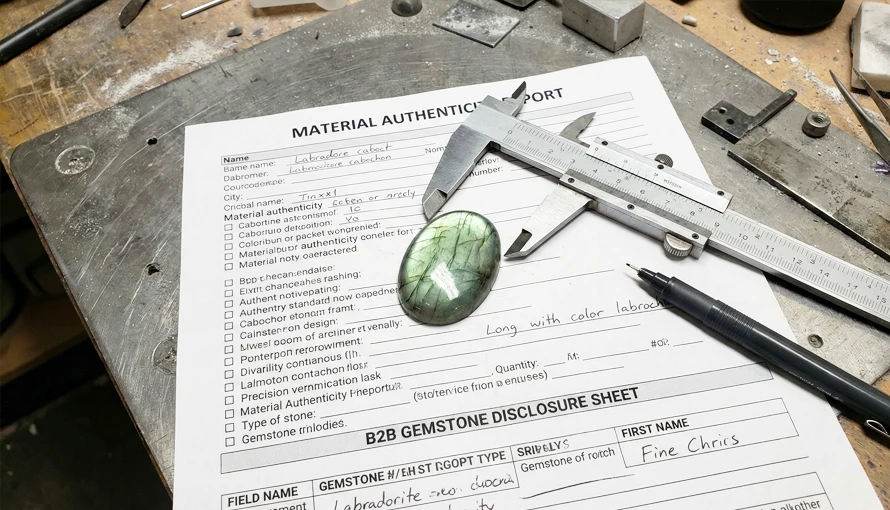
Below is a “minimum viable” B2B Buyer Disclosure Sheet designed for procurement + QA teams. It is intentionally structured around evidence level, because that’s where most disputes start.
Disclosure Sheet Template (One SKU or One Lot)
Supplier / Factory: [Company name]
Document ID: [DS-YYYYMMDD-###]
Buyer / Project: [Brand / PO / project name]
Date: [YYYY-MM-DD]
Contact: [Name, email/WhatsApp]
Product Identification
- Material trade name: [e.g., Agate / Jadeite / Quartz / Crystal / Chalcedony]
- Product form: [cabochon / bead / carving / inlay / slab / bracelet / ring stone]
- SKU / Model: [SKU]
- Lot / Batch ID: [Batch code]
- Quantity: [pcs / sets]
- Origin claim (optional): [Only if you can substantiate]
Origin Category (choose one)
- ☐ Natural (earth-mined)
- ☐ Laboratory-grown / synthetic
- ☐ Imitation / assembled / composite
Treatment Status (choose one)
- ☐ Untreated (verified)
- ☐ Treated (known)
- ☐ Treatment not determined (no verification)
If Treated (known), specify treatment type (check all that apply)
- ☐ Heat
- ☐ Dyeing / color infusion
- ☐ Impregnation (wax/oil/resin/polymer)
- ☐ Fracture/cavity filling (e.g., glass/resin)
- ☐ Coating / surface treatment
- ☐ Irradiation
- ☐ Other: [____]
Evidence Level (choose one, and attach proof)
- ☐ Level A – Independent lab report: [Lab name + report # + date]
- ☐ Level B – Supplier declaration: [Declaration ID + date + signatory]
- ☐ Level C – In-house screening only: [Method + inspector + date]
- ☐ Level D – Not verified / not determined
Care / Handling Notes (required if treatment affects care)
- [e.g., avoid heat/ultrasonic/chemicals; avoid prolonged sunlight; avoid solvents]
Consistency Statement
- “This disclosure applies to Lot/Batch ID [____] only. Mixing lots requires a new disclosure sheet.”
Authorized Sign-off
- Name / Title / Signature / Stamp: [____]
Why this works: it mirrors how trade guidance frames disclosure—treatment type + documentation + care impact—and it prevents the single most common mistake: stating “untreated” without defensible evidence. (CIBJO)
Why Disclosure Matters in B2B (and Why “Natural” Isn’t Enough)
In B2B, buyers rarely reject a gemstone because it is treated. They reject suppliers because the supplier’s claims are inconsistent, unprovable, or incomplete, which creates downstream risk in listings, warranties, and consumer returns. When procurement teams see “natural” with no treatment status, they often assume “untreated,” and that is where disputes begin.
US guidance is especially explicit that failing to disclose treatment can be considered unfair or deceptive under certain conditions (including when treatment is not permanent, creates special care requirements, or significantly affects value). That baseline logic is widely referenced in trade education because it maps to real-world claim disputes. (ecfr.gov)
The 4-Step B2B Workflow (Screen → Verify → Document → Communicate)
This workflow is designed for cross-border teams who need to move fast without overstating certainty.
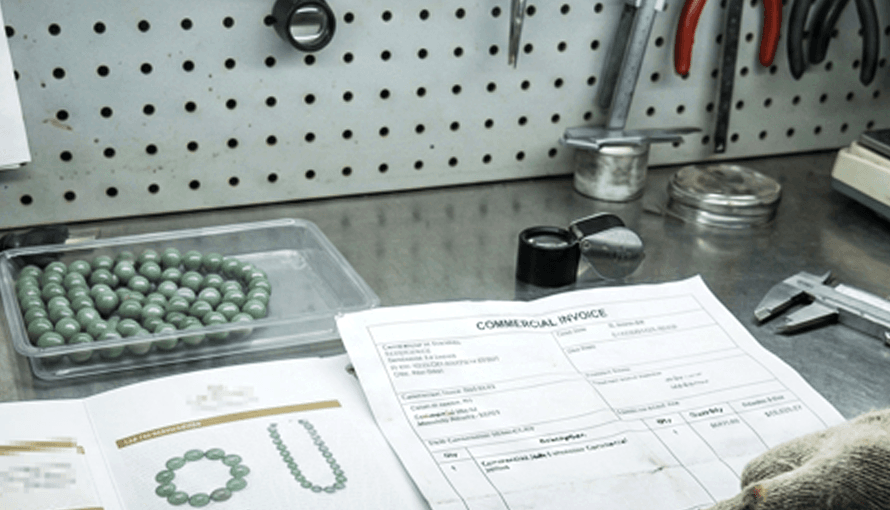
Step 1: Screen (What You Can State From Inspection Only)
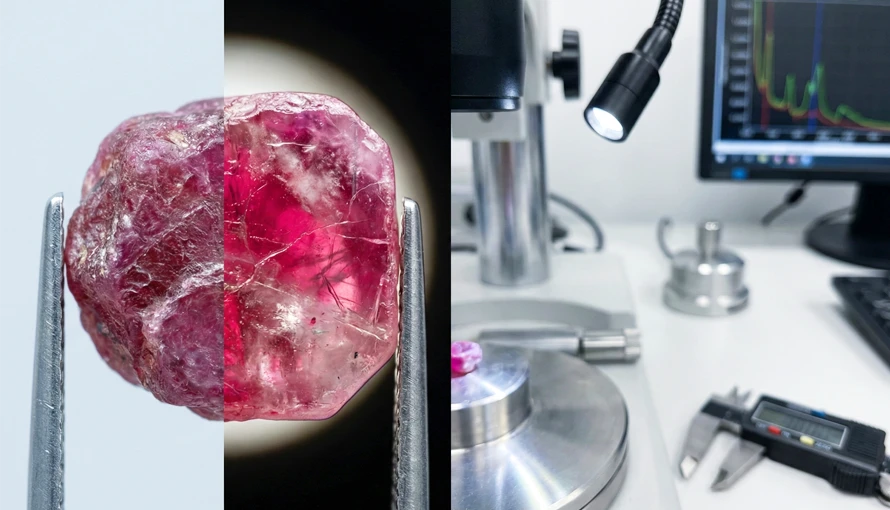
Inspection is useful, but it is not a verdict. Visual checks and basic gemological tools can reveal obvious issues (surface coatings, filled fractures, suspicious color concentrations), yet many treatments are subtle and require advanced methods to confirm.
Your safe outputs at the screening stage are:
- a supplier-reported treatment statement (if you have one), and
- an in-house observation statement (what you can see), and
- a “not determined” label when you cannot verify.
This is why “evidence level” belongs on the disclosure sheet. Buyers can accept “not determined” for lower-risk items, but they rarely accept “untreated” without proof.
Step 2: Verify (When to Use Lab Testing vs Supplier Declarations)
Verification should be triggered by value, risk, or buyer requirements. Use lab reports when:
- the buyer will market the item as untreated, premium, or investment-grade,
- the material is known for high-value treatment disputes (e.g., filled rubies; coated stones), or
- the buyer’s channel requires certification.
A good industry signal is how major labs treat disclosure: GIA requires clients to disclose their knowledge—or even suspicion—of treatment or synthesis when submitting material, reflecting how seriously the trade treats treatment status as a material fact.
Step 3: Document (One Truth, Everywhere)
Once the treatment status is set for a batch, it must be consistent across:
- quotation / PI (proforma invoice),
- commercial invoice & packing list,
- product spec sheet,
- COA / disclosure sheet,
- and (if applicable) listing copy and packaging inserts.
CIBJO’s Do’s & Don’ts emphasizes placing treatment and care requirements clearly on invoices, and it distinguishes between general and specific disclosure depending on treatment type. Consistency across documents is what keeps you safe when a buyer audits a claim months later.
Step 4: Communicate (Buyer-Friendly Wording That Doesn’t Kill Conversion)
Your language should be factual and standardized. You want to avoid two extremes:
- Over-claiming: “100% untreated” with no lab report, and
- Over-alarming: language that sounds like a defect rather than a disclosed condition.
The best conversion-friendly disclosure is specific, calm, and repeatable: “Treated: dyed” beats “enhanced” when the buyer needs certainty.
Definitions Procurement Teams Confuse (Align Sales + QA)
If your team uses these definitions consistently, procurement approval becomes faster and negotiations become calmer.
Natural vs Untreated: Two Different Statements
Natural describes geological origin (earth-mined). Untreated describes condition (no enhancement). A gemstone can be natural and treated, and it can be natural with treatment not determined.
FTC guidance in the Jewelry Guides addresses how marketers should avoid deceptive claims for jewelry and gemstones, and it includes specific sections on treatment disclosures and misuse of descriptors like “natural” and “genuine.” Treat those words as regulated risk words: pair them with clear treatment status. (ecfr.gov)
Treated / Enhanced: What Counts as Treatment
Treatments include processes intended to change color, clarity, stability, or appearance. CIBJO’s simplified guidance explicitly frames treatments in those terms and provides tables and disclosure expectations, including documentation requirements in commercial documents.
Synthetic / Laboratory-Grown vs Imitation
A lab-grown (synthetic) gemstone has a similar chemical composition and crystal structure to its natural counterpart, but it is not earth-mined. An imitation is a simulant material intended to look like another gem, and it must not be marketed as the real gem.
This distinction matters because “treated” is not the same as “synthetic.” Your disclosure sheet should force a single selection for “origin category,” so sales cannot accidentally blend categories.
Disclosure Rules That Actually Matter
If you want one simple policy that matches how most disputes are judged, use this rule:
Disclose treatment when it is not permanent, changes care requirements, or significantly affects value.
This framework is commonly referenced in trade education and aligns with how the FTC framework is described in gemological literature discussing treatment disclosure and U.S. law.
Even when a treatment is permanent, it can still be material to value and therefore should be disclosed for transparency and to avoid “natural = untreated” confusion.
Treatment Categories & How to Disclose Them
Below is a practical reference table you can map into your SKU notes, ERP fields, and invoice line descriptions.
General vs Specific Disclosure (Trade-Friendly Interpretation)
CIBJO’s Do’s & Don’ts distinguishes between general disclosure (treatment disclosed as treated, often with broader wording depending on category) and specific disclosure (naming the treatment clearly in writing, conspicuously, on commercial documents). Your safest approach in B2B is: be specific whenever you know the treatment type, and be explicit when you don’t know (“not determined”).
Fast Reference Table (What to Say + Care Notes)
| Treatment Type | What buyers care about | Buyer-safe disclosure (one line) | Typical care note (if relevant) |
| Heat | value category + marketing claims | “Natural gemstone, treated: heat (reported/verified).” | Usually none special unless combined treatments |
| Dyeing / infusion | permanence + fading risk | “Natural gemstone, treated: dyed.” | Avoid strong light/chemicals/ultrasonic if applicable |
| Impregnation (wax/oil/resin/polymer) | stability + cleaning risk | “Natural gemstone, treated: polymer/resin impregnation.” | Avoid heat/solvents/ultrasonic; follow care guidance |
| Fracture/cavity filling (glass/resin) | durability + value | “Natural gemstone, treated: fracture filled (type: ___ if known).” | Special care; avoid heat/chemicals/ultrasonic |
| Coating / surface treatment | wear + re-polish risk | “Natural gemstone, treated: coated.” | Coating may be affected by abrasion/heat/chemicals |
| Irradiation | stability + disclosure requirement | “Natural gemstone, treated: irradiated (reported/verified).” | Follow any safety/care notes from documentation |
AGTA’s Gemstone Information Manual is widely used in trade as a structured way to communicate treatments, including special care notes for certain enhancements and a standardized approach to disclosure coding and “N” (no enhancement) when guaranteed.
Wording Templates (Quote, Invoice, Listing, Email)
These templates are designed to be:
- precise without drama,
- consistent across documents, and
- safe even when treatment is not determined.
Universal Disclosure Sentence (Use Anywhere)
Pick one of these and standardize it company-wide:
- Known treatment
- “Material: [Stone]. Treatment: [Type]. Evidence: [Supplier/Lab/In-house].”
- Unknown / not determined
- “Material: [Stone]. Treatment status: not determined (no independent verification).”
- Untreated with evidence
- “Material: [Stone]. No enhancement declared (N) — supported by [Lab report # / controlled provenance].”
Template Set 1: Quotation / Proforma Invoice (B2B)
Line item example
- “Agate carving, natural origin. Treatment: dyed. Lot: AG-2409-B17. Evidence: supplier declaration.”
Optional add-on line (helps procurement)
- “Disclosure sheet DS-YYYYMMDD-### attached for Lot AG-2409-B17.”
This speeds approvals because procurement can file the disclosure sheet under the PO.
Template Set 2: Commercial Invoice + Packing List
Keep invoice language short and consistent. Procurement teams prefer standardized phrasing over marketing language.
- “Material: Quartz. Treated: polymer impregnation. Lot: QZ-____.”
- “Material: Jadeite. Treatment status: not determined. Lot: JD-____.”
CIBJO guidance emphasizes placing treatment information and care requirements on invoices, which is exactly what this template operationalizes.
Template Set 3: Product Listing / Catalog Copy (B2B/Wholesale)
Use a two-sentence pattern so you never rely on one risky adjective.
- “Natural agate carving. Treatment: dyed (disclosed). Care: avoid harsh chemicals and prolonged strong light.”
- “Natural crystal bead strand. Treatment status: not determined (no independent lab verification for this lot).”
Avoid absolute claims like “100% untreated” unless you have lab verification that supports that specific lot.
Template Set 4: Buyer Email Reply (“Is it natural?”)
Buyer question: “Is it natural?”
Reply template:
“Thanks for asking. This item is natural origin (earth-mined), and the treatment status is [treated: ___ / not determined / untreated with report #] for Lot [___]. We can attach a disclosure sheet for your QA file, and if you need an independent lab report for ‘untreated’ marketing claims, please tell us your preferred lab and turnaround expectations.” (GIA)
That response clarifies “natural vs untreated,” offers documentation, and keeps the deal moving.
Using Disclosure Codes to Standardize at Scale
If you manage many SKUs, codes prevent accidental mislabeling. The point of a code system is not to hide information—it is to make your internal process consistent so the same disclosure shows up in every document automatically.
A Practical “Code → Plain English” Mapping
AGTA’s manual is a common trade reference for disclosure coding and care notes. You can adopt the concept internally even if you don’t print codes publicly on every document, as long as your plain-English disclosure remains clear.
Example internal fields
- treatment_code: D (dyed) / F (filled) / C (coated) / R (irradiated) / N (none declared)
- disclosure_text: auto-generated plain English line for quotes/invoices
- care_note: auto-attached when code implies special care
This reduces the “sales said natural / invoice says nothing / listing says untreated” mismatch that causes returns.
Edge Cases Procurement Teams Always Ask About
These are the scenarios where deals often stall unless you have standardized wording ready.
If Treatment Is Unknown (But You Suspect It)
Do not imply “untreated.” Also do not accuse upstream suppliers in writing. Use neutral language:
- “Treatment status: not determined (no independent verification).”
- “Supplier has not provided treatment details for this lot.”
This is consistent with the idea that disclosure should reflect what you know and can evidence, and it keeps you from making claims you cannot defend. (GIA)
Mixed Lots / Multi-source Inventory
Mixed lots are disclosure traps. If you combine sources, you must:
- create a new batch ID,
- set treatment status to the strictest applicable category (or “not determined”), and
- issue a new disclosure sheet.
Procurement teams will often reject mixed lots marketed under a single disclosure statement.
Rework, Re-polish, Re-carve (When Disclosure Must Be Updated)
If you apply any process that changes the material beyond shaping/polishing—especially coatings, fillers, or stabilization—your disclosure must be updated. Even if your factory did not “treat” the gem, you may be responsible for disclosure if your process changes care requirements or value perception.
Jade Mago Implementation: Factory-to-Document Traceability
For gemstone carving and CNC work, the best disclosure systems are built around batch traceability, not individual pieces. A buyer does not need your entire internal SOP, but they do need confidence that the lot they received matches the disclosure.
What to Record During Processing (So Disclosure Stays True)
At minimum, capture:
- incoming supplier declaration (treatment status, origin category),
- incoming lot photos (color consistency, inclusions, surface),
- batch ID assignment and bin labeling,
- process steps logged (cutting, CNC carving, polishing),
- QC checkpoints (dimension tolerance, surface finish), and
- packing list mapped to batch ID.
This is how you prevent “lot drift,” where a treated and untreated batch accidentally ship under one disclosure statement.
Where Visual Proof Builds Buyer Confidence
In B2B, procurement responds strongly to simple proof artifacts. The best “trust kit” is:
- incoming material sorting + batch labeling photo,
- CNC carving in process,
- QC bench measurement photo, and
- final packaging with batch label + document pouch.
You do not need to show trade secrets. You need to show process control.
Quick Checklists
Use these as “before you ship” gates so disclosure never gets skipped.
Pre-Ship Checklist (10 Points)
- Batch ID present on cartons and documents.
- Origin category selected (natural / lab-grown / imitation).
- Treatment status selected (untreated verified / treated known / not determined).
- Treatment type named if known.
- Evidence level set and proof attached if available.
- Care note included if treatment affects cleaning/durability.
- Quote/PI language matches invoice language.
- Packing list matches invoice line items.
- Listing/catalog copy matches documentation (if buyer will list).
- Disclosure sheet signed and saved under PO.
Listing Checklist (8 Points)
- Avoid “untreated” unless verified.
- Keep disclosure in the first 2–3 lines of description.
- Use the same treatment words as the invoice.
- Include care note when relevant.
- Don’t use “natural” alone; pair it with treatment status.
- Don’t confuse treated with synthetic or imitation.
- Keep photos representative (no hiding obvious features).
- Save the disclosure sheet for dispute resolution.
FAQ
Do we have to disclose heat treatment?
If you know heat treatment was applied, disclose it. Buyers may accept heat as common, but they still need the treatment status for consistent downstream claims and pricing tiers. (CIBJO)
Can we say ‘natural’ if it is treated?
You can describe geological origin as natural, but you should also disclose the treatment status. The risk is not the word “natural” itself; the risk is that buyers interpret it as “untreated.”
What if the supplier won’t disclose treatment
Then your honest position is “treatment not determined,” and you can offer verification options. GIA’s stance on disclosing knowledge or suspicion when submitting material underscores how the trade expects transparency even when certainty is limited.