
Introduction
In the bustling world of gemstone processing and B2B jewelry manufacturing, few things are as critically important as the precise identification of raw materials. At JADE MAGO, we frequently encounter inquiries from wholesale clients and designers who use the terms “Green Quartz” and “Aventurine” interchangeably. It is a reasonable confusion for the uninitiated; after all, both materials are chemically silicon dioxide, and both present themselves in various verdant shades that can captivate the eye. However, for those of us deeply entrenched in the lapidary arts and the mass production of stone artifacts, treating these two materials as identical is a mistake that can compromise the integrity of a product line.
The short answer to the question is nuanced: While Aventurine is technically a variety of quartz, not all green quartz is aventurine. The distinction lies not just in the chemical formula, but in the internal inclusions, the optical phenomena, and the geological conditions under which they formed. Understanding the difference between Green Quartz vs Aventurine is essential for determining the correct processing method, pricing strategy, and marketing narrative for your final products. Whether you are sourcing raw stone for CNC carving or selecting cabochons for a jewelry collection, knowing the specific physical properties of these stones will save you from costly manufacturing errors.
In this comprehensive guide, we will leverage our years of experience at JADE MAGO to dissect the mineralogical, visual, and commercial differences between these two popular stones. We will explore why a simple visual inspection is often insufficient and provide you with the professional knowledge needed to navigate the gemstone market with confidence.
Table of Contents
The Geological and Mineralogical Foundations
To truly understand the difference between these materials, we must look beneath the surface and examine their internal structure. The primary confusion stems from the fact that they belong to the same mineral family, yet their “personality” as stones is dictated by entirely different geological factors.
Defining Aventurine: The Stone of Opportunity
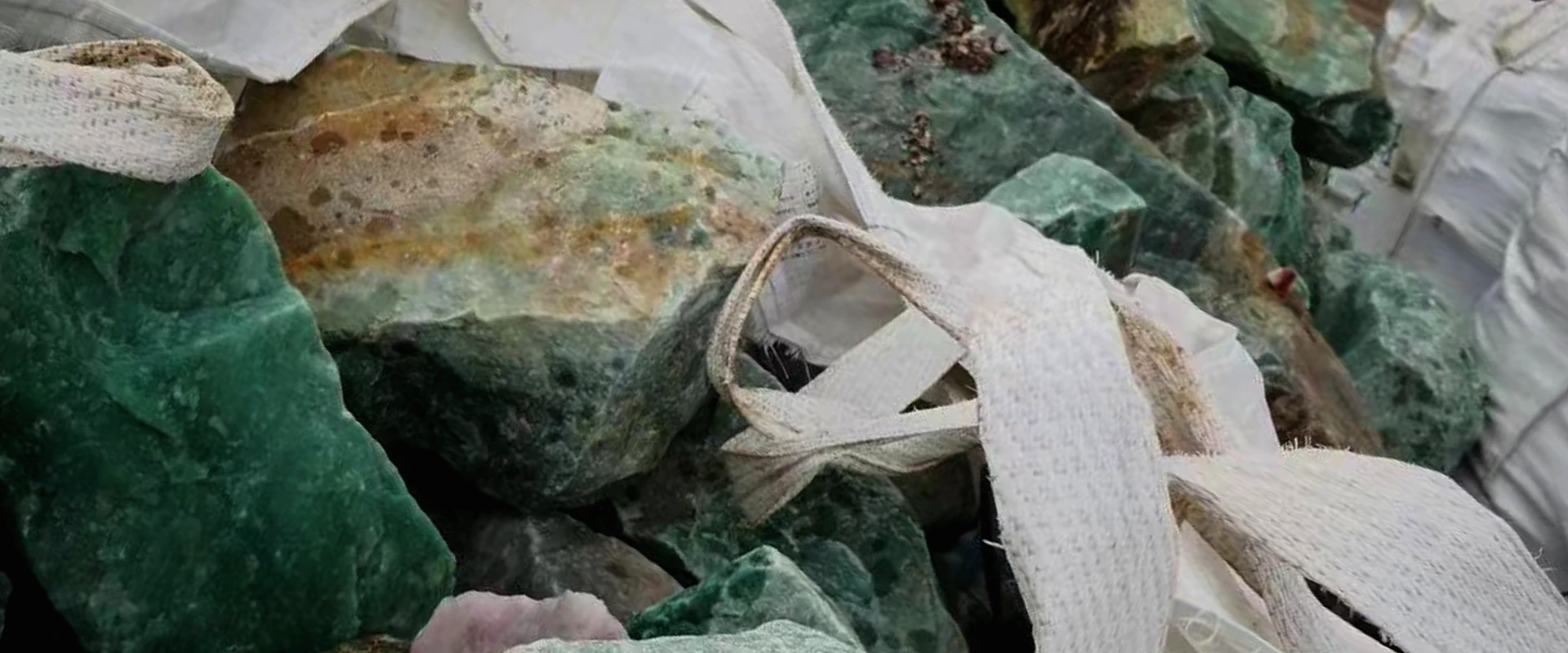
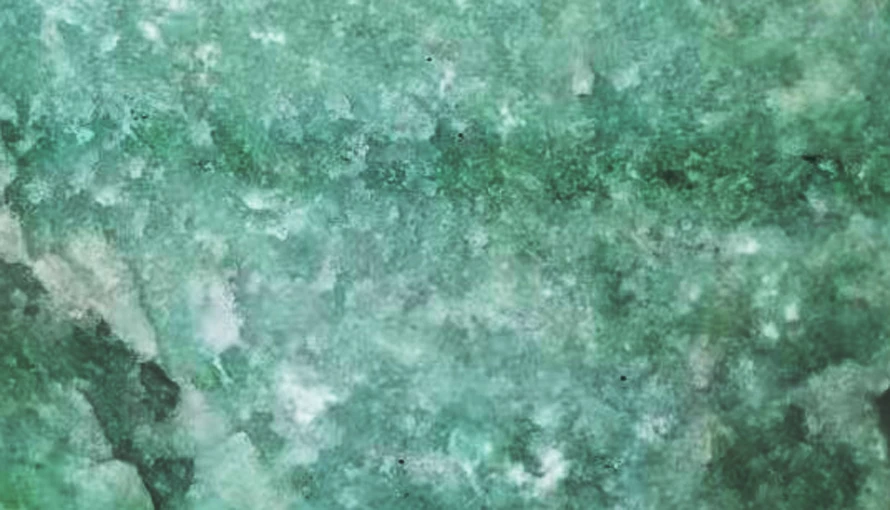
Aventurine is a form of polycrystalline quartz, meaning it is composed of many tiny interlocking crystals rather than a single large crystal structure. However, what truly defines Aventurine and separates it from standard quartz is the presence of platy mineral inclusions. In the case of Green Aventurine, which is the most common variety used in our industry, these inclusions are typically Fuchsite (a chromium-rich variety of muscovite mica). It is the presence of these tiny mica flakes that gives Aventurine its distinct granular appearance and its varying degrees of translucency.
When we process Aventurine at the JADE MAGO factories, we are not just cutting through pure silica; we are cutting through a matrix heavily suspended with these foreign minerals. The density and orientation of the Fuchsite inclusions determine the intensity of the green color. A piece of Aventurine with a high volume of Fuchsite will appear as a deep, saturated emerald green, whereas a piece with fewer inclusions will appear pale and washed out. According to data from the Gemological Institute of America (GIA), this specific internal structure is what categorizes the stone specifically as a quartzite rock in many geological contexts, rather than a simple mineral crystal.
Defining Green Quartz: Prasiolite and Massive Quartz
In contrast, when industry experts speak of “Green Quartz” in a strict mineralogical sense, they are often referring to a stone known as Prasiolite. Prasiolite is a macro-crystalline quartz, meaning the crystals are large enough to be identified with the naked eye, similar to Amethyst or Citrine. Natural Prasiolite is incredibly rare and is typically found in specific regions like Brazil or Poland. However, the vast majority of “Green Quartz” found in the commercial market today is actually heat-treated Amethyst or irradiated quartz.
Unlike Aventurine, Prasiolite does not rely on mica inclusions for its color. Its green hue is derived from structural changes within the crystal lattice itself or the presence of iron ions that have been altered by heat. Because it lacks the heavy inclusions found in Aventurine, Prasiolite is usually much more transparent and lacks the granular texture. There is also “Massive Green Quartz,” which is often colored by Actinolite or Chlorite, but even this variety lacks the specific optical effect that defines true Aventurine. For a manufacturer, the key takeaway is that Green Quartz is generally a cleaner, more glass-like material compared to the inclusion-heavy nature of Aventurine.
Visual Identification and Optical Phenomena
For buyers visiting a trade show or a mine, you cannot always rely on a laboratory report. You must rely on your eyes and a standard 10x loupe. Distinguishing Green Quartz vs Aventurine visually is one of the first skills we teach our quality control officers at JADE MAGO.
The Phenomenon of Aventurescence
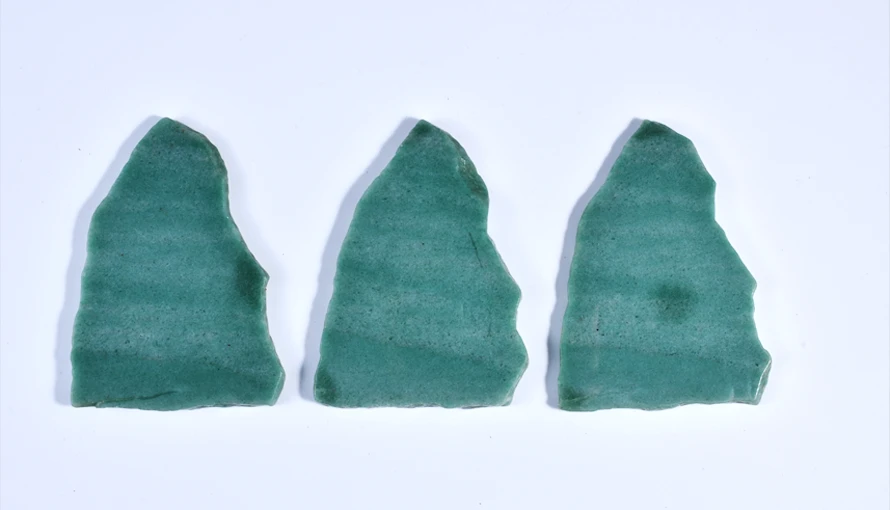
The most definitive visual test for Aventurine is a phenomenon appropriately named “Aventurescence.” This refers to a glittering effect caused by light reflecting off the tiny mineral inclusions inside the stone. Remember the Fuchsite mica we discussed earlier? When light hits these flat, plate-like inclusions, it bounces back to the eye, creating a shimmer that resembles a metallic glitter trapped within the stone.
This effect can range from a subtle sheen in lower-grade material to a dazzling metallic sparkle in high-quality specimens. When you rotate a piece of rough or polished Aventurine under a strong light source, you should see these tiny internal sparks. If the stone is completely uniform in color, glassy, and shows absolutely no internal glitter or granularity, it is highly unlikely to be Aventurine. This optical characteristic is so unique that it is the primary diagnostic tool used by gemologists worldwide, as noted in various educational resources on Mindat.org.
Transparency and Texture Differences
Beyond the glitter, the texture and transparency of the stones offer significant clues. Green Quartz (Prasiolite) typically exhibits a vitreous (glass-like) luster and is often transparent to translucent. It looks like a piece of green glass. You can often see straight through a faceted Green Quartz gemstone, and the color is usually a uniform, pale leek-green or mint-green.
Aventurine, on the other hand, is rarely transparent. It is most often translucent to opaque. Due to the massive accumulation of inclusions, the stone has a cloudy, sugary texture. Even the highest quality Aventurine cabochons will have a hazy appearance rather than the crystal-clear clarity of Prasiolite. When we are selecting raw materials for carving Buddha statues or intricate pendants, we look for this sugary texture as a confirmation of the stone’s identity. If a vendor hands you a block of material that is crystal clear and calls it Aventurine, they are likely mistaken or attempting to sell you a synthetic glass imitation or a different variety of quartz entirely.
Manufacturing and Processing Implications
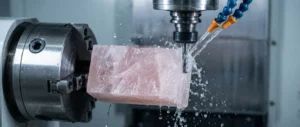
For a business like JADE MAGO, the distinction between stone varieties is not merely academic; it dictates every step of our manufacturing workflow. While a geologist might classify stones based on atomic structure, a lapidary artist or factory manager classifies them based on how they behave against a diamond saw or a grinding wheel. The processing differences between Green Quartz vs Aventurine are significant, and failing to adjust your machinery or technique can result in high wastage rates or subpar finishing.
Hardness and Structural Integrity During Cutting
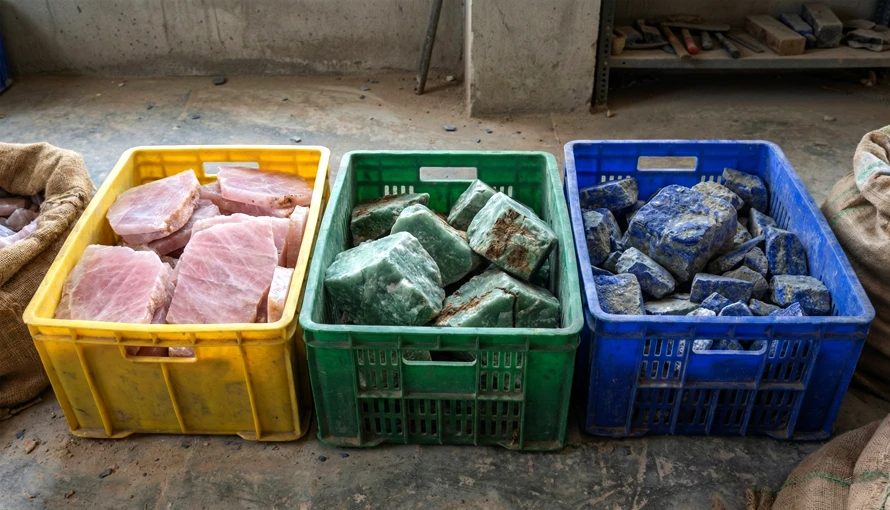
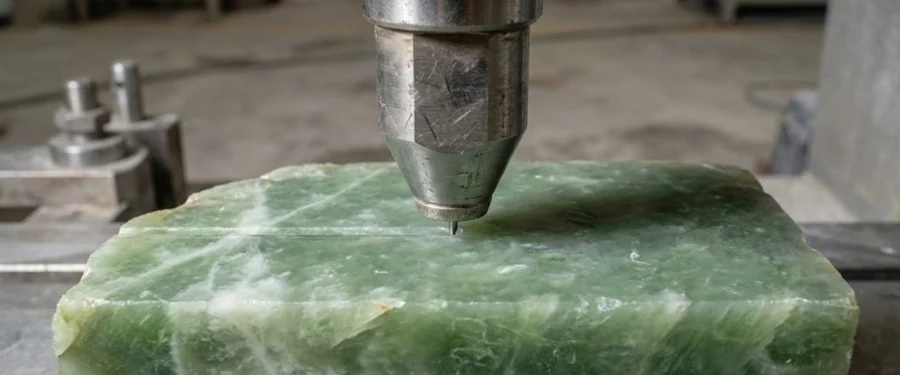
On the Mohs scale of mineral hardness, both quartz and aventurine sit comfortably at a 7. This generally implies that they are durable materials suitable for everyday wear and standard processing. However, the presence of Fuchsite mica in Aventurine introduces a variable that standard Green Quartz does not possess. Mica is significantly softer than quartz, typically ranking between 2 and 3 on the Mohs scale. When we are sawing through a block of Aventurine, especially lower-grade material with heavy inclusions, the stone does not fracture with the same clean, conchoidal break as pure Green Quartz.
Instead, Aventurine can exhibit a degree of crumbling or “pitting” at the microscopic level where the mica flakes are exposed to the surface. When using high-speed CNC carving machines, we often have to adjust the rotation speed and feed rate.
If we run the machines at the high speeds used for pure, homogenous Green Quartz (Prasiolite), the vibration can cause the mica platelets to dislodge, leaving small pits on the surface of the carving.
Pure Green Quartz, being a macro-crystalline material, is more brittle and prone to thermal shock, but it cuts cleanly like glass. Therefore, cooling systems must be rigorously monitored when cutting Green Quartz to prevent heat fractures, whereas Aventurine is slightly more forgiving of heat but less forgiving of abrasive friction.
Polishing Techniques and Surface Finish
The most distinct difference in processing becomes apparent during the final polishing stages. Green Quartz is a delight for most lapidaries because it takes a high, vitreous polish with relative ease. Using standard cerium oxide or high-grit diamond paste will result in a mirror-like finish that reflects light perfectly, much like a polished window pane. The surface is uniform, and there are no soft spots to worry about.
Conversely, polishing Aventurine requires a more nuanced approach known in the trade as “undercutting management.” Because the quartz matrix is hard and the mica inclusions are soft, using a soft polishing wheel can dig out the mica faster than the quartz, creating an uneven “orange peel” texture.
To achieve a high-gloss finish on Aventurine, we utilize harder backing pads and specific diamond compounds that cut the quartz and mica at the same rate.
We often advise our B2B clients that while Green Quartz can achieve a “wet look” finish, Aventurine will always have a slightly more waxy or greasy luster due to its granular nature. Understanding this limitation is crucial for managing client expectations regarding the final gloss level of the product.
Suitability for Faceting versus Cabochons
Due to their optical properties, the optimal cutting styles for these two stones differ vastly. Green Quartz (Prasiolite), with its high transparency and lack of inclusions, is almost exclusively used for faceted gemstones. The goal with Green Quartz is to trap light inside the stone and bounce it back through the table, creating brilliance. A faceted cut on this material highlights its clarity and minty color.
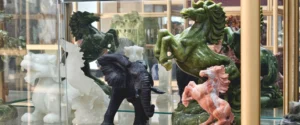
Aventurine, however, is a terrible candidate for faceting. The inclusions block the light path, meaning a faceted Aventurine will look dead, opaque, and uninteresting. Instead, the industry standard is to cut Aventurine en cabochon (smooth, rounded domes) or to use it for beads and carvings. The curved surface of a cabochon enhances the Aventurescence, allowing the light to glide over the stone and catch the glittering mica flakes from different angles. At JADE MAGO, we almost never recommend faceting Aventurine unless it is a very specific, flat-facet design intended to look rustic. Manufacturers must align the cut with the stone’s natural strengths to maximize commercial value.
Commercial Market and Value Perception
Navigating the financial side of the gemstone market requires a keen understanding of supply chains and consumer perception. The value proposition for Green Quartz vs Aventurine changes depending on whether you are selling raw rough, finished jewelry, or architectural elements.
The “Indian Jade” Misnomer and Trade Ethics
One of the most persistent issues in the stone trade is the mislabeling of Aventurine as “Indian Jade.” This trade name originated decades ago because high-quality green Aventurine can bear a striking resemblance to Nephrite Jade or even low-grade Jadeite. For retailers and wholesalers, this can be a legal minefield. The Federal Trade Commission (FTC) in the United States, and similar bodies globally, have strict guidelines against misrepresenting stone species.
Aventurine is generally much more abundant and affordable than true jade. While it is acceptable to use “Indian Jade” as a descriptive marketing term in some loose contexts, it must always be disclosed that the material is actually Aventurine Quartz. Pure Green Quartz (Prasiolite), on the other hand, is rarely confused with jade due to its transparency. It has its own identity crisis, often being confused with Peridot or Green Tourmaline. For a B2B buyer, understanding that “Indian Jade” is simply Aventurine is crucial for price negotiation. You should never pay jade prices for a quartz-based material, no matter how beautiful the green hue might be.
Market Pricing and Availability
In terms of raw material costs, Aventurine is one of the most cost-effective green stones available on the market. Large deposits in India, Brazil, and Russia keep the supply steady and the prices relatively low. This makes it an excellent choice for mass-production jewelry lines, bead manufacturing, and larger ornamental carvings where using expensive Jadeite would be cost-prohibitive.
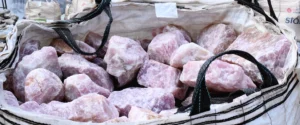
Green Quartz presents a more complex pricing structure. Natural, untreated Prasiolite is rare and commands a higher price per carat. However, the market is flooded with heat-treated amethyst that has been turned green. This treated material is affordable, though typically slightly more expensive per gram than rough Aventurine due to the processing costs involved in heat treatment and the higher rejection rate of the raw amethyst. When sourcing, JADE MAGO always advises clients to ask for “origin guarantees.” If a supplier offers large quantities of “Natural Green Quartz” at rock-bottom prices, it is almost certainly treated amethyst or irradiated quartz. Transparency in the supply chain protects your brand’s reputation.
Consumer Trends and Market Demand
As manufacturers, we do not just process stones; we process emotions and desires. Understanding the end-consumer’s motivation for buying Green Quartz vs Aventurine helps us assist our B2B clients in stocking the right inventory. The target demographics for these two stones are often quite distinct, driven by different aesthetic preferences and cultural beliefs.
The Holistic and Metaphysical Market
Aventurine holds a dominant position in the metaphysical and holistic wellness market. Known widely as the “Stone of Opportunity,” it is believed by many crystal healing enthusiasts to be the luckiest of all crystals, particularly in manifesting prosperity and wealth.
This reputation drives a massive volume of sales for tumbled stones, massage wands, and spiritual carvings. When we produce products for this sector, the specific quality of the “shimmer” or aventurescence is paramount, as it is visually linked to the concept of “energy” by the consumer.
Marketing campaigns for Aventurine often focus on the Heart Chakra, utilizing the stone’s soothing green energy to promote emotional calm. According to broader market analysis and global sourcing trends, the demand for rough, raw, or minimally processed Aventurine remains consistently high because buyers want to feel a connection to the “earthy” nature of the material.
The Fashion and Fine Jewelry Sector
Green Quartz (Prasiolite), conversely, appeals to a more traditional jewelry demographic. Its clarity and sparkle make it a favorite for cocktail rings, earrings, and statement necklaces where the goal is elegance rather than earthiness.
The consumer buying Green Quartz is typically looking for a sophisticated, mint-green gemstone that complements gold or silver settings without the heavy inclusions found in Aventurine. It is often marketed as a unique alternative to more expensive green stones like Tsavorite or Emerald.
In recent years, we have seen a surge in demand for “checkerboard cut” Green Quartz, where the faceting style maximizes the stone’s vitreous luster. For designers, Green Quartz offers a clean, modern look that fits well with contemporary minimalism, whereas Aventurine is often relegated to bohemian, rustic, or beaded jewelry styles.
A Sourcing Checklist for B2B Buyers
At JADE MAGO, we believe that an educated buyer is our best partner. When you are sourcing materials for your next production run, distinguishing between Green Quartz and Aventurine is only the first step. You must also ensure that you are receiving the quality you are paying for. Here is how seasoned professionals navigate the sourcing process without relying on standard checklists.
Verifying Treatments and Origins
The first question you must ask any potential supplier regards the origin and treatment of the stone. If you are buying Green Quartz, you must ask if the material is irradiated or heat-treated. As we discussed, almost all commercial Prasiolite is heat-treated amethyst from Brazil.
A transparent supplier will confirm this immediately. If they claim it is “100% natural untreated” but the price is low, proceed with extreme caution.
For Aventurine, the concern is less about heat treatment and more about dye. Low-grade white quartzite is frequently dyed green to mimic high-quality Aventurine. You can often detect this by looking at the cracks in the stone; if the green color seems to pool in the fissures while the rest of the stone is pale, it is likely a dyed inferior product.
The Importance of Sample Testing
Never commit to a multi-ton order based solely on photographs. Digital images can easily be manipulated to enhance saturation or hide inclusions. We always recommend requesting a physical sample batch.
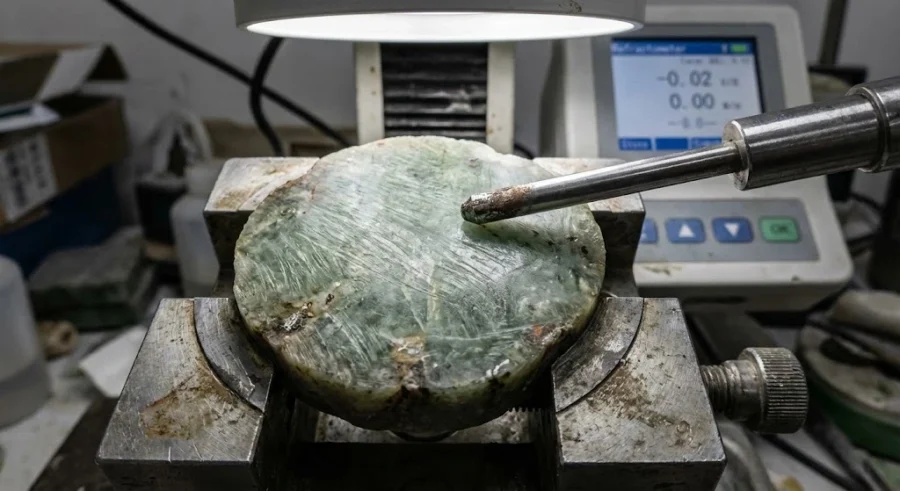
Upon receiving the samples, perform a scratch test and a magnification test. Use a simple 10x jeweler’s loupe to look for the characteristic fuchsite platelets in Aventurine. If the sample is Green Quartz, check for color zoning—bands of different color intensities—which is common in amethyst and often remains visible after heat treatment.
Furthermore, inspect the consistency of the batch. Aventurine is a natural rock, meaning it will have variance in pattern and color depth. A batch of Aventurine that looks perfectly identical in every single bead is suspicious and may indicate man-made glass (Goldstone) or plastic imitations.
Conclusion: Clarifying the Verdict
To summarize the core inquiry of this article: No, Green Quartz is not the same as Aventurine. While they share a chemical lineage as silicon dioxide, they are distant cousins rather than identical twins.
Green Quartz (Prasiolite) is the elegant, transparent introvert of the family. It is defined by its crystal clarity, its glass-like luster, and its suitability for faceted, high-end jewelry. It is a material that demands light to shine through it, revealing a cool, minty hue that speaks of sophistication.
Aventurine is the glittering, opaque extrovert. It is defined by its inclusions, its sparkly aventurescence, and its granular, sugary texture. It is a material that reflects light off its surface, offering a deep, earthy green that speaks of nature and luck. It is the workhorse of the carving and bead industry, beloved for its character rather than its clarity.
For us at JADE MAGO, understanding these distinctions ensures that we apply the correct cutting techniques, choose the appropriate polishing compounds, and ultimately deliver a product that meets the specific needs of our clients. Whether you are looking to manufacture high-gloss faceted pendants or matte-finish spiritual totems, choosing the right material is the foundation of your success. We hope this guide has illuminated the path for your future gemstone endeavors.
Frequently Asked Questions
Is “Indian Jade” real Jade?
No, “Indian Jade” is a misleading trade name for Green Aventurine. While high-quality Aventurine can resemble Nephrite Jade, it is chemically a quartz variety and has a significantly lower market value than genuine Jadeite or Nephrite. B2B buyers should always clarify the mineral species to avoid overpaying.
Is most Green Quartz on the market natural?
While natural Green Quartz (Prasiolite) exists, it is rare. The vast majority of Green Quartz available in the commercial market is actually heat-treated Amethyst or irradiated quartz, typically sourced from Brazil. Always ask your supplier for treatment disclosures. If the stone is affordable, inclusion-free, and deeply green, it is likely treated.
Which stone is harder to process, Green Quartz or Aventurine?
Both have a Mohs hardness of 7, but they behave differently. Green Quartz is more brittle and prone to thermal shock (cracking from heat), requiring excellent cooling systems during cutting. Aventurine is softer in spots due to mica inclusions and can crumble or pit during high-speed CNC carving, requiring adjusted feed rates and rotation speeds.
-900x375.webp)