
Every year, tens of thousands of buyers attempt to source custom crystals from Chinese suppliers—and industry data consistently shows that defect-related losses absorb between 8% and 15% of total order value when the procurement process lacks structure. If you are planning to import custom crystals from China, the decisions you make before a single unit enters production will determine whether your shipment arrives as specified, or becomes an expensive lesson in due diligence. The margin between a successful import order and a costly failure is not luck—it is process.
This guide is built on a four-phase, 11-checkpoint framework developed by JADEMAGO, a crystal manufacturer with over 65 years of active production experience spanning raw material processing, design, manufacturing, and direct international sales. Whether you are placing your first wholesale order or scaling an existing import operation, what follows is the most actionable framework currently available for sourcing custom crystals from a crystal factory in China.
Before going further, it helps to identify the three decisions that carry the highest financial weight in this entire process. Supplier selection is the first: choosing the wrong crystal factory is the fastest route to quality failures and supply instability. Contract structure is the second: buyers who omit defect thresholds and delay penalties from their purchase agreements surrender their legal recourse before production begins. Production monitoring is the third: the industry’s most persistent problem—”good sample, bad bulk order”—is preventable, but only if you intervene during manufacturing. JADEMAGO has built its entire client onboarding process around addressing these three failure points systematically.
Table of Contents
1 – Procurement & Supplier Selection: The Stage Where Most Losses Begin

When you decide to import custom crystals from China, the procurement phase concentrates the highest density of risk in the entire supply chain. This is not because the process is inherently difficult—it is because most buyers treat supplier selection as a price negotiation rather than a capability assessment. That single misunderstanding is responsible for the majority of failed custom crystals import orders documented across the industry.
JADEMAGO’s sourcing framework breaks Phase 1 into four executable steps. Each step feeds directly into the next, and skipping any one of them creates a gap that compounds into larger problems downstream.
1: Define Your Product Specifications Before Contacting Any Supplier
The first action you should take has nothing to do with finding suppliers. Before you contact a single crystal factory, document your product requirements in precise, written form. This means defining material type, dimensional tolerances (length, width, height), surface finish standard, transparency grade, color specification, and intended application—whether the custom crystals will be used as gift items, decorative objects, promotional merchandise, or retail display pieces.
Vague specifications produce vague quotes, and vague quotes produce contracts full of exploitable gaps. According to the International Gem Society (IGS), clarity grading and dimensional tolerances are among the most frequently disputed variables in gemstone and crystal procurement relationships. When your specifications are locked in writing before any supplier conversation begins, you establish an objective standard against which you can hold your crystal manufacturer accountable throughout the entire production cycle. This means you can reduce pre-production revision cycles by up to 30%, directly compressing your time-to-market.
A useful rule: if your product brief cannot be handed to a stranger and used to produce an accurate prototype without a single clarifying question, it is not specific enough. Tighten it before you proceed.
2: How to Identify and Vet a Crystal Factory With the Right Capabilities
The search for a reliable crystal manufacturer runs through three primary channels: manufacturer websites, large B2B wholesale platforms, and industry trade shows. Each channel has a different signal-to-noise ratio that you need to account for. Trade shows—particularly China’s Canton Fair—allow you to evaluate a crystal factory’s physical output in person, which no digital platform can replicate. Online platforms offer volume and accessibility, but require significantly more due diligence to separate manufacturers from trading companies that present themselves as factories.
When evaluating candidates, apply three screening criteria in sequence. First, does the crystal factory have documented production experience with products comparable to yours in material, scale, and complexity? Second, does the crystal manufacturer explicitly support OEM or fully custom production, or do they only offer catalog items with minor modifications? Third—and this is the variable most buyers overlook—does the supplier have active export experience into your specific country or region? Customs classification rules, import restrictions, labeling requirements, and certification standards vary significantly by destination market, and a crystal factory that has never shipped to your country is an operational liability, regardless of how impressive their facility looks on video.
Once you have a shortlist of two to four candidates, verification must go beyond a company profile or platform rating. Request a live video tour of the facility, focusing on production-floor equipment, quality inspection stations, and finished goods storage. Ask for documentation of past orders with specifications comparable to yours. Commission a sample against your product brief before committing to any volume. These three actions—video verification, reference order review, and physical sample testing—form the only reliable approval foundation for a custom crystals sourcing relationship.
The core principle here is capability matching, not price minimization. A crystal manufacturer that quotes 20% below market but has no documented experience with your product type will cost you far more in reorders, rework, and rejected shipments than a mid-range supplier with ten verifiable reference customers. Capability fit is the variable that predicts outcome; price is just the variable that predicts the quote. This means prioritizing supplier capability over unit price is not a compromise on cost efficiency—it is the mechanism that produces the lowest actual landed cost per unit.
3: Quoting and Cost Modeling — Build Your Margin Before You Negotiate
When supplier quotes come in, do not evaluate them in isolation. Build a margin model first. Start with your target resale or retail price, then work backward: subtract your required gross margin, estimated logistics costs, import duties applicable to your destination country, and quality control expenses. The remaining figure is your maximum viable factory price for your custom crystals.
This reverse-calculation discipline forces specification decisions to stay within a financially sustainable range. If the quoted price compresses your margin below viability, you have several adjustment levers available: reduce the dimensional complexity of the custom crystals design, shift to a material grade that performs equivalently at lower cost, or consolidate your SKU count to increase per-order volume—which typically unlocks unit price reductions of 8% to 15% from most crystal manufacturer partners once minimum order quantities are exceeded. This means your pricing negotiation is not a conversation about discounts—it is a structured adjustment of product parameters to reach a quality-price balance point that keeps your margin intact.
One additional note: never finalize pricing without understanding the MOQ structure. A crystal factory that offers a low per-unit price at 5,000 units but cannot produce fewer than 1,000 at the same quality level is presenting you with a falsely attractive number if your initial order is 200 units. Align the price discussion with your actual volume before committing.
4: Contract Terms — Write the Risk In Before a Single Dollar Transfers
This is the step that separates experienced importers from buyers who learn their lessons the hard way. Every purchase agreement for custom crystals must contain, at minimum, the following documented provisions: material type with allowable substitution restrictions, dimensional specifications with acceptable tolerance ranges, a written defect definition standard, packaging specifications including carton dimensions and internal cushioning requirements, a minimum acceptable pass rate for finished goods, a delivery timeline, and—critically—a penalty mechanism for late delivery and a defined compensation framework for quality failures that fall below contracted thresholds.
According to GIA (Gemological Institute of America), material misrepresentation and undocumented specification drift are among the most common sources of commercial disputes in the gemstone and crystal supply chain globally. A contract that lacks explicit defect thresholds gives you no enforceable position when bulk goods arrive below the quality standard of your approved sample. Do not treat contract drafting as a formality or a sign of distrust toward your crystal manufacturer—treat it as the primary financial protection mechanism that exists for your benefit. It costs nothing to include, and it is worth everything when something goes wrong. This means a well-constructed purchase agreement is not bureaucracy—it is the structural difference between a recoverable problem and an unrecoverable loss.
2 – Production Monitoring: How to Prevent the “Good Sample, Bad Bulk Order” Problem
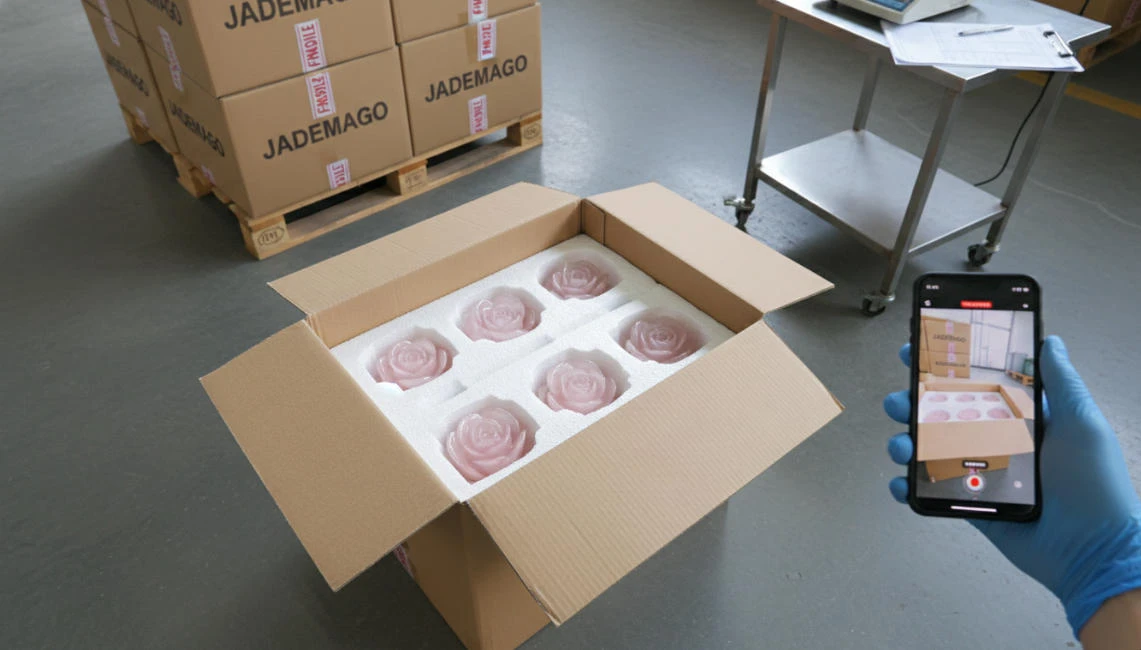
The single most damaging pattern in cross-border custom crystals procurement has a name that every experienced importer recognizes immediately: good sample, bad bulk order. A supplier submits an approved sample that meets every specification on your brief. Production begins. Six weeks later, a container arrives at your warehouse containing goods that are measurably inferior to that sample—surface finishes inconsistent, dimensional tolerances exceeded, packaging inadequate for the fragility of the product. The sample was not a lie, exactly. It was produced under conditions that were never maintained at scale.
Understanding why this happens is the first step toward preventing it. Most crystal factory operations maintain a dedicated sample production workflow that involves their most skilled technicians, tightest quality controls, and freshest materials. Volume production, by contrast, runs under commercial pressure—output targets, labor rotations, material substitution decisions made at the floor level without buyer visibility. The gap between these two environments is where your margin disappears. According to industry quality benchmarks referenced by the International Gem Society, synthetic and processed crystal products sourced in bulk without active production oversight carry a statistically higher rate of specification deviation than those subject to in-process inspection checkpoints. This means that production monitoring is not optional for buyers who want to protect their investment—it is the mechanism that closes the gap between sample quality and bulk reality.
The good news is that you do not need to be physically present in the crystal factory to exercise meaningful oversight. What you need is a systematic remote monitoring protocol with defined checkpoints and documented evidence at each stage.
Production-Stage Remote Monitoring: Request Video and Photo Evidence at Every Key Checkpoint
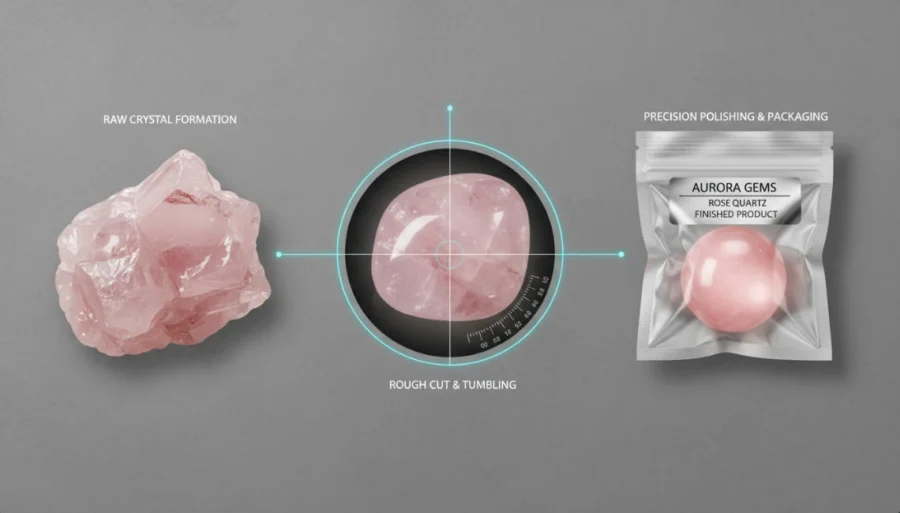
The first line of defense against bulk quality drift is establishing a scheduled visual reporting cadence with your crystal manufacturer. Before production begins, agree in writing on the specific production milestones at which your supplier must send photo or video documentation. These milestones should include at minimum: raw material receipt and inspection confirmation, initial forming or cutting stage output, surface finishing and polishing stage output, and pre-packaging finished goods inspection.
Each checkpoint serves a distinct diagnostic function. Raw material documentation allows you to confirm that the input material matches the contracted specification—a critical protection against unauthorized material substitution, which is one of the most frequently cited sourcing complaints across the custom crystals import category. Mid-production visuals allow you to identify dimensional or finish deviations while they are still correctable, rather than discovering them after the full batch has been completed and packaged. This means building a checkpoint schedule into your production agreement gives you intervention rights at every stage where correction is still cost-effective.
Do not accept documentation that is undated, staged in a showroom, or inconsistent with the production timeline. Request that video walkthroughs include a visible timestamp and show the production floor in active operation. A credible crystal factory will accommodate these requests without friction. A supplier that resists transparent documentation at agreed checkpoints is providing you with the most important data point of the entire engagement.
Packaging Inspection: Verifying That Your Custom Crystals Order Is Packed to Specification
Packaging is where a significant percentage of transit damage originates, and it is the stage most frequently overlooked by buyers who focus their quality attention on the product itself. Custom crystals are fragile by nature. A unit that passes every production-stage inspection can still arrive at its destination cracked, chipped, or surface-damaged if the inner cushioning, carton strength, or stacking configuration fails to meet the physical demands of an international shipment.
Your packaging specification—documented in the purchase agreement from Phase 1—must be verified at the point of packing, not assumed. Request video or photo evidence showing the interior packaging configuration for a representative sample of cartons: inner wrap material type, cushioning thickness on all six contact faces, carton seal integrity, and outer carton labeling compliance. Cross-reference this documentation against your contracted packaging standard before authorizing shipment. If deviation is found at this stage, correction is still logistically and financially feasible. If deviation is discovered at the destination warehouse after a container has been unloaded, your options become significantly more limited and expensive. This means packaging verification at origin is not a redundant step—it is the last point in the supply chain where you can enforce your standard at zero additional freight cost.
Quality Control Standards: What Defect Rates Are Acceptable for Custom Crystals Imports?
Quality control in the custom crystals manufacturing category operates within an industry-recognized defect tolerance framework that every buyer should understand before setting contractual expectations.
Quality control thresholds for processed crystal and decorative glass products are not universally standardized across all markets—they are typically negotiated against a recognized sampling framework and documented in the purchase agreement. The most widely adopted reference standard in international manufactured goods procurement is ISO 2859-1, the acceptance sampling procedure for inspection by attributes, published by the International Organization for Standardization. Under ISO 2859-1’s AQL (Acceptable Quality Level) framework, consumer decorative products are most commonly inspected at AQL 1.0 to AQL 2.5, which translates to an accepted defect probability of 1.0% to 2.5% at standard inspection levels depending on batch size and risk classification. For custom crystals products, JADEMAGO’s production quality standard targets a finished goods defect rate of 0.5% to 1.0%—a threshold that positions comfortably within AQL 1.0 at standard inspection level II for most commercial order volumes. Buyers operating in regulated markets such as the EU or North America should additionally verify whether their specific product category carries mandatory conformity requirements under applicable consumer product safety regulations, as these may impose defect standards that supersede the contractual AQL threshold.
It is equally important to note that defect rate performance is not static across a supplier relationship. A crystal factory that delivers 0.6% defect rates on the first three orders can experience process drift—particularly following equipment maintenance cycles, raw material supplier changes, or production floor staffing rotations—that pushes subsequent batches toward the upper boundary of the contracted threshold. This is precisely why the order retrospective framework in Phase 4 of this guide exists: batch-over-batch defect rate tracking is the only reliable early warning system for production quality drift at a crystal manufacturer.
Beyond the percentage threshold, two specific quality validation tests should be treated as non-negotiable requirements in your inspection protocol. The first is dimensional conformity sampling, in which a statistically representative sample of finished units—typically 10% to 15% of total batch volume—is measured against your specification tolerances using calibrated instruments. The GIA’s technical standards for crystal and gemstone material evaluation provide a useful reference framework for surface quality and inclusion criteria that can be adapted for commercial crystal product inspection. The second is the drop test, more formally referred to as the 1-meter carton drop test, which simulates the impact conditions most commonly encountered during freight handling. This test requires a sealed, fully packed carton to be dropped from a height of one meter onto a hard surface on each of its six faces. Any carton configuration that results in product damage under these conditions represents a packaging failure that must be corrected before shipment authorization.
You have three practical pathways for executing quality control: internal inspection by the crystal manufacturer’s own quality department, buyer-conducted inspection via a representative on the ground in China, or third-party inspection commissioned through an independent QC agency. Each pathway carries different cost and reliability characteristics. Supplier self-inspection is the lowest cost option but carries the highest potential for conflict-of-interest bias—internal QC standards in a production environment are subject to commercial pressure in ways that independent inspection is not. Third-party inspection, while adding a line item to your landed cost, provides documented, defensible evidence that is invaluable in any post-shipment dispute resolution process. For first-time orders with a new crystal factory, third-party inspection is the approach that most consistently protects buyer interests.
Third-party inspection costs are determined by three primary variables: the inspection agency selected, the physical location of the crystal factory relative to the agency’s nearest branch, and the inspection scope (product count, test types, and documentation requirements). The three largest globally operating inspection agencies—SGS, Bureau Veritas, and Intertek—all maintain published service frameworks for pre-shipment inspection of consumer goods in China, with standard pre-shipment inspection (PSI) engagements for decorative and gift-category products typically priced in the range of $200 to $500 USD per inspection day for factory locations within major manufacturing clusters in Guangdong, Zhejiang, and Fujian provinces. Inspections requiring travel to more remote factory locations or extended test scope (including mechanical drop testing and dimensional sampling across large batch volumes) carry additional cost. Buyers are advised to request a formal quote from at least two agencies before placing an inspection order, as pricing structures differ materially between providers and can be negotiated for repeat engagements. The cost-benefit comparison remains consistent regardless of the exact figure: a single pre-shipment inspection, even at the upper end of the market rate range, represents a fraction of the replacement and reshipping cost of a bulk custom crystal order that fails post-delivery inspection.
3 – Logistics & Customs Clearance: Shipping Your Custom Crystals Order from China to Your Door

Getting your custom crystals through production and quality inspection is a significant achievement—but the shipment is not complete until it clears customs at your destination port and arrives at your warehouse in the condition it left the crystal factory. Logistics is the phase where buyers who have done everything correctly up to this point can still absorb serious losses through poor transport selection, documentation errors, or customs compliance failures. Understanding the structure of this phase before you place your order—not after the goods are already moving—is the difference between a smooth delivery and a shipment held at port.
JADEMAGO’s logistics framework for custom crystal export orders is built around three sequential decisions: transport mode selection, documentation compliance, and clearance pathway management. Each decision directly affects your landed cost, your delivery timeline, and your legal standing at the point of import.
Air Freight vs. Sea Freight: Which Transport Mode Is Right for Your Custom Crystals Import?
The transport mode decision is fundamentally a function of three variables: your shipment volume, your delivery deadline, and your product’s value-to-weight ratio. Both air freight and sea freight are viable options for importing custom crystals from China, but they serve different order profiles, and treating them as interchangeable will predictably produce either unnecessary cost overruns or unacceptable delivery delays.
Air freight offers transit times typically ranging from 3 to 7 business days from major Chinese export hubs to most international destinations. It provides superior handling conditions—lower humidity exposure, reduced vibration, and less stacking pressure than ocean container environments—which translates directly into lower in-transit damage rates for fragile custom crystals products. The cost premium is significant:
Under standard market conditions, air freight rates from China to major North American and European destinations have historically run 3 to 8 times higher per kilogram than equivalent LCL sea freight rates, with the ratio widening significantly during peak shipping seasons (typically October through January) and compressing during low-demand periods. Freightos market data for the China–North America transpacific lane shows air cargo rates ranging from $3.50 to $8.00 USD per kilogram and LCL sea freight rates ranging from $0.80 to $2.50 USD per kilogram under normal market conditions—a ratio that has historically been volatile and was significantly distorted during the 2021–2023 global logistics disruption period. For current rate benchmarking, consult a licensed freight forwarder with active China export lane experience before finalizing your logistics cost model.
For small, high-value orders where the cost of a single damaged shipment exceeds the freight premium, air is the economically rational choice. This means air freight is not a luxury option for custom crystals buyers—it is a risk management tool whose cost should be weighed against your product’s per-unit replacement cost and the commercial consequence of a delayed delivery.
Sea freight operates on a fundamentally different economic model. Full Container Load (FCL) and Less than Container Load (LCL) shipments from Chinese ports to most major global destinations carry transit times of 18 to 40 days depending on routing and destination port. The per-unit freight cost is substantially lower, making sea freight the rational choice for large-volume custom crystals orders where delivery timelines allow for the longer transit window. The trade-off is handling exposure: ocean containers experience significantly more physical stress over a longer period than air shipments, which is precisely why your packaging specification and drop-test validation from Phase 2 are not administrative formalities—they are the structural protection that determines whether your product survives a sea freight journey intact.
A practical decision framework: if your shipment weighs less than 200 kilograms, your delivery window is under 14 days, or your per-unit product value exceeds $15 USD, air freight will typically produce a lower total landed cost when damage rates and delay costs are factored in. For shipments exceeding 500 kilograms with delivery windows of 30 days or more, sea freight is almost always the economically superior option.
Freight rate data is inherently dynamic. The figures referenced in this section reflect general market conditions for standard commercial shipments from major Chinese export hubs—primarily Shenzhen, Shanghai, and Guangzhou—to North American and European destination ports, based on published rate benchmarks from Freightos, the largest independent freight rate transparency platform, and cross-referenced against IATA’s Air Cargo Market Analysis for air freight benchmarks. Actual rates for your specific custom crystals shipment will vary based on origin port, destination port, shipment dimensions and weight, commodity classification, seasonal demand cycles, and current carrier capacity. The figures below should be used as a directional planning framework, not as a fixed cost model, and should be verified against current market quotes at the time of your order.
Import Customs Clearance: Documents, HS Codes, and What You Must Prepare Before Shipment
Customs clearance is the procedural bottleneck that catches the largest number of first-time custom crystals importers off guard. Export clearance from China is typically managed by your crystal manufacturer or their designated freight forwarder—JADEMAGO, for instance, handles all China-side export documentation as a standard component of its international order process. Import clearance at your destination, however, is your responsibility, and the consequences of documentation errors range from shipment delays measured in weeks to goods seizure and financial penalties.
Three documents are mandatory for every custom crystals import shipment from China, regardless of destination country. The Bill of Lading (for sea freight) or Air Waybill (for air freight) serves as the primary title document for your goods and must be issued in the name of the correct legal consignee. The Commercial Invoice must accurately state the product description, unit quantity, declared value, country of origin, and HS tariff classification code—discrepancies between the invoice and the physical shipment are one of the most common triggers for customs holds. The Packing List must detail the contents, dimensions, and gross and net weights of each individual carton in the shipment.
Beyond the core document set, two compliance requirements demand specific attention. First, all shipping labels and carton markings for goods manufactured in China must include the declaration “Made in China”—this is not optional, and omission constitutes a labeling violation under the import regulations of most major markets including the United States, the European Union, and the United Kingdom. Second, your HS tariff code classification must be verified before shipment, not assumed. Custom crystals may fall under different HS classifications depending on material composition, intended end use, and surface treatment—misclassification results in incorrect duty assessment, which customs authorities in most jurisdictions treat as a compliance failure subject to retroactive penalty.
The World Customs Organization’s HS nomenclature database provides the authoritative classification framework. Engaging a licensed customs broker to conduct a pre-shipment classification review is a cost that typically pays for itself on the first order. Expect to invest between $150 and $350 USD for a professional pre-clearance review—a figure that compares favorably against the cost of a customs hold, which can add $500 to $2,000 USD in demurrage and storage fees per week of delay.
DDP Logistics: The Full-Service Option for Buyers Who Want to Eliminate Clearance Complexity
For buyers who prefer to remove customs clearance entirely from their operational responsibility, a Delivered Duty Paid (DDP) logistics arrangement transfers all import clearance obligations to the logistics provider. Under a DDP agreement, your crystal manufacturer or their freight partner manages export documentation from the crystal factory, international transit, import customs filing, duty payment, and final delivery to your specified address. Your only operational requirement is to be ready to receive the goods.
The trade-off is cost: DDP arrangements typically carry a freight premium of 15% to 30% above standard shipment pricing, reflecting the administrative and financial risk assumed by the logistics provider. For buyers placing their first custom crystals import order, or for those operating in markets with complex import regulatory environments, that premium frequently represents the most cost-effective path when the full cost of a clearance error is factored in. JADEMAGO maintains DDP logistics channel access for select destination markets—if this option is relevant to your order, it should be confirmed during the contract stage of Phase 1, not at the point of shipment readiness. This means DDP is not a fallback option—it is a procurement decision that needs to be structured before production begins.
4 – After-Sales & Order Optimization: What Happens After Your Custom Crystals Arrive
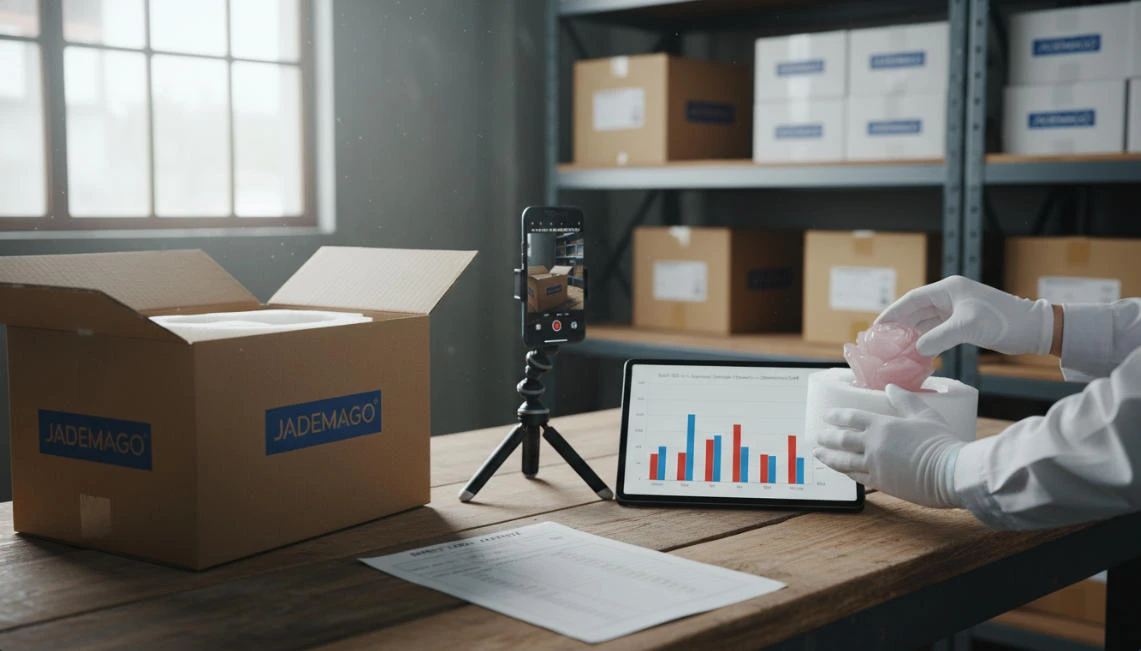
Receiving your shipment is not the end of the procurement process—it is the beginning of the evidence collection window that determines your post-delivery rights and your ability to improve the next order. Buyers who treat the arrival of goods as the conclusion of the transaction routinely forfeit both their claim rights and the operational intelligence that would have made their subsequent orders more profitable. The after-sales phase of a custom crystals import order has two distinct functions: protecting your financial position on the current order, and building the data foundation that drives margin improvement on every order that follows.
JADEMAGO structures its after-sales support around the same principle that governs the entire four-phase framework: documentation precedes action. Every step in this phase produces a record—either a record of compliance that closes the transaction cleanly, or a record of deviation that initiates a formal resolution process. Neither outcome is possible without the evidence to support it.
Receiving Inspection: How to Document and Claim Damages on Arrival
The first action upon receiving any custom crystal shipment is not unpacking—it is recording. Before opening a single carton, begin a continuous video documentation of the unboxing process. This is not a procedural formality; it is the primary evidence instrument available to you if goods arrive damaged or fail to meet contracted specifications. A timestamped, unedited unboxing video showing the external condition of cartons, the internal packaging configuration, and the first visual inspection of product units is the single most effective tool for initiating a supplier warranty claim. Without it, your position in any dispute defaults to your word against the supplier’s, which is not a position that resolves quickly or inexpensively.
Following the unboxing video, conduct a randomized physical inspection of at minimum 10% of total unit count across multiple cartons drawn from different positions within the shipment. Cross-reference each inspected unit against your contracted specification: dimensional tolerances, surface finish standard, color consistency, and structural integrity. Record all deviations in a structured defect log that captures unit count, defect type, defect severity, and photographic evidence for each non-conforming item. According to quality assurance protocols referenced by the Swiss Gemmological Institute SSEF, systematic random sampling with documented chain of evidence is the accepted standard for commercial crystal and gemstone product dispute resolution. This means your inspection record is not internal paperwork—it is a legally functional document if your claim escalates beyond an informal resolution.
If your inspection reveals a defect rate that exceeds the threshold specified in your purchase agreement, contact your crystal manufacturer immediately with the complete documentation package: unboxing video, defect log, and photographic evidence. Do not dispose of non-conforming units before the claim is resolved—physical retention of defective goods is typically a prerequisite for warranty replacement or financial compensation. Response timelines and resolution mechanisms should already be defined in your Phase 1 contract, which is precisely why that document exists. This means every clause you negotiated into your purchase agreement in Phase 1 now has a direct monetary value attached to it.
Order Review & Optimization: The Two Metrics That Improve Every Subsequent Import
Once your shipment has been received, inspected, and any claims have been initiated, the final step in the custom crystal procurement cycle is a structured order retrospective. This step is marked as optional in many sourcing guides—JADEMAGO’s experience across 65 years of crystal factory operations suggests it should be treated as mandatory for any buyer intending to place repeat orders.
The retrospective focuses on two quantitative metrics. The first is actual damage rate versus contracted threshold: comparing the documented defect count from your receiving inspection against the acceptable defect rate specified in your purchase agreement. A result that consistently falls within the contracted range confirms supplier reliability and supports the case for increasing order volume. A result that consistently approaches or exceeds the threshold—even if individual shipments technically remain within tolerance—signals a production quality trend that should be addressed with your crystal manufacturer before the next order is placed, not during it.
The second metric is batch consistency against approved sample: a systematic comparison of the bulk goods received against the physical and documented characteristics of your pre-production approved sample. Dimensional drift, color shift, or surface finish variation that falls within individual unit tolerance but shows a directional pattern across the batch indicates a process control issue at the crystal factory that will worsen over time if not corrected. Identifying this pattern after one order allows you to address it contractually before the second. Identifying it after five orders means you have absorbed five shipments worth of compounding margin erosion. This means the 30 to 60 minutes required to complete a structured order retrospective is the highest-ROI activity available to a custom crystal importer between shipments—it directly determines the profitability trajectory of your entire sourcing relationship.
Why Source Custom Crystals from JADEMAGO: What 65 Years of Crystal Manufacturing Actually Delivers
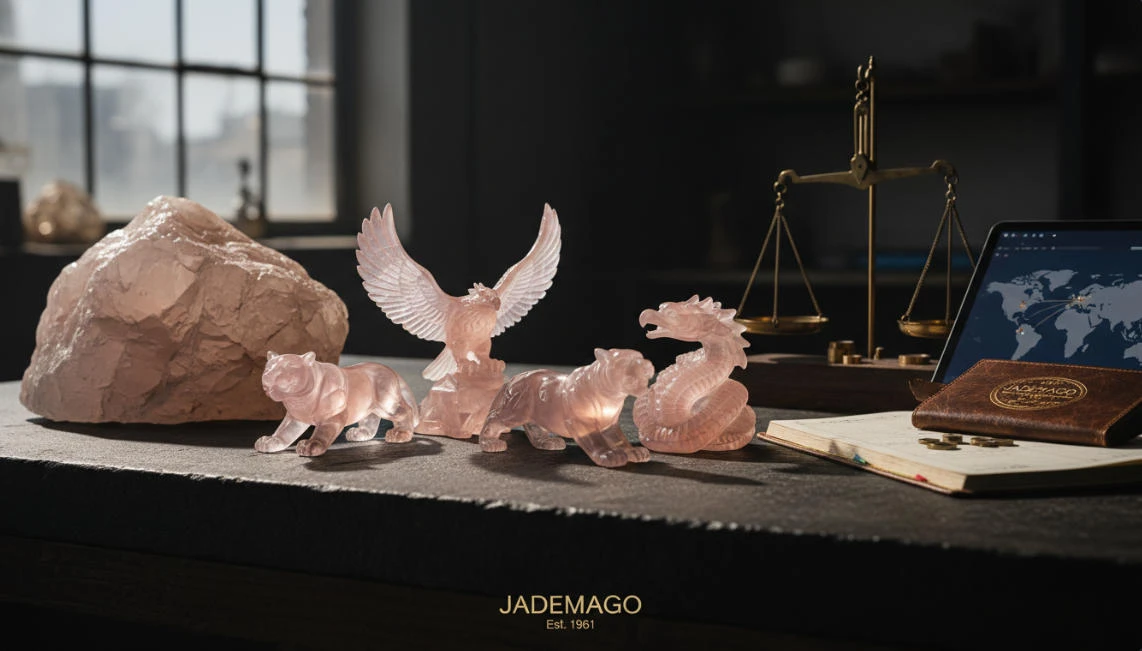
There is a meaningful difference between a supplier who claims manufacturing capability and one who has spent six decades refining it under commercial pressure. JADEMAGO was established as a crystal manufacturer with a direct focus on raw material processing, precision cutting, surface treatment, design development, and international export—not as a trading company that sources finished goods and repackages them as proprietary product. That distinction matters to you because it determines where quality control actually lives in the supply chain.
When you source custom crystals through a trading intermediary, your quality standard is enforced at the point of purchase, after production has already concluded. When you work directly with a crystal factory that owns its production process, your quality standard can be enforced at every stage of manufacturing—raw material input, forming, finishing, packaging, and pre-shipment inspection. The four-phase framework documented in this guide is not a theoretical model. It reflects the actual production and export workflow that JADEMAGO applies to every international custom crystal order, built from 65 years of identifying exactly where buyer losses originate and engineering process controls to prevent them.
What You Can Expect When You Work With a Source-Level Crystal Manufacturer
Your ability to define product specifications with precision, enforce them contractually, monitor production remotely, and receive documented quality evidence at every checkpoint is a function of working with a crystal factory that has the operational infrastructure to support that level of transparency. JADEMAGO maintains dedicated quality inspection stations, export compliance documentation capability, and DDP logistics channel access for international buyers across North America, Europe, and Southeast Asia.
The Gemological Institute of America identifies material traceability and documented production provenance as increasingly significant factors in commercial crystal product valuation—a standard that source-level manufacturers are structurally better positioned to meet than multi-tier supply chains. This means working directly with a crystal factory like JADEMAGO is not simply a cost efficiency decision—it is a supply chain integrity decision that affects your product’s defensibility in regulated markets and your customers’ confidence in what they are buying.
Buyers who have applied the four-phase framework outlined in this guide—from specification definition through order retrospective—consistently report two measurable outcomes: a reduction in per-unit defect-related loss of between 10% and 18% compared to unstructured sourcing approaches, and a compression of order-to-delivery cycle time of 15% to 25% after the first successfully completed import cycle establishes a verified supplier relationship. Neither outcome is guaranteed by any single supplier. Both outcomes are consistently produced by buyers who treat procurement process discipline as a non-negotiable component of their import strategy.
Start Your Custom Crystal Import With a Verified Sample and a Clear Specification
If you are evaluating JADEMAGO as a potential crystal manufacturer partner, the recommended starting point is a sample order against your written product specification. A sample engagement allows you to validate material quality, dimensional accuracy, surface finish standard, and packaging integrity before committing to volume production—exactly as the Phase 1 framework recommends for any new supplier relationship.
Do not begin your first custom crystal import order with a volume commitment. Begin with a specification document, a sample request, and the four-phase framework in this guide as your operational checklist. The suppliers worth working with will accommodate that process without hesitation. The ones who resist it are providing you with the most important data point of the entire evaluation.
If you are ready to request a sample, discuss a specific custom crystal design, or ask a sourcing question that this guide has not addressed, contact JADEMAGO directly. A response from a production-qualified team member—not a sales script—is what you should expect from a crystal factory with the depth of manufacturing experience to back its commitments.
FAQs: Importing Custom Crystals from China
1. What is theMOQ for custom crystals from a Chinese crystal factory?
MOQ varies significantly between suppliers and product types. Most crystal manufacturers in China set MOQs between 50 and 500 units for standard custom designs, while more complex geometries or specialized surface treatments may require higher minimums to justify tooling and setup costs. JADEMAGO works with international buyers to align MOQ requirements with realistic first-order volumes—request a product-specific MOQ confirmation during the sample stage rather than assuming a platform-listed figure applies to your design.
2. How long does it take to produce and ship a custom crystal order from China?
A typical custom crystal order involves three time components: sample production and approval (7 to 14 days), bulk production (15 to 30 days depending on order volume and complexity), and shipping (3 to 7 days by air freight, or 18 to 40 days by sea freight depending on destination). From order confirmation to delivery, buyers should plan for a total lead time of 35 to 75 days for a first-time order. Established supplier relationships with pre-approved specifications can compress this window by 20% to 30% on repeat orders.
3. What documents do I need to import custom crystals from China into the US or EU?
At minimum, you will need a Commercial Invoice, a Packing List, and a Bill of Lading or Air Waybill. US importers must additionally ensure correct HTS tariff code classification and CBP entry filing compliance. EU importers are subject to CE marking requirements where applicable, and must verify that country-of-origin labeling meets EU customs declaration standards. Engaging a licensed customs broker for your first shipment is strongly recommended—misclassification or documentation errors are among the most common and costly causes of customs holds for first-time crystal importers.