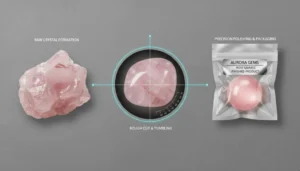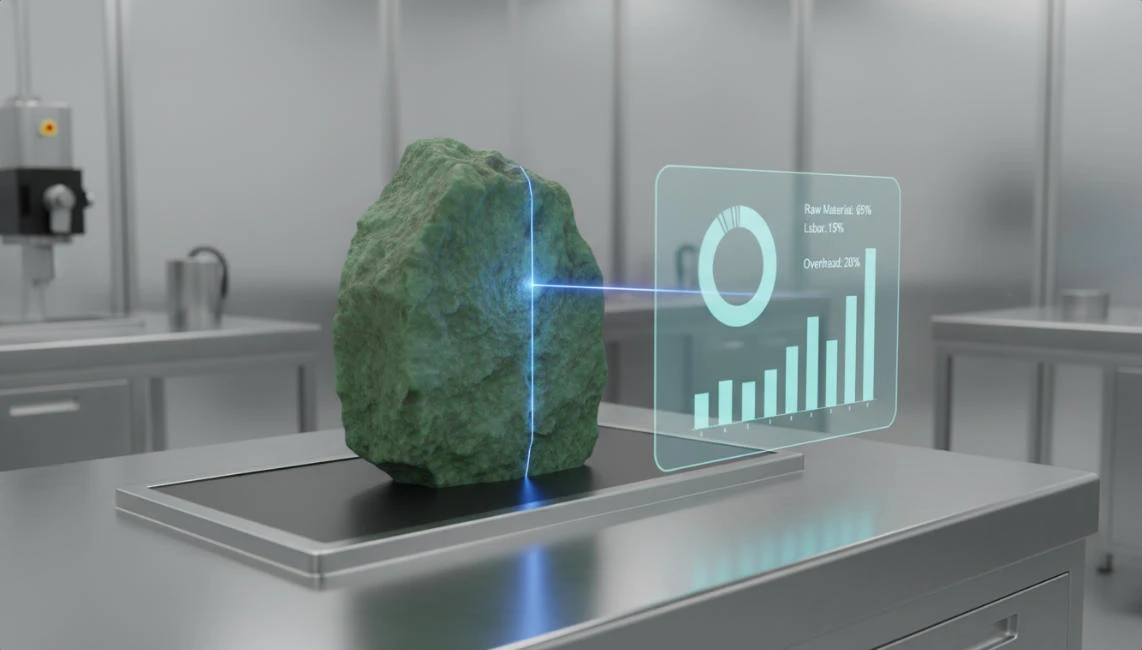

Before you approve a single purchase order, you need to understand one uncomfortable truth about jade processing: there is no such thing as a standard price. Based on JADEMAGO’s 2024–2025 production data compiled across thousands of SKUs, raw materials alone account for 50% to 70% of total manufacturing cost — and that single variable can shift your landed cost by a factor of five or more before any carving tool touches the stone. If your current supplier has never shown you a cost breakdown, you are not negotiating a price. You are accepting one.
This article delivers a transparent, data-backed analysis of howjade processing costs are structured, where the volatility lives, and what you — as a B2B buyer, brand owner, or wholesale sourcing manager — can do to evaluate supplier quotes with precision. The figures cited here are drawn from JADEMAGO’s internal production records and aggregated data from select industry peers operating in the same jade processing factory environment.
Table of Contents
Why Jade Processing Costs Vary So Dramatically — And What That Means for Your Sourcing Budget
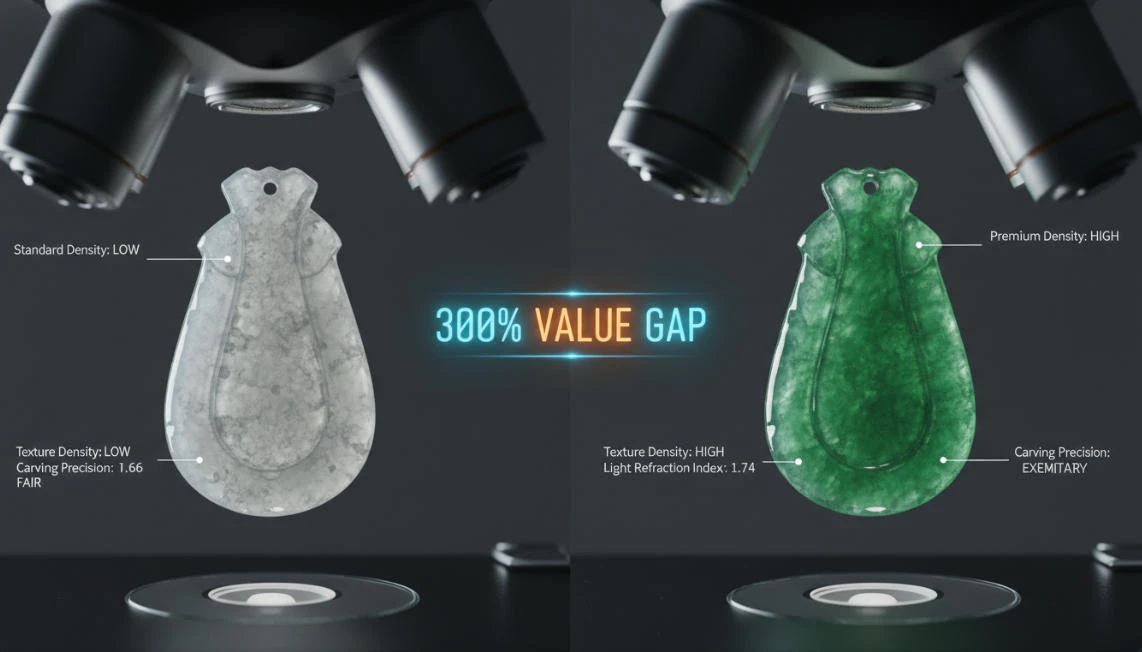
Most buyers assume that jade processing follows a predictable pricing ladder: better material equals higher price, more complex carving equals higher labor. While that logic is directionally correct, it dramatically understates how non-linear those relationships actually are. Two products made from the same type of jade, carved into the same shape, can carry price tags that differ by 300% or more — and both quotes can be entirely legitimate.
The core reason is structural. Jade manufacturing cost is not a single number. It is the sum of four distinct cost components, each with its own volatility profile and its own set of drivers. Until you understand how those four components interact, supplier quotes will always feel opaque. Once you do, patterns emerge that make negotiation — and quality verification — far more reliable.
The 4-Factor Cost Model Every Jade Buyer Should Know Before Requesting a Quote
The four components that constitute any jade processing cost breakdown are: raw material cost, manufacturing and labor cost, equipment depreciation and consumable cost, and quality inspection cost. Each of these has a defined role in the production chain, and each responds to a different set of market and operational variables.
Raw material cost refers to the price of the jade rough or semi-processed stone before any fabrication begins. Manufacturing cost encompasses all human labor and machine time required to cut, shape, grind, and polish the piece to finished specification. Equipment depreciation and consumables cover the wear cost of precision machinery — diamond-tipped saws, CNC jade carvers, polishing wheels — along with the grinding compounds and cutting fluids consumed during production. Quality inspection cost covers gemological testing, dimensional verification, and the documentation required to support a compliant export shipment.
Understanding this four-part structure allows you to ask targeted questions during the quoting process. Rather than asking “why is this expensive?”, you can ask “which cost component is driving this quote, and can you show me why?”
Raw Material vs. Manufacturing Cost — The Two Most Volatile Variables in Jade Production
Among the four components, raw material and manufacturing costs carry the widest price ranges by a significant margin. According to JADEMAGO’s production data, raw material prices for jade of the same nominal type — for example, Grade A Burmese jadeite — can vary by more than five times depending on translucency, color saturation, texture uniformity, and origin documentation. A kilogram of mid-grade jadeite rough suitable for standard bangles occupies a completely different price tier than a kilogram of imperial green material with certified provenance, even though both are technically “jadeite.”
Manufacturing cost follows a parallel logic. For a fixed design, the price difference between machine-assisted finishing by a skilled technician and fully hand-carved execution by a senior master artisan can exceed 300%. This is not a sign of supplier inconsistency — it is a reflection of the skill scarcity premium that applies to experienced jade carvers, a labor pool that has been contracting globally for over a decade. According to the International Gem Society (IGS), the artisanal craftsmanship associated with high-end jade carving represents a specialized skill set that cannot be replicated industrially without measurable quality loss.
This means that when you receive two quotes for the same jade product specification and one is three times higher than the other, the most likely explanation is not margin inflation. It is a fundamental difference in either the material grade used or the craftsmanship tier applied — and your job as a buyer is to determine which.
Jade Processing Cost Breakdown by Percentage — Industry Benchmarks from a 65-Year Jade Manufacturer
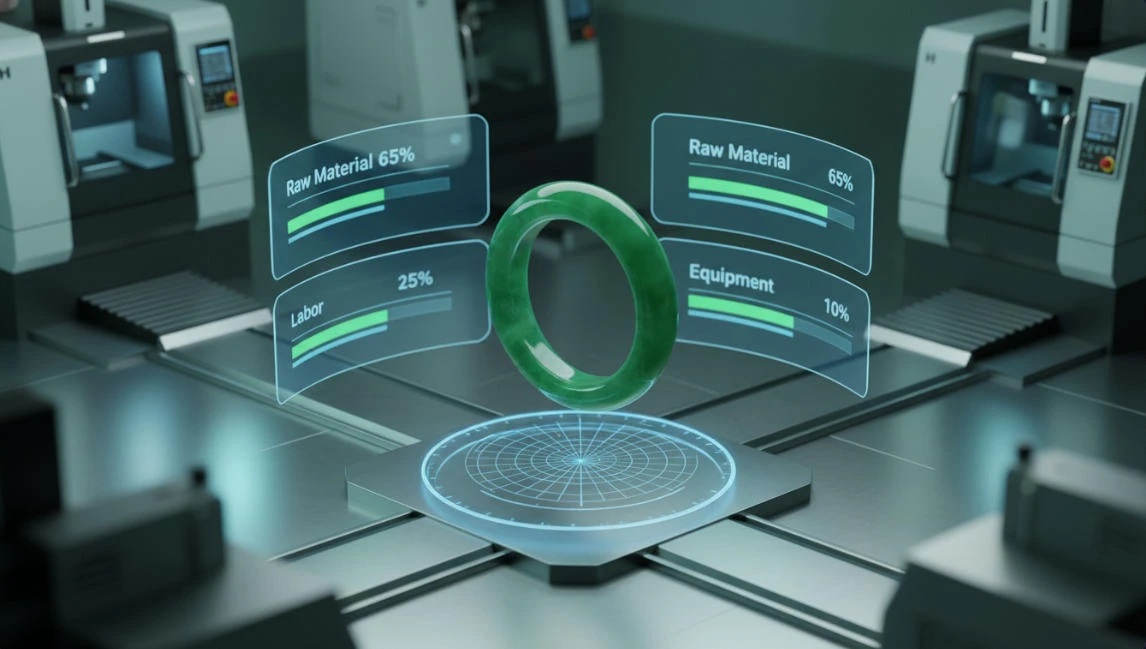
Numbers without context are just noise. What makes the following data actionable is that it comes from a single, traceable source: JADEMAGO’s internal production records spanning 2024 to 2025, cross-referenced with aggregated figures from select peer manufacturers operating jade processing factory environments of comparable scale. These are not industry estimates sourced from trade publications. They are working figures used by production planners and procurement teams to build real cost models for real orders.
The benchmark cost structure for jade processing breaks down as follows: raw materials account for 50% to 70% of total production cost; manufacturing and labor account for 20% to 30%; equipment depreciation and consumables account for 5% to 10%; and quality inspection accounts for 3% to 5%. These ranges are not static. They shift based on product type, material grade, production volume, and the specific jade processing pathway chosen for each SKU. What they give you is a reference frame — a baseline against which any supplier quote can be measured for structural plausibility.
Methodology Note — Data Transparency StatementThe percentages cited in this section are derived from JADEMAGO’s internal production cost records covering the period January 2024 to December 2025, spanning multiple product categories including bangles, pendants, carved decorative pieces, and cabochons across commercial, mid-premium, and gem-grade material tiers. Cross-reference data was aggregated from a small number of peer jade processing factory operators of comparable scale who contributed anonymized cost structure summaries for comparative validation.
Scope limitation: These figures reflect factory-gate cost structure in a source-manufacturing context and are not representative of retail margin structures, trading-company pricing models, or single-artisan workshop economics. Readers applying these benchmarks to significantly different operational contexts should treat the ranges as directional rather than prescriptive. Individual product categories may fall outside the stated ranges for reasons documented in the case studies below.
Raw Material Cost in Jade Manufacturing: Why It Accounts for 50%–70% of Total Production Cost
The dominant position of raw material cost in the jade processing cost breakdown is not accidental. It reflects the geological reality of jade as a finite, non-reproducible natural resource whose supply chain originates in a small number of geographically constrained source regions. The majority of commercial-grade jadeite — the more commercially valuable of the two primary jade varieties — is sourced from Myanmar’s Kachin State, a region whose output is subject to both geological limits and regulatory complexity.
What this means in practical terms is that raw material pricing in jade manufacturing does not follow conventional commodity curves. There is no futures market for jadeite rough. Pricing is determined by auction, by long-term supplier relationships, and by real-time assessment of individual stones by experienced buyers — a process that the Gemological Institute of America (GIA) has documented extensively in its quality factor research on jadeite. A jade manufacturer without direct access to primary rough markets is, by definition, purchasing at a premium — and that premium flows directly into your unit cost.
For standard commercial jade products — mid-grade bangles, carved pendants, decorative cabochons — raw material typically lands in the 50% to 60% range of total production cost. As material grade increases, this proportion rises. The practical implication for your sourcing decisions is straightforward: if you are upgrading material quality, expect the cost curve to steepen non-linearly, not proportionally.
Jade Processing and Labor Cost Breakdown: Understanding the 20%–30% Manufacturing Expense
Manufacturing cost in jade processing is a composite of machine time, operator skill, and design complexity. For standard production runs — pieces that follow established templates, use defined toolpaths, and require minimal hand-finishing — manufacturing cost typically occupies the lower end of the 20% to 30% range. As design complexity increases, as production volume decreases, or as the craftsmanship tier is elevated, this proportion climbs.
The key driver of labor cost variability is workmanship grade. Jade carving skill is not evenly distributed across the workforce. In a functional jade processing factory, you will find multiple tiers of craftspeople: machine operators who execute computer-assisted cuts, skilled artisans who perform hand-finishing and detail work, and senior master carvers who execute fully bespoke, high-complexity pieces. The hourly cost differential between a skilled artisan and a senior master carver can exceed 400%, and the latter category represents an increasingly scarce resource as traditional jade carving apprenticeship programs decline in availability.
This means that when your product specification calls for intricate hand carving — phoenix motifs, landscape scenes, figural sculptures — the 20% to 30% labor benchmark no longer applies. You are entering a different cost structure entirely, and your supplier’s quote should reflect that shift explicitly and transparently. If it does not, that is a red flag worth investigating.
Equipment Depreciation and Quality Inspection Cost in Jade Factories: The Often-Overlooked 8%–15%
Equipment depreciation and quality inspection together account for 8% to 15% of total jade processing cost — a range that appears modest relative to raw materials and labor, but carries outsized implications for product reliability and regulatory compliance. These two cost lines are also the ones most likely to disappear from the quotes of suppliers who are competing primarily on price.
Precision jade processing equipment — including multi-axis CNC carving machines, laser measurement systems, and spectrometric testing instruments — represents a significant capital investment for any jade processing factory. Industry-grade equipment from established manufacturers carries depreciation cycles of five to ten years, and the annual depreciation charge on a fully equipped production line can represent a meaningful percentage of operating cost. Suppliers who quote below market consistently over extended periods are frequently deferring equipment reinvestment, which translates directly into dimensional inconsistency, higher defect rates, and longer lead times as aging equipment requires unscheduled maintenance.
Quality inspection cost deserves equal attention. A compliant jade processing workflow includes gemological identification testing to verify species authenticity (jadeite versus nephrite versus treated simulants), dimensional verification against production tolerances, surface finish assessment, and documentation preparation for export compliance. The Swiss Gemmological Institute SSEF is one of the internationally recognized bodies whose certification protocols define the baseline for rigorous jade authentication — and building those standards into your procurement requirements is one of the most cost-effective risk mitigation tools available to B2B buyers. When a supplier’s quote does not include a visible quality inspection line, ask specifically what testing is being performed and who is performing it. The answer will tell you a great deal about the reliability of everything else in that quote.
This means that for every dollar you save by choosing a supplier who has eliminated quality inspection from their workflow, you are accepting a proportional increase in the probability of receiving material that fails authentication, fails dimensional tolerance, or fails your end customer’s expectations upon delivery.
When the Numbers Break the Rules — Extreme Cost Structure Scenarios in Jade Production
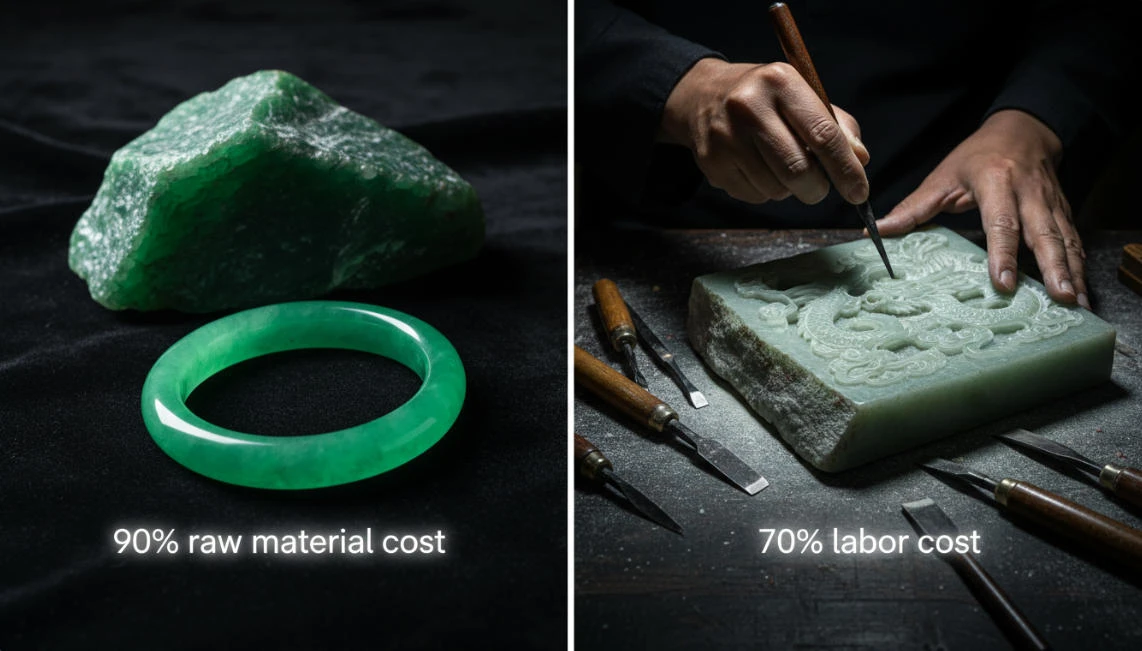
The benchmark percentages outlined in the previous section are built on averages. Averages, by definition, smooth out the extremes — and in jade processing, the extremes are not outliers. They are entirely predictable outcomes that occur whenever a product specification pushes hard in one direction: either toward exceptional material rarity, or toward exceptional craftsmanship intensity. Every experienced buyer eventually encounters both scenarios. The question is whether you recognize them before or after the invoice arrives.
Understanding extreme cost structures is not an academic exercise. It is a practical tool for evaluating whether a quote makes structural sense for the product you are actually ordering. When a supplier’s numbers diverge significantly from the standard benchmarks, that divergence should prompt a specific question: which cost component is driving this, and is the driver legitimate? The two case studies below represent the clearest examples of how standard cost ratios can be overridden by product-specific factors — and what that means for your sourcing decisions.
Imperial Green Jadeite Bangle: When Raw Material Cost Exceeds 90% of Total Production Price
Imperial green jadeite — the highest chromium-saturated, translucent variety of gem-grade jadeite — occupies a category in which the raw material is so intrinsically valuable that it fundamentally redefines the entire cost architecture of the finished product. A certified imperial green jadeite bangle of commercial size, sourced from authenticated Myanmar rough with documented chain of custody, can carry a raw material cost that represents 90% or more of the finished product’s factory price.
It is important to clarify a point that many buyers misunderstand: manufacturing and carving costs do not stay flat simply because the material is expensive. In fact, they rise. When a craftsperson works with imperial green rough, every cut, every grinding pass, and every polishing stage carries a damage risk whose financial consequence is directly proportional to the value of the stone being worked. A carving error on a piece of common nephrite costs the workshop a few dollars. The same error on an imperial green bangle blank can cost thousands. This is a risk-hedging principle embedded in professional jade processing: as raw material cost increases, skilled carvers and production managers apply higher labor rates and longer process times to offset the elevated breakage and loss risk. You are not just paying for their hands — you are paying for their accountability.
What this means in practice is that both raw material cost and manufacturing cost rise as material grade climbs toward the imperial tier. The critical distinction, however, is the rate of increase. Raw material cost rises dramatically — often exponentially — with each step up in color saturation, translucency, and provenance quality. Manufacturing cost rises in a more measured and bounded way, constrained by the fact that carving time and skill requirements do not scale at the same velocity as gem value. The net effect is that raw material’s proportional share of total cost expands to 90% or above, not because manufacturing cost disappeared, but because raw material cost outpaced it by such a wide margin that all other components are compressed into a narrow residual.
The GIA’s documented research on jadeite quality factors confirms that color — specifically the combination of hue, tone, and saturation that defines imperial green — is the single most commercially significant value driver in jadeite grading. For buyers sourcing at this tier, the practical implication is clear: do not attempt to recover margin by pressuring the manufacturing cost line. That line has already absorbed a legitimate risk premium. Your negotiating energy is better directed at verifying the authenticity and provenance of the raw material itself — which is where the real value, and the real risk, actually lives. Requiring third-party gemological certification from a recognized institution such as SSEF is not an optional procurement step at this level. It is the most cost-effective risk mitigation tool available to you.
Master Artisan Carving on Common Jade Material: When Labor Costs Reach 70%+ of Factory Price
The inverse scenario is equally instructive. Consider a product specification that combines a common or mid-grade jade material — nephrite of standard commercial quality, or lower-grade jadeite with visible inclusions — with a request for fully hand-executed carving by a senior master artisan, executed in a complex traditional motif such as a multi-figure landscape or a detailed mythological scene. In this configuration, the raw material cost may represent only 15% to 20% of the finished product’s factory price. The carving labor, by contrast, can account for 70% or more.
This cost structure is not a pricing error. It is the accurate reflection of a market in which the scarcity premium belongs not to the stone, but to the human skill applied to it. A senior jade master carver with decades of experience in complex figurative work produces output that cannot be replicated by machine, cannot be accelerated by additional workforce, and cannot be sourced from a larger labor pool — because that pool is genuinely small. According to research documented by the International Gem Society, traditional jade carving techniques represent a craft tradition whose full mastery requires years of dedicated apprenticeship, and the number of practitioners capable of executing museum-quality work continues to decline globally.
For buyers sourcing in this product category — art pieces, collector items, bespoke corporate gifts, or high-value custom pieces — the practical implication is that your cost model needs to be built around the craftsperson, not the stone. Budget for the artisan first. Then select a material grade that is appropriate for the price point you are targeting. Attempting to apply standard jade processing cost benchmarks to master-carving commissions will consistently produce inaccurate cost expectations and strained supplier relationships.
The Two Golden Rules of Jade Cost Structure — A Sourcing Framework for B2B Buyers
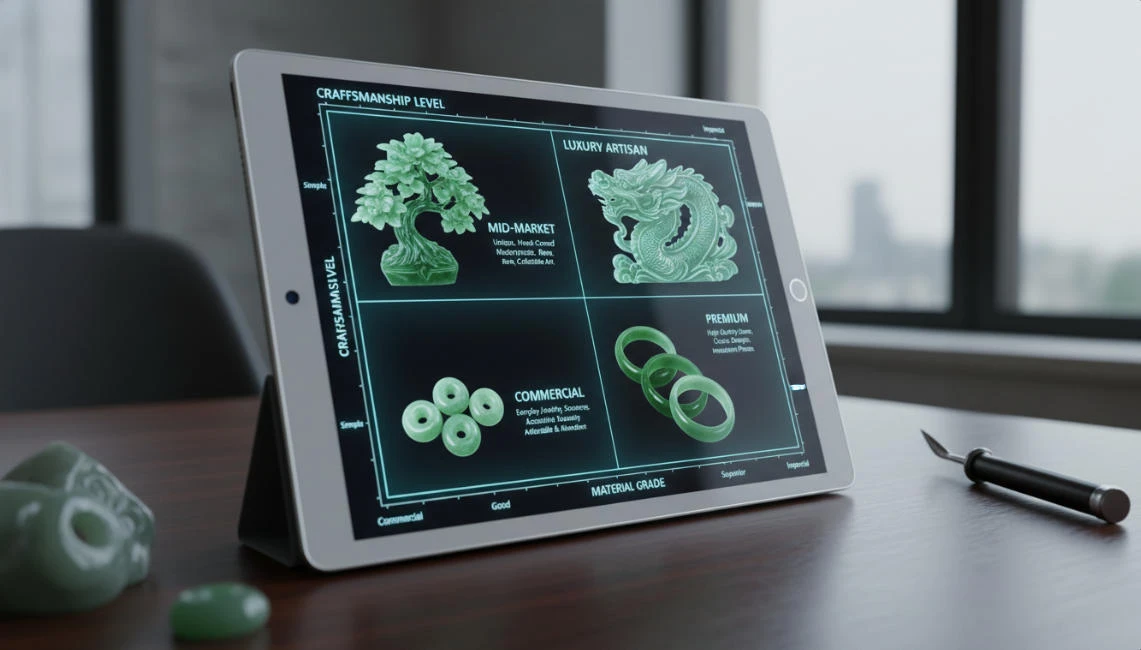
After examining the standard benchmarks and the extreme scenarios, two consistent structural rules emerge from the data. These rules are not theoretical constructs. They are observable patterns that appear repeatedly across JADEMAGO’s production records and across the broader jade manufacturing cost data reviewed for this analysis. Internalizing them will not make jade pricing simple — nothing will — but it will make the logic of jade pricing legible, which is the prerequisite for any effective sourcing strategy.
Applying these two rules during your pre-quote process takes less than five minutes and can save you hours of post-quote confusion and negotiation friction. More importantly, it gives you a structured basis for comparing quotes from multiple suppliers that goes beyond the final number.
1 — Higher Material Grade Drives a Higher Raw Material Cost Ratio When Craftsmanship Is Fixed
When the craftsmanship tier is held constant — meaning you are comparing quotes for the same design, the same level of finishing, executed by craftspeople of equivalent skill — the proportion of total cost attributable to raw material increases as material grade increases. This is not a linear relationship. It accelerates.
Moving from standard commercial-grade jadeite to mid-premium grade might increase your raw material cost ratio from 55% to 65%. Moving from mid-premium to gem-grade translucent material might push that ratio to 80% or above. The manufacturing cost in absolute terms stays roughly constant across those three tiers. What changes is the denominator — the total cost — which is being driven upward almost entirely by the raw material component. This means that material upgrades deliver diminishing manufacturing cost leverage: the higher you go on material grade, the smaller a proportion of your total cost you can influence through production efficiency or labor negotiation.
The practical application of this rule is straightforward. When your product brief calls for a material upgrade, model the cost impact as a non-linear increase rather than a proportional one. If your current product carries a raw material cost ratio of 60% and you upgrade to a material that doubles the stone cost per unit, your total product cost will not double — but it will increase by significantly more than 50%. Building that curve into your cost modeling before you go to market will prevent the single most common source of jade sourcing budget overruns.
2 — Craftsmanship Grade Drives Processing Cost Independently of Material Quality
The second rule operates in the orthogonal direction. When raw material grade is held constant — meaning you are comparing production options for the same stone, the same starting material — manufacturing cost varies independently based on the craftsmanship tier selected. A piece of mid-grade nephrite carved by a machine-assisted technician and the same piece carved entirely by hand by a senior artisan share identical raw material cost. They do not share identical total cost, because the carving labor component differs by a factor of three to four.
This independence is commercially significant because it gives you a genuine strategic choice that raw material procurement does not offer. You cannot manufacture gem-grade jadeite from lower-grade rough. But you can choose, within a defined material tier, the craftsmanship level that your market position and margin structure require. A product line targeting mid-market retail distribution has different craftsmanship requirements than a line targeting luxury boutiques — and the jade processing cost structure accommodates both, provided the selection is made deliberately rather than by default.
This means that your product development process should treat material selection and craftsmanship selection as two independent decisions, each with its own cost logic, its own supplier requirements, and its own quality verification pathway. Bundling them into a single “product specification” without separating the cost drivers makes it significantly harder to optimize either one — and significantly easier for a supplier to obscure where your money is actually going.
How to Use Jade Processing Cost Data to Evaluate and Negotiate with Your Jade Manufacturer
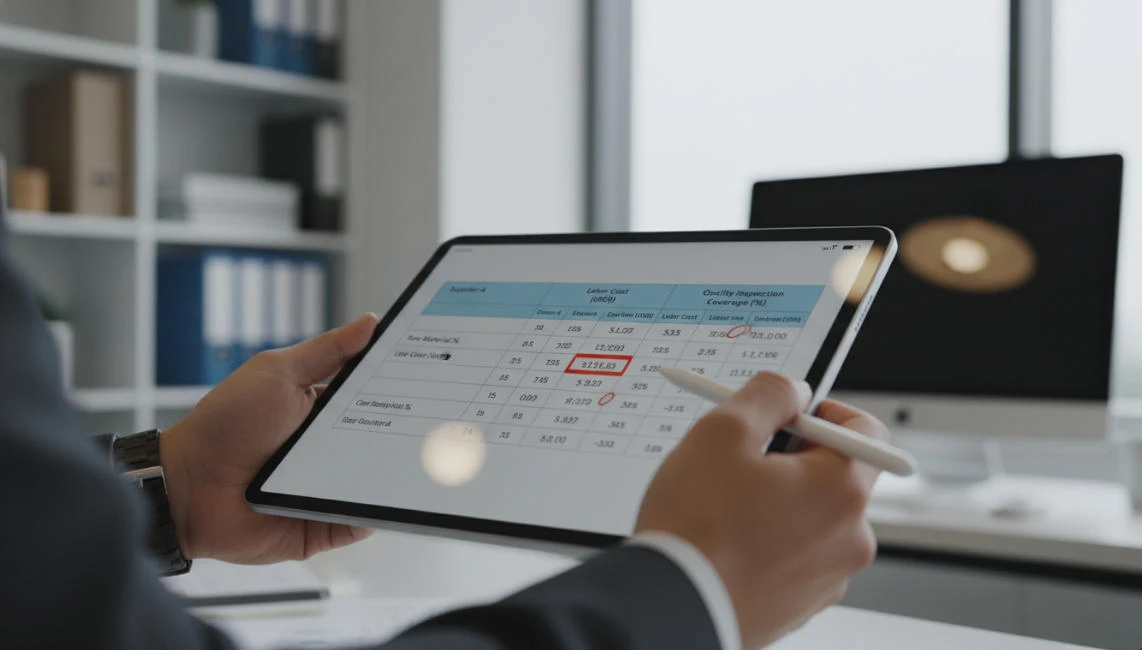
Data without application is just information. The cost structure benchmarks and case studies presented in this article are only valuable to you if they change how you approach the sourcing process — specifically, how you read a supplier quote, how you structure your pre-order conversations, and how you identify the difference between a price that reflects genuine cost drivers and a price that reflects a supplier’s margin strategy or, worse, a systematic reduction in quality inputs.
The jade processing market is not a transparent one. Unlike commodity manufacturing categories where standardized inputs produce standardized cost structures, jade processing involves a layered combination of geological variability, artisanal skill scarcity, and authentication complexity that creates significant information asymmetry between experienced manufacturers and buyers who are newer to the category. That asymmetry is not inevitable. It is addressable — and the framework in this section gives you the tools to address it before you place your next order.
Red Flags in Jade Factory Quotes: What Abnormal Cost Ratios Reveal About a Supplier
The most reliable way to use cost structure knowledge in a sourcing context is not to calculate exact percentages for every quote you receive. It is to identify structural anomalies — quotes whose implied cost ratios diverge from established benchmarks in ways that cannot be explained by legitimate product-specific factors. Three patterns appear consistently in problematic quotes from jade processing factory environments, and each one warrants direct follow-up before any purchase commitment is made.
The first pattern is a raw material cost that appears inconsistent with the material quality being claimed. If a supplier quotes a price that implies a raw material ratio well below 50% for a product described as premium or gem-grade jadeite, one of two things is likely: either the material grade is lower than represented, or the total price is being structured in a way that obscures where the cost is actually allocated. Either way, you need a clearer breakdown before proceeding. Ask the supplier to specify the raw material cost per unit explicitly, and cross-reference it against current rough market pricing for the grade being claimed.
The second pattern is an unusually low manufacturing cost line on a product specification that calls for hand carving or complex design execution. As established earlier in this article, senior master carvers command a significant skill premium — and that premium does not disappear simply because a supplier wants to win your business on price. A manufacturing cost that sits at 10% or below for a complex hand-carved piece should prompt you to ask specifically who is executing the carving, at what skill tier, and what the actual hourly labor rate being applied is. You may be looking at a quote that has substituted machine-assisted production for the hand craftsmanship your specification requires.
The third pattern — and the one most commonly overlooked — is the complete absence of a quality inspection line item. A jade processing cost breakdown that accounts for raw material and manufacturing but shows nothing for testing, certification, or dimensional verification is telling you something important: either quality inspection is not being performed, or its cost is being absorbed elsewhere in the quote in a way that makes it invisible to you. Neither scenario is acceptable for a compliant, export-ready product. The SSEF Swiss Gemmological Institute and the GIA both publish detailed documentation on what constitutes a rigorous jade authentication process. Use those standards as your reference point when evaluating what a supplier’s quality inspection commitment actually includes.
Questions to Ask Your Jade Processing Factory Before Placing a Bulk Order
Knowing what to look for in a quote is one skill. Knowing what to ask before the quote is finalized is another — and arguably more valuable, because it shapes the information you receive rather than requiring you to reverse-engineer it after the fact. The following questions are designed to surface the cost structure information you need while simultaneously signaling to your supplier that you are a buyer who understands the category.
Begin with raw material provenance. Ask your supplier to specify the origin, grade classification, and purchasing channel for the jade material being used in your order. A supplier with direct access to primary rough markets — whether through auction participation, long-term extraction partnerships, or owned sourcing operations — will be able to answer this question with specificity. A supplier purchasing at multiple intermediary steps will either deflect the question or provide vague answers. The degree of specificity in the response tells you a great deal about the reliability of the raw material cost line in their quote.
Follow with a craftsmanship tier question. Ask specifically whether the production method for your pieces is machine-assisted, hand-finished, or fully hand-executed, and request that the labor rate and estimated production time per piece be stated explicitly. If the answer is that pieces are “handmade,” ask what percentage of the total production hours are performed by human hands versus CNC or automated equipment. This question consistently separates suppliers who have a clear, documented production process from those who are using “handmade” as a marketing descriptor rather than a production specification.
Then ask about quality inspection protocol. Request a written description of the testing and verification steps applied to your product category, the instruments or methodologies used, and whether any third-party gemological certification is available or required for your order. If you are sourcing jadeite products for markets with consumer protection requirements around gemstone disclosure — including most developed retail markets — this question is not optional. According to guidelines published by the GIA, disclosure of treatment status is a foundational requirement for ethical jadeite commerce, and your supplier’s quality inspection process should explicitly address treatment detection as a standard step.
Why JADEMAGO’s Cost Structure Represents a Reliable Benchmark for Jade Manufacturing
The data presented throughout this article — the 50%–70% raw material ratio, the 20%–30% manufacturing range, the equipment and quality inspection allocations — originates from JADEMAGO’s internal production records spanning 2024 to 2025. That provenance matters, because benchmark data is only as reliable as the operational context from which it is drawn.
JADEMAGO has been operating as a source-level jade manufacturer for over 65 years. That duration is not a marketing credential. It is a functional statement about the depth of institutional knowledge embedded in the company’s production systems, supplier relationships, and quality standards. Over six decades of jade processing operations, cost structures have been stress-tested across multiple raw material market cycles, shifting labor demographics, evolving equipment generations, and changing export compliance requirements. The benchmarks in this article are not theoretical models. They are the residue of that operational history.
65 Years of Jade Manufacturing Experience — How JADEMAGO Delivers Cost Transparency Without Sacrificing Production Standards
What distinguishes a source-level jade processing factory from a trading intermediary is not just price access — it is the ability to show you exactly where your money goes. When you source through multiple layers of intermediaries, each layer adds margin and removes visibility. You receive a final price with no structural breakdown, and you have no basis for evaluating whether the raw material cost reflects actual market conditions, whether the manufacturing cost reflects the craftsmanship tier you specified, or whether any meaningful quality inspection was performed before your shipment left the factory floor.
JADEMAGO’s integrated production model — covering raw material procurement, in-house design, manufacturing, and quality verification under a single operational structure — means that every cost component in your quote is traceable to an actual production activity. Your raw material cost reflects what JADEMAGO paid for the stone, plus the margin required to sustain direct sourcing relationships. Your manufacturing cost reflects the actual labor tier and production hours applied to your specification. Your quality inspection cost reflects a real testing and documentation process, not a line item added to make the quote look complete.
This structure means that you can request a cost breakdown on any order and receive one that corresponds to operational reality rather than a reverse-engineered justification for a pre-determined margin. For buyers managing supplier compliance requirements, brand integrity standards, or retail disclosure obligations, that traceability is not a convenience — it is a procurement requirement that many suppliers in the jade processing category cannot meet.
Partner with a Jade Manufacturer Who Shows You the Numbers — Contact JADEMAGO
The single most actionable step you can take after reading this article is to apply its framework to your next sourcing conversation. Request a cost breakdown. Ask the raw material provenance question. Ask the craftsmanship tier question. Ask the quality inspection question. If your current supplier can answer all three with specificity and supporting documentation, you have a supplier worth keeping. If they cannot, you now understand exactly what that gap costs you — in risk, in compliance exposure, and in the gap between the product you specified and the product you actually received.
JADEMAGO works with B2B buyers, wholesale brands, and OEM sourcing operations that require cost-transparent, specification-accurate jade manufacturing. Whether your product line sits in the commercial mid-market tier or the premium custom segment, the same cost structure principles apply — and the same commitment to showing you the breakdown behind every quote applies equally.
If you are ready to source jade products with a manufacturer who treats cost transparency as a standard, not a concession, contact JADEMAGO directly to request a detailed quote with full cost structure documentation.
Faqs About Jade Processing Cost Breakdown
1. What is the average cost breakdown for jade processing?
Based on JADEMAGO’s 2024–2025 production data, a typical jade processing cost structure allocates 50%–70% to raw materials, 20%–30% to manufacturing and labor, 5%–10% to equipment depreciation and consumables, and 3%–5% to quality inspection. These ranges apply to standard factory-gate production and will shift depending on material grade and craftsmanship tier.
2. Why do jade processing quotes vary so much between suppliers?
The two most volatile cost components — raw material and manufacturing labor — can individually vary by 5x and 3x respectively depending on material grade and craftsperson skill level. A price difference of 200%–300% between two quotes for the same product specification is not necessarily a sign of dishonesty; it most often reflects a genuine difference in material quality or production method.
3. How much of jade processing cost is raw material?
For most commercial jade products, raw material accounts for 50%–60% of total production cost. At the top end of the market — such as certified imperial green jadeite bangles — that proportion can exceed 90%, because the stone’s intrinsic value outpaces all other cost components combined.
4. Does a higher material grade always increase the total jade manufacturing cost significantly?
Yes, and non-linearly. When craftsmanship tier is held constant, upgrading material grade causes the raw material cost ratio to accelerate rather than increase proportionally. Doubling the stone cost per unit will raise your total product cost by more than 50%, because raw material already dominates the cost structure. Budget modeling should treat material upgrades as a curve, not a straight line.
5. What should I ask a jade processing factory before placing a bulk order?
Three questions cover the most critical cost verification points: first, ask for the raw material origin, grade classification, and purchasing channel; second, request that manufacturing cost be stated with the labor tier and estimated production hours per piece; third, ask for a written quality inspection protocol that specifically addresses treatment detection. A supplier who cannot answer all three with documentation is a supplier whose cost structure cannot be independently verified.