
Introduction
Your buyers don’t pay for “origin stories”—they pay for predictable yield, edge integrity, and delivery certainty, and those outcomes are controlled more by microstructure than marketing labels. In practice, “Myanmar” and “Russian” often imply different jade families with different internal architectures, which is why they “talk back” differently under a wheel, bur, or CNC toolpath. This means you can reduce scrap surprises by treating microstructure as a production variable, not a trivia fact.
Table of Contents
Why “Origin” Isn’t the Real Variable—Microstructure Is
What buyers actually experience on the shop floor
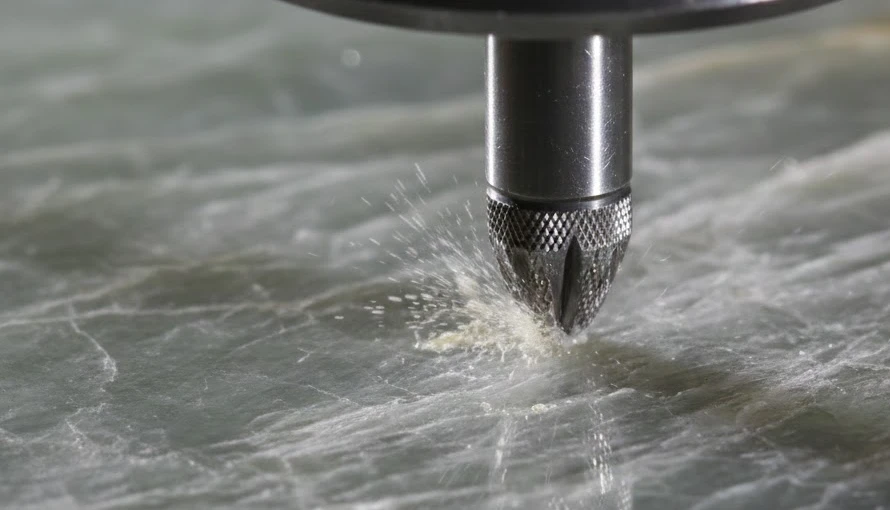
A product manager may describe it as “same CAD, different disaster,” while a shop owner calls it “this batch chips like glass” or “this one drags and eats tools.” Those are not vague complaints—they are signals of how cracks initiate and propagate inside the stone when stress concentrates at corners, exits, and thin walls. This means you can translate subjective feedback into a controllable machining risk profile before you scale production.
The hidden cost of treating jade as one material class
If you quote one fixed process route for “jade,” you are pricing as if hardness alone predicts performance, and you will get punished by variability in toughness and fracture behavior. That variability shows up as rework hours, tool replacement, schedule slips, and disputes about whether defects were “material” or “manufacturing.” This means you can protect margin by quoting based on microstructure-driven failure modes instead of hope.
What this guide will help you do
This article connects mineralogical structure to cutting feedback, then converts that mechanism into practical CNC/hand-cut decisions and RFQ language. You will also get a simple ROI model and a compliance checklist for Myanmar/Russia-related trade constraints so sourcing does not become a legal or logistics trap. This means you can align procurement, design, and manufacturing around the same measurable expectations.
Jade Materials Buyers Call “Myanmar” and “Russian”: What They Usually Mean
Myanmar label—often jadeite-dominant supply
In many commercial contexts, “Myanmar jade” commonly points buyers toward jadeite, which is typically described visually as more granular compared with nephrite’s fibrous appearance. GIA’s classic reference explains that jadeite shows separate crystal entities in thin section while nephrite appears rope-like and woven, and that difference maps to the common “granular vs fibrous” visual cue. This means you can ask the right questions early—“jadeite or nephrite?”—instead of discovering it through scrap.
Russian label—often nephrite-dominant supply
In many buying workflows, “Russian jade” is commonly used to mean nephrite, a tough amphibole-based jade with a felted or interwoven crystal habit. GIA notes nephrite’s toughness is linked to fine-grained interlocking structure, which is the mineralogical reason it can resist crack growth differently than a granular mosaic. This means you can anticipate “tougher cutting” behavior and plan for load/heat management instead of forcing detail too early.
A procurement caution: labels do not guarantee mineral identity
Even if market language trends one way, origin labels are not laboratory identifications, and treatment, mixing, and re-labeling can blur reality. The operational fix is to request identification evidence and run small pilot tests before full production rather than trusting naming conventions. This means you can stop paying for ambiguity by turning “origin” into a verified input, not a guess.
The Microstructure That Matters: Interwoven Fibers vs Granular Interlock
Fibrous interweave (nephrite-type) — why cracks struggle to run
Nephrite’s “woven” look is not cosmetic—it’s a mechanical network where crystals appear rope-like and inextricably interlaced, which deflects and bridges cracks under load. GIA’s “Jade Enigma” highlights this dramatic woven contrast in thin section and ties it to the fibrous visual appearance seen in finished material. This means you can expect higher toughness behavior and design your process to manage drag, heat, and steady tool load.
Granular interlock (jadeite-type) — why edges can chip under concentrated stress
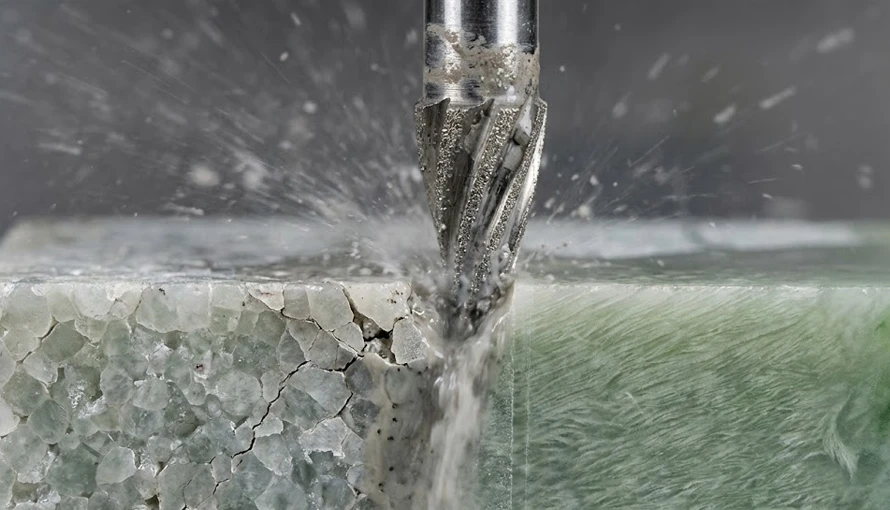
Jadeite typically presents as separate yet intergrown crystals, often perceived as a granular mosaic rather than a felted weave. In machining, that architecture can be more sensitive to localized point loads at sharp corners, tool exits, and thin lips, where micro-chips can initiate and cascade into visible edge loss. This means you can reduce chipping by engineering stress away from exits and corners instead of “slowing down and praying.”
Hardness is not enough—toughness and crack behavior decide failure mode
Two materials can be similarly “hard” in everyday conversation yet behave opposite under a cutter because the governing question is how easily a crack starts and how easily it grows. Microstructure determines crack path geometry, energy absorption, and whether damage concentrates as chips or spreads as dull haze and drag marks. This means you can stop over-weighting hardness and start controlling the real drivers of yield and edge integrity.
Translating Microstructure Into Shop-Floor Feedback
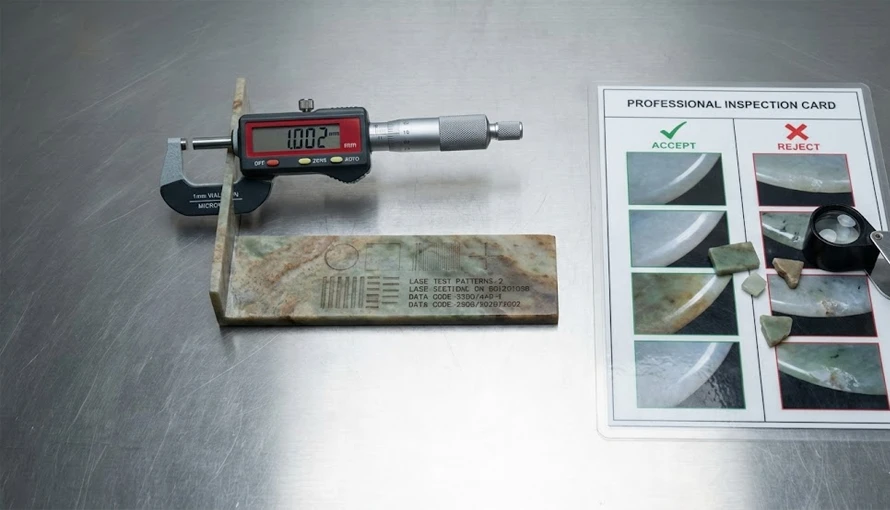
Edge integrity: why one chips and the other “holds” but feels slow
When your team reports frequent corner blowouts, the failure often points to crack initiation at stress concentrators—especially on designs with razor edges and tight internal corners. When they report “tough pull” and slow refinement, that often points to a structure that resists crack growth but loads tools steadily, increasing heat sensitivity and time-to-finish. This means you can interpret feedback as diagnostics and pick the right mitigation instead of changing five variables at once.
Tool wear modes: impact micro-chipping vs steady abrasion and heat
Chipping-prone behavior often punishes tool edges through intermittent shock at exits and inclusions, which can create sudden tool micro-chipping and visible edge chatter. Tough, fibrous behavior often punishes tools through sustained contact load, which can accelerate dulling and heat-driven glazing if coolant and chip evacuation are not controlled. This means you can choose tools and coolant strategies that match the dominant wear mode rather than buying “better tools” blindly.
Surface finish and polish response differences
Micro-chipping tends to create crisp but fragile edges and can leave tiny pits that become haze after polishing if not fully removed by grit progression. Drag-dominant cutting can leave directional micro-grooves or “pull marks” that demand different semi-finish timing and a more disciplined progression to avoid locking defects under a shiny top layer. This means you can hit a consistent luster by aligning grit progression to the damage type your microstructure produces.
CNC / Hand-Carving Strategy Adjustments by Structure Class
For chipping-prone material (common risk on granular/interlocked types)
Start by protecting exits and corners: add micro-radii in CAD, avoid sharp internal corners where possible, and sequence toolpaths so the cutter does not “break out” of a thin lip at the end of a pass. Then reduce peak stress by using lighter step-downs, minimizing re-entry shocks, and finishing edges with stable, low-impact passes rather than aggressive cleanup. This means you can reduce edge loss without sacrificing the entire cycle time budget.
For tough/drag-prone material (common risk on fibrous interweave types)
Split removal into clear phases: rough with a strategy optimized for chip evacuation and stability, then semi-finish to remove directional grooves before you attempt fine detail. Control heat by avoiding dwell, keeping tool sharpness disciplined, and ensuring coolant delivery and debris removal are consistent because “tough pull” often hides rising temperature until surface quality suddenly degrades. This means you can prevent late-stage surface failures that destroy value after most labor is already sunk.
Universal best practices that reduce variability across both classes
Standardize fixturing stiffness, keep a “test-cut coupon” geometry that replicates your most fragile feature, and treat the coupon results as a gating metric before full run. Document the winning combination as a repeatable recipe tied to incoming-lot identifiers rather than as tribal knowledge in one operator’s head. This means you can scale quality across batches and staff changes without re-learning the same expensive lessons.
How-to: a practical 7-step “microstructure-to-toolpath” workflow
- Confirm identity claims (jadeite/nephrite) from paperwork and quick checks, then 2) run a coupon test that includes a sharp corner, thin wall, and engraved line, and 3) record defect type and frequency. Next 4) choose the mitigation family (exit protection vs heat/load control), 5) lock a conservative finishing strategy for edges, 6) validate polish response on the coupon, and 7) only then scale to production quantities. This means you can turn “How do we machine this?” into a repeatable onboarding process for every new batch.
Quoting and RFQ Specs: How to Prevent Scrap Surprises
.webp "How Fiber-Interwoven Jade Microstructure Changes Cutting Performance: A Mineralogical Explanation of Myanmar vs. Russian Material Machining Feedback 3")
The 6 fields buyers should include in every inquiry
Require: (1) mineral identity claim (jadeite/nephrite if known), (2) transparency/texture target, (3) finish target (matte/satin/mirror), (4) critical edge features, (5) tolerance expectations, and (6) end-use context that defines acceptable micro-defects. If buyers cannot provide these, you should quote with a risk buffer and require a pilot sample stage because missing information is not neutral—it is risk. This means you can avoid under-quoting and then “negotiating with physics” mid-production.
The 4 risk flags that change price and lead time
Thin walls, sharp corners, deep undercuts, and ultra-fine engraving each increase defect probability, but the defect type changes by structure class. Granular/interlocked behavior raises chipping probability at corners and exits, while fibrous behavior raises time-to-finish and tool consumption risk because detail can “fight back” through drag and heat. This means you can justify pricing transparently with engineering logic instead of vague “material is difficult” claims.
A practical acceptance standard to prevent disputes
Define what counts as unacceptable edge loss versus acceptable natural character, and attach reference photos for both categories in the RFQ. Also define whether inclusion exposure is allowed after carving and whether micro-pits that do not compromise wear are acceptable, because polish can exaggerate tiny defects into brand-visible issues. This means you can reduce argument time and protect relationships by agreeing on standards before cutting starts.
Cost Intent: Quantifying ROI From Microstructure-Based Process Control
A simple ROI model you can use in procurement meetings
ROI in jade processing is dominated by three measurable levers: scrap rate, rework hours, and tool consumption, and microstructure-aware process control targets all three. If a 1,000-piece run has a 12% scrap rate at $18 unit manufacturing cost, scrap alone costs 1,000 × 0.12 × $18 = $2,160, and that is before rework labor and delays. This means you can bring a numbers-based business case to justify pilot testing and process discipline.
Example scenario: coupon testing + strategy split reduces total cost
Assume coupon testing plus a structure-matched toolpath reduces scrap from 12% to 7% and cuts average rework time from 18 minutes to 10 minutes per affected piece, with labor at $22/hour and 25% of pieces requiring rework pre-fix. Scrap savings become 1,000 × (0.12−0.07) × $18 = $900, and rework savings become 1,000 × 0.25 × (18−10)/60 × $22 ≈ $733, totaling $1,633 per 1,000 pieces before tool savings. This means you can quantify payback without pretending every batch will behave identically.
How-to: pricing a “microstructure risk buffer” without losing the order
Instead of adding a flat premium, tie your buffer to risk flags and mitigation steps: quote a base price with a required coupon gate, then specify a range adjustment if the coupon shows chipping above a defined threshold or if tool wear exceeds a set limit. Buyers accept ranges more readily when they see the trigger conditions and the steps you take to control them, because that reads as professionalism rather than opportunism. This means you can defend margins while still sounding fair and process-driven.
Compliant Intent: Regulations and Sanctions You Must Not Ignore (Myanmar & Russia Context)
Myanmar gemstone compliance—sanctions and restricted entities
In April 2021, the U.S. Treasury sanctioned Myanma Gems Enterprise (MGE), a state-owned entity responsible for gemstone activities in Burma/Myanmar, and that has direct implications for payments, counterparties, and facilitation risk in supply chains connected to Myanmar gemstones. (U.S. Department of the Treasury) In practice, compliance means screening counterparties, understanding beneficial ownership, and ensuring your transactions do not involve sanctioned entities or prohibited facilitation, which should be handled with qualified compliance/legal support. This means you can reduce the risk of blocked payments, seized shipments, and reputational damage tied to sanctioned counterparties.
U.S. rules have changed over time—do not rely on outdated “ban/no-ban” assumptions
There have been multiple legal mechanisms affecting Burmese-origin jadeite/rubies over the years, including executive orders and sanctions program guidance, and some public explanations differ by time period and scope. Official U.S. materials describe reinstated prohibitions under specific executive authority and sanctions program context, which is why you should verify the current import and transaction posture for your exact product and route rather than repeating a simplified headline. (Federal Register) This means you can avoid building your sourcing plan on a compliance myth that collapses at customs or the bank.
How-to: a practical 6-step compliance workflow for gemstone sourcing
- Map all parties (miners, brokers, exporters, cutters, shippers, banks), then 2) screen names and beneficial owners against applicable sanctions lists, and 3) document country-of-origin and transformation steps. Next 4) require contractual representations about sanctioned entities and forced-labor exposure, 5) keep audit-ready records (invoices, export docs, transport), and 6) re-check when routes, banks, or intermediaries change because that is where violations often occur. (U.S. Department of the Treasury) This means you can operationalize compliance as a repeatable checklist instead of an afterthought.
Russia-related risk is often logistics and finance, not just the stone
Even when a product category is not explicitly named in a sanctions headline, Russia-related transactions can trigger restrictions through financial institutions, shipping, and counterparties, and sanctions packages can evolve. The EU has issued detailed sanctions guidance in adjacent gemstone categories like diamonds, illustrating how traceability, grandfathering clauses, and phased restrictions can become operational realities that affect buyers and suppliers. (Finance) This means you can plan routes, payment rails, and documentation to prevent last-minute compliance-driven disruption.
Note: This section is general information, not legal advice, and you should confirm requirements for your jurisdictions, customers, and shipping routes with qualified counsel/compliance professionals. This means you can stay cautious while still building a workable, audit-friendly sourcing process.
Simple Incoming Inspection: Predict Cutting Behavior Before Full Production
Visual texture cues that correlate with behavior (indicators, not guarantees)
Granular-looking texture often correlates with behavior where edge chipping becomes the dominant risk, while a more fibrous or felted visual cue often correlates with toughness and drag behavior. GIA’s thin-section comparison captures why jadeite is commonly seen as granular and nephrite as fibrous, which is a practical mental model even when you cannot run microscopy on every lot. This means you can make a better first-pass risk call using consistent observation instead of intuition.
How-to: a low-cost pilot test protocol (no lab required)
Cut a standardized coupon that includes (1) a sharp external corner, (2) a thin wall feature, and (3) a fine engraved line, and then score outcomes: number of chips, maximum chip size, visible drag marks, and polish haze after a fixed grit sequence. Keep the same tool type, pass strategy family, and coolant method so the coupon measures material behavior rather than operator creativity. This means you can catch “bad surprises” on a cheap test piece instead of on your highest-value design.
When to request lab confirmation
If the order value is high, the tolerance is tight, or the piece is brand-critical, you should request formal identification and treatment disclosure through reputable gemological channels. Even a simple confirmation of jadeite versus nephrite can materially improve your ability to quote risk and choose a safe machining route. (GIA) This means you can spend a small amount upfront to avoid a large loss later.
Summary: What to Do If You’re Buying “Myanmar” or “Russian” for Production
A decision tree you can reuse (microstructure → risk → process)
First, treat “Myanmar/Russian” as a sourcing hint, not a machining spec, and validate whether you are dealing with a granular (often jadeite-like) or fibrous (often nephrite-like) structure class. Then link structure class to dominant risk—edge chipping versus drag/heat/tool wear—and lock a process strategy family before you accept delivery dates and pricing. (GIA) This means you can align design, cost, and schedule with the material’s real behavior, not the label on the box.
When to involve the manufacturer early
If your CAD includes thin walls, knife edges, deep relief, or mirror polish expectations, you should involve the shop during design to add micro-radii, exit protection, and realistic tolerance/finish tradeoffs. Early collaboration is cheaper than late-stage rework because most jade failures become more expensive the closer you get to final polish. This means you can protect both aesthetics and delivery by making manufacturability a design input, not a post-failure fix.
The practical promise: predictable delivery and fewer disputes
When microstructure is treated as a first-class variable, you gain a stable quoting method, fewer arguments about “who caused the defect,” and a documented method for scaling a winning recipe across lots. That combination is what brands and cross-border companies actually buy when they choose a processing partner, because reliability is the real luxury. This means you can win repeat orders by selling predictability, not just carving capacity.
FAQ
What’s the biggest reason Myanmar and Russian “jade” cut differently?
Most buyers are comparing jadeite-dominant material (often marketed as Myanmar jade) with nephrite-dominant material (often marketed as Russian jade), and the two can have very different microstructures: granular/interlocked crystals vs fiber-interwoven networks. Those structures change how cracks start and propagate, which directly affects chipping, tool wear, and polishing behavior.
This means you can predict machining risk from structure class instead of relying on origin labels.
How should I write an RFQ so the factory can quote accurately?
Include six fields: (1) material identity claim, (2) texture/transparency target, (3) finish target, (4) critical edge/detail features, (5) tolerance expectations, and (6) acceptance standard with reference photos. If those are missing, require a pilot sample stage and quote with a risk buffer.
This means you can prevent under-quoting, rework disputes, and delayed deliveries.
What’s a practical way to quantify ROI from microstructure-based process control?
Use three levers: scrap rate, rework time, and tool consumption. Even a small scrap reduction is measurable:
ROI ≈ (Scrap Savings + Rework Savings + Tool Savings) − (Testing Cost + Process Setup Cost).
If scrap drops from 12% to 7% on 1,000 pieces at $18/unit, scrap savings alone ≈ $900.
This means you can justify pilot testing with a procurement-ready business case.