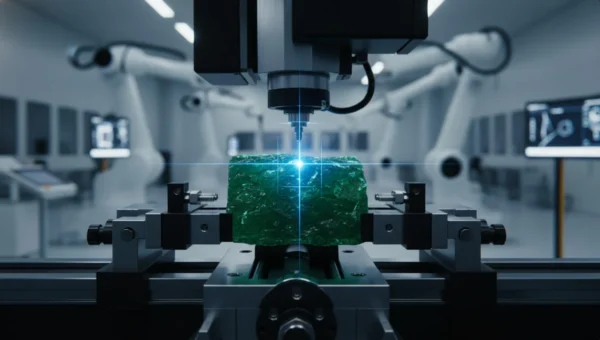
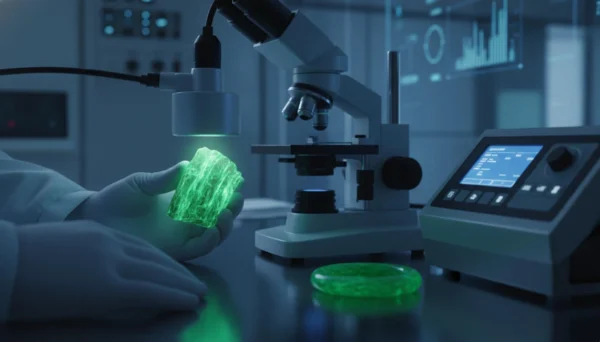
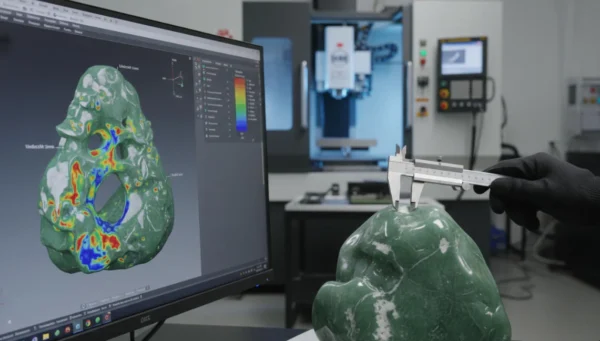
Gemstone lapping and gemstone polishing are the final two stages in professional gemstone production — and they are not finishing touches. They are the steps that directly determine whether your finished stone commands a premium price or ends up discounted for surface defects. Data from the Gemological Institute of America (GIA) consistently shows that surface finish quality ranks among the top three factors buyers evaluate when pricing polished gemstones. Starting from a rough grit of 80 and advancing through a precise sequence to a mirror-grade surface, gemstone lapping and polishing spans a processing range of over 30 incremental stages — each one non-negotiable. If a single stage is skipped or rushed, the surface damage compounds, and no amount of additional polishing time will fully recover it. For manufacturers, wholesalers, and jewelry brands sourcing finished stones, understanding this gemstone process is the first step toward protecting the value of every order you place.
Table of Contents
Why Gemstone Lapping and Polishing Determine Product Value — Not Just Appearance
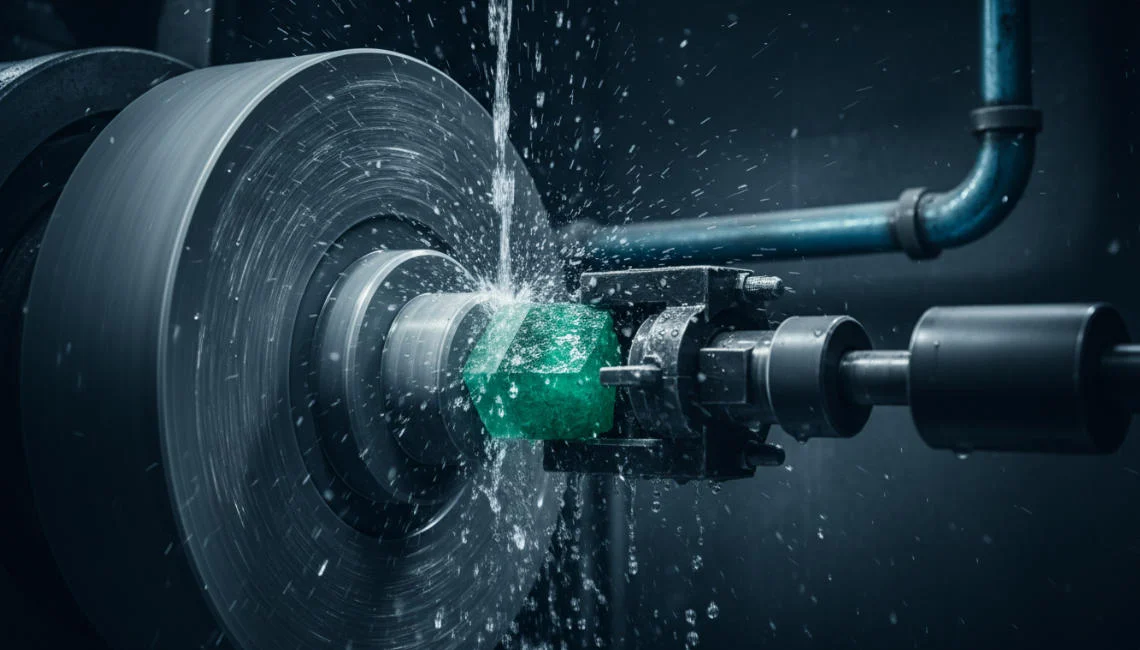
Many buyers focus on raw material quality when evaluating gemstones, but professionals in gemstone production know that surface processing accounts for a disproportionate share of the final product’s market value. Gemstone lapping removes saw marks and corrects geometric precision; gemstone polishing transforms that refined surface into a mirror-grade finish. Together, they define what a buyer sees, feels, and pays for — and no amount of exceptional raw material will compensate for a poorly executed surface.
How Surface Finish Directly Controls Pricing in Gemstone Production
The relationship between surface quality and price is not subtle. According to the International Gem Society (IGS), surface clarity and luster are primary grading factors across most commercial gemstone categories. A quartz crystal sphere polished to a true mirror finish can sell for two to three times the price of one with a dull or slightly hazy surface — even when both pieces originate from identical raw material. This means your gemstone polishing standard is, in practical terms, a direct pricing decision that affects your margin on every unit sold.
Dimensional accuracy matters equally, and this is where gemstone lapping plays its core role. The lapping stage establishes the geometric tolerances of a finished stone — the flatness of a cabochon base, the angular precision of a faceted surface, the curve consistency across a sphere. For stones destined for jewelry settings, these tolerances directly affect setting compatibility, assembly labor costs, and downstream rejection rates. Tight lapping tolerances mean that your setting workshop spends less time adjusting fits and more time completing assemblies.
Beyond pricing and dimensional fit, surface quality determines product safety. Rough or inconsistently lapped edges on wearable pieces introduce tactile discomfort and product liability exposure. Professional-grade gemstone lapping and polishing eliminates micro-edges and surface irregularities, bringing finished pieces to the surface quality standards required for consumer products. This means that consistent lapping output is not just a quality metric — it is a compliance baseline for retail distribution.
Batch Consistency: The Hidden Cost Driver in Large-Scale Gemstone Production
Producing one perfectly polished stone is achievable by any skilled craftsperson. Producing 10,000 stones at the same surface grade — that is the manufacturing challenge that separates industrial-scale gemstone production operations from craft workshops. In bulk orders, even a 3% surface defect rate generates 300 rejected or reworked pieces per 10,000 units, translating directly into rework labor costs, delivery delays, and order disputes. Can your current supplier quantify their batch consistency data?
Machine polishing systems with controlled vibration frequency and calibrated media loading, when properly matched to material type, achieve batch consistency rates above 97% on standard gemstone categories according to gemstone process benchmarks published in lapidary manufacturing literature. This means that investing in proper polishing system selection and process parameter documentation is not a quality overhead — it is a cost-reduction strategy with measurable return. You should expect any jade manufacturer or gemstone processing supplier you work with to provide documented consistency data before a large order commitment is made.
What Is Gemstone Lapping? Process, Tools, and the Critical Grit Sequence
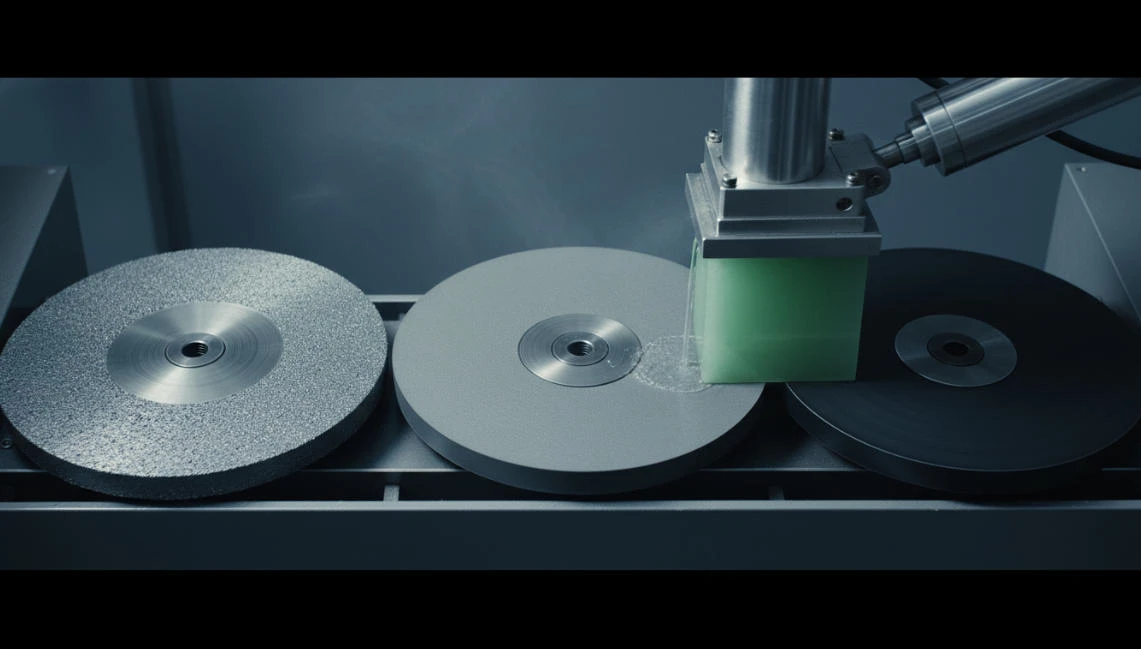
Gemstone lapping is the systematic abrasive refinement process applied after initial cutting or CNC machining. Its purpose is threefold: to remove saw marks and tool cut lines left by earlier machining stages, to correct and establish precise geometric form — including flat faces, consistent curvatures, and angular accuracy — and to prepare the stone’s surface for gemstone polishing. Without a properly executed lapping sequence, the polishing stage cannot produce a true mirror finish regardless of how much time or material is invested. The Gemological Institute of America (GIA) describes surface preparation as the foundational variable in determining final stone appearance, a position validated by every professional lapidary working at industrial scale.
It is worth clarifying what gemstone lapping does not do: it does not produce a finished surface on its own. Its output is a geometrically accurate, progressively refined surface that is ready to be polished — not a product ready for sale. This distinction matters operationally because it defines where lapping ends and polishing begins, and why both stages require independent quality checkpoints.
The 3-Stage Gemstone Lapping Grit Sequence: From 80 Grit to Pre-Polish 3000
Professional gemstone lapping follows a staged grit progression that cannot be shortened without sacrificing surface integrity. Each stage serves a distinct function, and the sequence must advance incrementally — skipping a grit range leaves subsurface scratches that the subsequent finer grit cannot remove. The result is a surface that appears refined but conceals damage that will resurface visibly under strong lighting after polishing.
1 — Coarse Lapping (80–260 grit). This stage handles the heaviest material removal. Even after CNC five-axis machining establishes the correct form and dimensional specifications, the tool paths leave micro-scale cut lines across the surface. Coarse lapping removes those lines and establishes the basic geometric profile. The technical priority at this stage is stock removal speed balanced against edge control — aggressive material removal on large flat areas must be moderated near edges and transitions to prevent chipping. For hard materials such as quartz and agate, coarse diamond lap discs at 80–120 grit are standard. For softer or more brittle materials such as obsidian, the starting grit should be no coarser than 200 to manage chip risk.
2 — Medium Lapping (400–1200 grit). This is the geometric precision stage. The objective is to eliminate all scratch patterns left by coarse lapping and to refine the surface to a consistent matte finish across the entire face. Crucially, this stage is also where dimensional tolerance is finalized — the final geometry of the stone is confirmed here, and any corrections to flatness, curvature consistency, or angular alignment must be completed before advancing. Rushing through the 400–1200 range is the most common error in production gemstone lapping and polishing workflows, and it accounts for a significant proportion of polishing-stage failures where stones appear cloudy or show irregular light reflection.
3 — Fine Lapping / Pre-Polish (2000–3000 grit). The final lapping stage eliminates all remaining machining and medium-lap marks and brings the surface to a near-smooth matte or semi-gloss state. At this point, the stone should show no visible scratches under a 10x loupe — if it does, the previous stage was not completed adequately and must be repeated. This pre-polish surface condition is the direct determinant of how efficiently the subsequent gemstone polishing stage will perform. A properly completed pre-polish at 3000 grit typically requires 30–50% less polishing time than a surface that advanced prematurely from 1200 grit, which means the time investment in this stage returns real production cost savings.
Gemstone Lapping Tools: Diamond Discs, Abrasives, and Cooling Media
The primary tooling for gemstone lapping consists of three components: the lap disc, the abrasive media, and the cooling and lubrication medium. Diamond-bonded lap discs are the industry standard for most hard gemstone materials, offering consistent abrasive distribution and a long service life relative to silicon carbide alternatives. The disc hardness and bond type should be matched to the stone’s hardness — a mismatch results in either rapid disc wear or uneven surface contact that distorts the stone’s geometry.
Water is the standard cooling and lubrication medium for most gemstone lapping and polishing operations, serving two critical functions: it flushes abraded material away from the working surface to prevent re-scratching, and it manages heat buildup in the stone. This second function is particularly important for thermally sensitive materials. Jade, for example, can develop micro-fractures or surface stress under heat accumulation that is invisible to the naked eye during processing but becomes apparent as surface haziness after polishing. According to guidelines from the Swiss Gemmological Institute SSEF, thermal management during processing is a documented factor in the final optical quality of jade and other cryptocrystalline materials. This means that proper coolant flow throughout your lapping operation is not optional — it is a direct quality control measure.
The Four Critical Technical Challenges in Gemstone Lapping
Understanding the lapping process is straightforward. Executing it consistently across thousands of pieces is where the real technical difficulty lies, and where production quality either holds or breaks down. There are four recurring failure modes in professional gemstone lapping and polishing that every manufacturer must actively control.
Grit transition discipline is the first and most fundamental. The rule is absolute: every grit stage must be completed fully before advancing. Each grit level can only remove the scratch pattern left by the previous grit — it cannot remove deeper damage from two stages back. In production settings where throughput pressure is high, the temptation to advance a batch before all pieces have cleared the current grit is a consistent source of polishing-stage failures. You should require your supplier to document their inter-stage inspection protocol as a standard part of quality assurance.
Pressure and contact uniformity is the second challenge. Excessive pressure during lapping creates surface waves and an “orange peel” texture — a subtle undulation in what should be a flat surface. Uneven pressure distribution causes localized depressions that are impossible to correct at the polishing stage. In production gemstone lapping, pressure parameters should be calibrated by material type and piece geometry, not set to a single universal value across all products.
Heat management is the third challenge, and it is material-specific. Hard materials such as quartz tolerate moderate heat accumulation with minimal consequence. Jade, by contrast, is among the most thermally sensitive common gemstone materials — the cryptocrystalline structure of nephrite and jadeite can develop internal stress under heat that permanently compromises surface quality. Continuous coolant delivery and controlled spindle speed are the standard solutions, with water flow rate and temperature monitored as active process parameters in professional gemstone production facilities.
Material structure variation is the fourth challenge. No two gemstone categories respond identically to the same lapping parameters, and within categories, individual stones show variation based on grain structure, internal flaw distribution, and density. Professional gemstone lapping requires material-specific parameter documentation — not a one-size-fits-all approach — and the ability to recognize when a particular stone requires parameter adjustment mid-sequence.
What Is Gemstone Polishing? Goals, Compounds, and the Path to a Mirror-Grade Finish
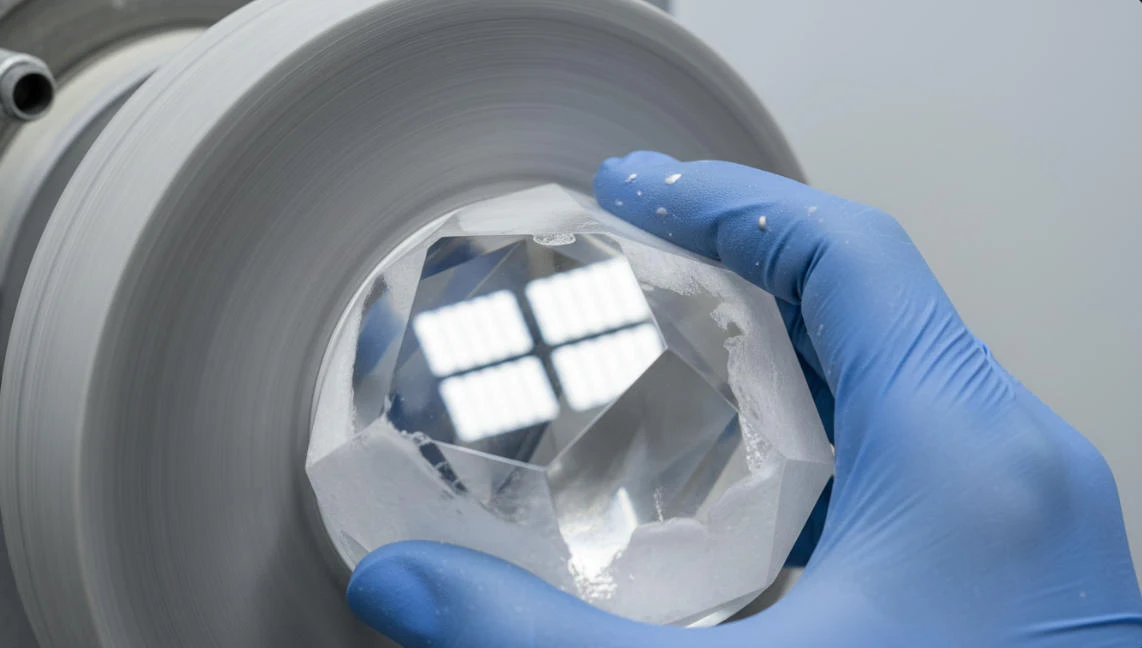
Gemstone polishing is the stage that follows a completed gemstone lapping sequence and transforms a geometrically precise, matte-finished surface into one that reflects light with mirror-grade clarity. Where lapping is fundamentally about material removal and dimensional accuracy, polishing operates at the micro and nano scale — its objective is to eliminate the residual surface irregularities left by the finest lapping stage and to bring the crystalline or mineral surface to its maximum optical expression. The International Gem Society (IGS) defines a true polish as the condition in which surface asperities are reduced below the wavelength of visible light, at which point the surface ceases to scatter light and begins to reflect it coherently — which is what produces the mirror effect visible to the naked eye.
This distinction between lapping and polishing is not merely semantic. It has direct operational consequences: gemstone polishing compounds work only on micro-scale surface texture. If the pre-polish surface still carries scratches from inadequate lapping — even scratches too fine to see clearly with the naked eye — polishing will not remove them. Instead, it will produce a surface that looks bright under indirect light but reveals a network of fine linear marks under direct or raking illumination. In the trade, this is described as a surface that “polishes bright but reads dirty,” and it is one of the most common quality failures in gemstone production at scale. The root cause is always insufficient lapping, not insufficient polishing.
Polishing Compounds for Gemstones: Cerium Oxide, Aluminum Oxide, and Diamond Paste Compared
The selection of polishing compound is among the most consequential decisions in the gemstone lapping and polishing workflow, and it must be matched to the specific mineral properties of the material being processed. Using the wrong compound does not simply reduce efficiency — it can produce a surface that never reaches full optical clarity regardless of the time invested. There are three primary compound categories used in professional gemstone polishing, each with distinct application profiles.
Cerium oxide is the benchmark compound for silica-based materials, including quartz crystal, rock crystal, and agate. It operates through a combined mechanical and chemical polishing mechanism — the cerium ions interact weakly with the silica surface at the molecular level, accelerating the smoothing process beyond what purely mechanical abrasion achieves. For quartz-family materials, cerium oxide consistently produces the highest luster values and the most uniform surface finish. According to gemstone process references documented by the IGS, cerium oxide is the preferred first-choice compound for any silica-dominant mineral where maximum transparency is the objective.
Aluminum oxide — also referred to as alumina — is the preferred compound for obsidian, labradorite, and similar volcanic or feldspar-family materials. It delivers effective micro-abrasion without the chemical interaction component of cerium oxide, making it more appropriate for materials where surface chemistry differs from silica. For obsidian in particular, aluminum oxide polishing combined with light pressure produces the high-contrast reflective surface that defines a quality finish on this material. Incorrect compound selection — for example, applying cerium oxide to labradorite — typically results in a surface that never reaches full brightness, a failure mode that wastes processing time and polishing media without producing a recoverable result.
Diamond polishing paste is the compound of choice for jade — both nephrite and jadeite — as well as for other hard, fine-grained materials where cerium oxide does not generate sufficient mechanical action. Diamond paste is graded by micron size rather than grit number; professional gemstone polishing of jade typically progresses through 3-micron and then 1-micron or 0.5-micron diamond paste on leather or wood laps. The hardness differential between diamond abrasive and the jade surface drives consistent micro-removal, and the paste carrier lubricates the surface to prevent localized heat buildup — a critical factor given jade’s thermal sensitivity established in the lapping section. Chromium oxide is used as an alternative to diamond paste for jade in some production contexts, particularly where a slightly warmer surface tone is preferred in the finished piece.
Hand Polishing vs. Machine Polishing: Matching the Method to Your Production Requirements
The choice between hand polishing and machine polishing in gemstone production is not a question of which method produces better results in isolation — it is a question of volume, piece geometry, material value, and consistency requirements. Both methods have defined application territories, and a professional jade manufacturer or gemstone processor will use both, matching the method to the specific production context rather than defaulting to one approach universally.
Hand polishing is the appropriate method for high-value, individually significant pieces — large jade carvings, oversized crystal spheres above 150mm diameter, or art-grade pieces where the aesthetic outcome justifies extended individual attention. The process begins with an initial polish pass using a leather or felt lap charged with the appropriate compound at low spindle speed and moderate, even pressure. The objective of this first pass is to eliminate the micro-scratch pattern left by the pre-polish lapping stage. The subsequent mirror polish pass uses finer compound, lower pressure, and slower, more deliberate tool movement to develop the final surface reflectivity. The defining variable in hand polishing quality is contact consistency — uniform pressure distribution across the full surface area of the piece throughout the entire polishing cycle. Experienced operators develop this tactile calibration over years of practice, which is why hand polishing of high-end pieces in professional gemstone production facilities is a skill-gated operation, not a general labor task.
Machine tumbling polishing is the correct method for batch production of standard-size pieces — tumbled stones, calibrated cabochons, sphere sets, and similar products where dimensional consistency and surface uniformity across large quantities are the primary objectives. Industrial vibratory polishing machines generate high-frequency oscillation that creates consistent relative motion between the polishing media and the stone surfaces simultaneously across all pieces in the batch. The media selection follows a two-stage sequence in professional gemstone lapping and polishing production: coarse polishing uses high-density ceramic media to address remaining surface texture from the lapping stage, while fine polishing uses softer organic media — walnut shell granules being the most common — loaded with the appropriate polishing compound powder. This means that machine polishing, when properly configured, delivers batch surface consistency that hand polishing cannot match at scale — and it does so with lower per-unit labor cost and higher throughput. For any gemstone production operation processing over 500 units per batch, machine polishing is the operationally rational choice for standard product categories.
Step-by-Step Gemstone Polishing Process: From Pre-Polish Inspection to Final Quality Control
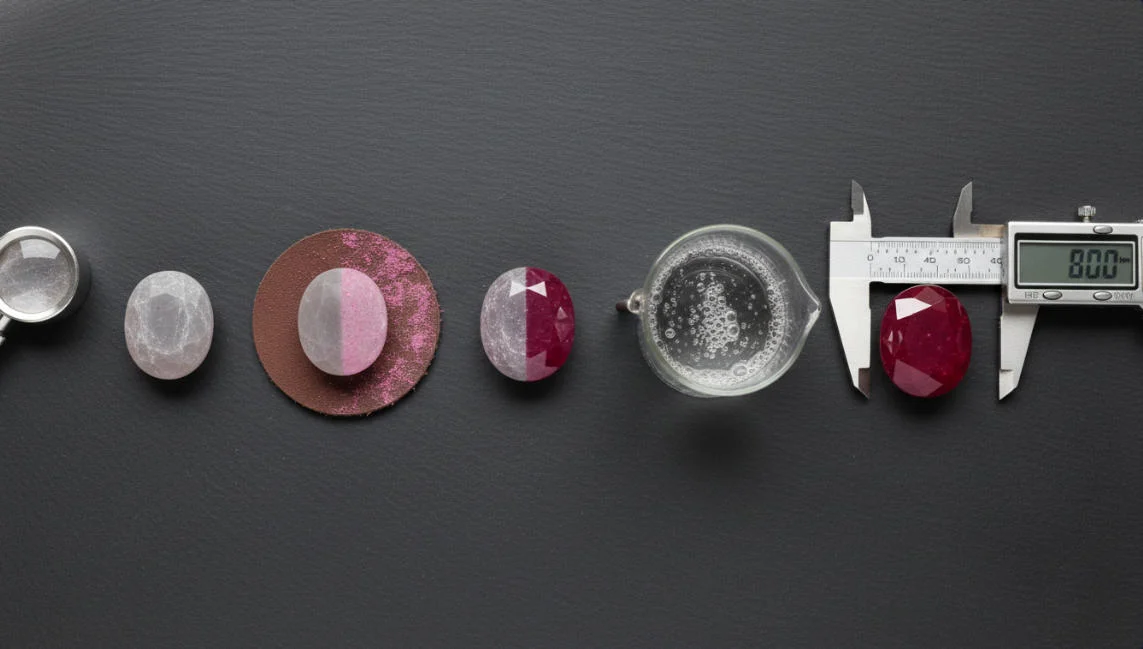
Understanding the individual components of gemstone polishing — compounds, tools, methods — is necessary but not sufficient for producing consistent results. The sequence in which those components are applied, and the quality checkpoints between stages, determine whether a polishing operation produces reliable output or generates inconsistent batches with unpredictable defect rates. The following sequence reflects the standard professional workflow used in industrial-scale gemstone lapping and polishing production.
1: Pre-Polish Inspection — The Quality Gate That Protects Your Polishing Output
Before any polishing compound contacts the stone, a pre-polish inspection must confirm that the lapping sequence has been fully completed. This inspection is the most important quality gate in the entire gemstone process because it is the last point at which lapping deficiencies can be identified and corrected before they become polishing failures. The inspection standard is a 10x loupe examination of the surface under directional light — the surface should show no visible scratch lines, no directional texture patterns, and no localized rough areas. A surface that passes this inspection at 10x will respond predictably to polishing. A surface that shows any residual lapping marks at this inspection stage will not polish out — it will produce a surface described earlier as “bright but dirty” that fails customer quality review.
The operational implication for procurement is direct: if a jade manufacturer or gemstone supplier cannot articulate their pre-polish inspection standard and the action taken when pieces fail it, their polishing consistency data cannot be trusted. You should ask for their documented inspection rejection rate at the pre-polish gate as a proxy for their overall process discipline.
2: Polishing System Selection and Material Matching
With the pre-polish inspection passed, the next step is confirming the correct polishing system configuration for the specific material in the batch. This means verifying that the correct compound, lap material, machine parameters, and cycle duration are set for the material being processed — not carried over from the previous batch without review. In gemstone production facilities processing multiple material types, batch changeover protocols should include explicit system reconfiguration steps to prevent cross-material parameter errors. A polishing configuration optimized for quartz will underperform on jade and potentially damage obsidian — the parameters are not interchangeable.
3: Progressive Polishing and Edge Monitoring
The polishing cycle itself progresses from compound-charged coarse media or leather lap through to the finest polishing stage, with intermediate checks to monitor surface development. The critical monitoring parameter during machine polishing is edge condition — gemstone polishing media acts on the highest points of a surface first, which means edges and ridges receive more polishing action per unit time than flat centers. For materials with lower hardness or those requiring extended polishing cycles, this differential polishing rate can produce edge over-rounding that distorts the intended form. Piece dimensions and edge sharpness should be checked against specification at intermediate intervals during long polishing runs, with cycle duration adjusted if edge degradation is detected before the surface target is reached.
4: Cleaning and Final Quality Inspection
After the polishing cycle is complete, all residual polishing compound must be fully removed before final inspection. Compound residue fills micro-surface features and creates a false impression of surface quality during inspection — a surface that appears fully polished with compound present may show residual texture once cleaned. Ultrasonic cleaning in a mild detergent solution followed by a clean water rinse is the standard cleaning protocol in professional gemstone lapping and polishing production. Final inspection combines 10x loupe examination for surface clarity with dimensional verification against the order specification. Pieces that show surface defects at final inspection must be quarantined and assessed — the defect type determines whether rework is possible or the piece must be downgraded or rejected. This means your final QC step is not just a sorting exercise — it is a process feedback mechanism that identifies which upstream stage generated the defect and where the parameter correction needs to be made.
Why “Polish Longer” Is Never the Answer to a Surface Quality Problem
One of the most operationally costly misconceptions in gemstone production is the belief that a surface quality problem can be resolved by extending the polishing cycle. It cannot. Gemstone polishing removes only micro-scale surface texture — it does not remove lapping scratches, geometric errors, or thermal damage. Polishing longer on a defective surface produces one of two outcomes: a surface that still shows the underlying defect, or a surface where edge over-polishing has degraded the dimensional accuracy of the piece while the core defect remains. Either outcome represents a loss — of time, media, and either the piece value or the rework cost. The correct response to any surface quality failure is to return to the lapping stage, identify which grit level the defect originates from, and reprocess from that point. This means that a well-disciplined gemstone lapping and polishing operation spends more time on pre-polish inspection and lapping completion verification than it does on extended polishing cycles — and its total rework rate is lower as a result.
Gemstone Lapping and Polishing by Material
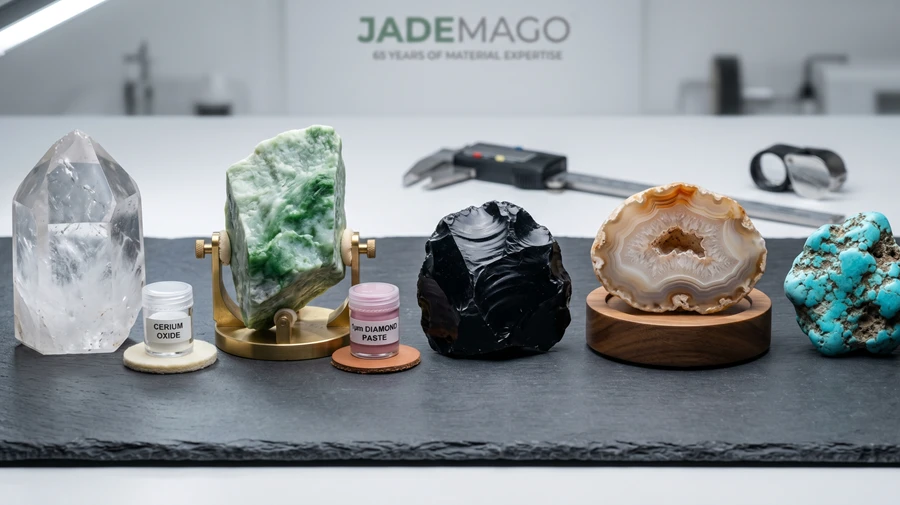
No single set of gemstone lapping and polishing parameters works across all mineral categories. Every material category presents a distinct combination of hardness, grain structure, thermal sensitivity, and surface chemistry that requires a correspondingly distinct processing approach. Using parameters optimized for one material on a different material category is one of the most common sources of surface quality failure in gemstone production — and it is entirely preventable with the correct material-specific process documentation. The following reference covers the five most commercially significant gemstone categories processed in professional lapidary manufacturing, including the processing parameters, compound selection, and the specific failure mode most likely to occur when the process is not correctly matched to the material.
Quartz Crystal: The Benchmark Material for Gemstone Lapping and Polishing
Quartz — including rock crystal, amethyst, citrine, rose quartz, and smoky quartz — is the reference material against which most gemstone lapping process parameters are calibrated. With a Mohs hardness of 7 and a consistent crystalline structure, quartz responds predictably to standard diamond lap progressions and tolerates moderate processing speeds without thermal damage risk. The recommended grit sequence for quartz lapping is 200 → 600 → 1200 → 3000, with each stage fully completing before advancement. Attempting to skip from 600 directly to 3000 on quartz — a shortcut tempting under production pressure — leaves a subsurface scratch network that manifests as a diffuse haze in the finished polish, reducing the transparency that defines value in clear quartz categories.
For gemstone polishing, cerium oxide on a felt or tin lap produces the highest luster values for quartz-family materials, leveraging the chemical-mechanical interaction between cerium ions and the silica surface described earlier. Machine vibratory polishing is the preferred production method for standard-size quartz pieces, delivering consistent results across large batches with predictable cycle times. The primary quality risk for quartz polishing is a milky or fogged surface finish — invariably traced back to either incomplete lapping at the 1200-grit stage or cerium oxide contamination from a previous batch of incompatible material. This means that equipment cleaning between material changeovers is a non-negotiable protocol step in any multi-material gemstone production facility.
Jade Lapping and Polishing: Why Jade Demands the Strictest Process Discipline
Jade — encompassing both nephrite and jadeite — represents the highest technical difficulty among common commercial gemstone materials in gemstone lapping and polishing, rated at difficulty level four out of five in standard lapidary processing references. The complexity arises from several converging material properties: jade’s cryptocrystalline or interlocking fibrous grain structure means that surface quality is determined not just by the outermost surface layer but by the integrity of the grain boundaries immediately beneath it; jade’s moderate hardness (nephrite: 6–6.5 Mohs, jadeite: 6.5–7 Mohs) combined with its toughness makes it resistant to rapid material removal while also susceptible to edge chipping under incorrect pressure; and jade’s thermal sensitivity — established in the lapping section — means that heat accumulation at any processing stage can permanently compromise surface optical quality in ways that are not immediately visible during processing.
The gemstone lapping sequence for jade must advance in smaller grit increments than quartz, with no stage skipping under any circumstances. A representative sequence runs 200 → 400 → 800 → 1200 → 2000 → 3000, with the transition from each stage confirmed by loupe inspection rather than timed by a fixed cycle duration. The reason for this stricter discipline is grain structure: jade’s interlocking crystal network means that scratch patterns from coarser grits propagate slightly deeper relative to the apparent scratch depth compared to single-crystal materials, and finer grits must work longer to fully clear those patterns. According to technical documentation from the Swiss Gemmological Institute SSEF, the surface condition of processed jade is a direct indicator of processing discipline — irregularities in surface texture that appear only under strong directional light are a recognized marker of inadequate grit progression in professional jade assessment.
Diamond polishing paste — typically 3-micron followed by 1-micron or 0.5-micron — on leather or hardwood laps is the correct polishing system for jade. Cerium oxide, while effective for silica materials, does not generate sufficient mechanical interaction with jade’s grain structure to produce a full mirror finish. The characteristic failure mode when incorrect compound is used on jade is a surface that develops partial brightness in some areas while remaining dull in others — a result of differential polishing action across the grain boundary network. For standard-volume jade production, machine vibratory polishing with correctly matched media and diamond compound delivers acceptable consistency. For high-value or artistically significant jade pieces, hand polishing by an experienced operator is the appropriate method — the irreplaceable value of such pieces justifies the higher per-unit processing time, and the tactile feedback of hand polishing allows real-time adjustment that machine cycles cannot replicate.
As a jade manufacturer with over 65 years of continuous jade processing experience, JADEMAGO has developed material-specific parameter sets for both nephrite and jadeite across all standard product categories — parameter sets that encode decades of observed material behavior rather than theoretical specifications. This means that when you source jade products through JADEMAGO, the processing parameters applied to your order have been validated against actual production outcomes across millions of finished pieces, not derived from general lapidary guidelines.
Obsidian: Managing Chip Risk Through Controlled Gemstone Lapping Parameters
Obsidian presents a distinct challenge profile in gemstone lapping and polishing: it is a volcanic glass with no crystalline structure, which means it lacks the grain boundary network that gives crystalline materials their fracture resistance. Obsidian fractures conchoidally — in smooth, curved breaks that propagate readily from surface stress concentrations. This makes it highly sensitive to pressure concentration during lapping and highly susceptible to edge chipping at coarser grit stages. The correct lapping sequence for obsidian starts at 200 grit rather than the 80–120 grit used for harder materials, progressing through 400 → 600 → 1200 → 3000 with consistently light pressure throughout. Any localized pressure concentration — from an uneven lap surface, a piece held at an angle, or a worn disc with high spots — generates a chip initiation site that propagates into the surface and requires returning to the previous lapping stage to recover.
For gemstone polishing, aluminum oxide on a felt or leather lap produces the reflective high-contrast finish that characterizes quality obsidian products. The polishing pressure must remain light throughout — obsidian’s amorphous structure polishes efficiently under the right compound and does not require the pressure levels appropriate for harder crystalline materials. Machine vibratory polishing is preferred for obsidian batch production, with careful attention to media weight and machine amplitude settings to prevent piece-to-piece impact damage during the cycle. The primary failure mode for obsidian is edge chipping — visible as small conchoidal breaks along piece edges that reduce both aesthetic quality and, for wearable products, safety compliance. This means that edge condition monitoring throughout the gemstone lapping and polishing sequence is more critical for obsidian than for any other common commercial material.
Agate and Chalcedony: Slower Processing for Microcrystalline Structures
Agate and chalcedony belong to the microcrystalline quartz family — their silica content is essentially equivalent to macrocrystalline quartz, but their grain structure is composed of microscopic interlocking crystals rather than a single crystal orientation. This microcrystalline structure makes agate more complex to process than standard quartz despite the similar chemical composition, because surface quality is determined by the collective behavior of millions of grain boundaries rather than a single crystal face. In practical terms, gemstone lapping of agate requires the same grit sequence as quartz (200 → 600 → 1200 → 3000) but at slower processing speeds — rushing the cycle on agate produces a surface that appears matte-smooth but carries micro-scale grain boundary relief that prevents full polish development.
Cerium oxide is the preferred polishing compound for agate, producing results comparable to its performance on macrocrystalline quartz when the lapping sequence has been correctly completed. Aluminum oxide is used as an alternative, particularly for banded agate where the alternating band compositions may respond differently to cerium oxide chemistry. The primary quality risk for agate polishing is surface non-uniformity — different banding layers or inclusion zones polishing to different brightness levels within the same piece. This is a material characteristic rather than a process error, but it can be minimized by ensuring complete lapping sequence execution and consistent compound distribution during polishing. This means that buyers selecting agate products should expect and accept minor inter-band luster variation as a natural material characteristic, while holding their supplier accountable for any large-scale non-uniformity that indicates process inconsistency.
Turquoise: Special Handling Requirements in Gemstone Lapping and Polishing
Turquoise is among the most technically demanding materials in commercial gemstone lapping and polishing due to a combination of properties that work against standard lapidary processing: its Mohs hardness ranges from 5 to 6 depending on formation conditions and treatment status, placing it at the lower end of common gemstone hardness; its porous microstructure means it absorbs processing fluids — including cooling water and polishing compounds — which can alter its color and surface behavior during processing; and its relatively high bound water content makes it sensitive to both thermal stress and chemical interaction with processing media.
Gemstone lapping of turquoise requires the lightest pressure settings used for any commercial gemstone material. The coarse lapping stage should start at 200–400 grit rather than the 80–120 grit appropriate for harder materials, and coolant flow must be carefully managed to provide adequate thermal control without saturating the porous structure with processing fluid. Most commercial turquoise destined for jewelry production has been stabilized — treated with resin under vacuum pressure to fill the pore network and increase both hardness and chemical resistance. Stabilized turquoise (resin stabilized) processes more predictably than natural turquoise and tolerates slightly more aggressive processing parameters, but still requires the lighter pressure settings appropriate for a material in the 5–6 Mohs range.
For polishing, wax-based compounds or very light alumina polishing is the correct approach for turquoise. The porous structure that makes standard compound polishing problematic for natural turquoise also means that wax-based finishing seals the surface while producing acceptable luster — a dual-function outcome not achievable with oxide compound polishing. The critical failure mode for turquoise processing is structural damage: excessive pressure, heat accumulation, or chemical interaction with incompatible compounds can produce surface crazing — a network of fine surface cracks — or localized color alteration, either of which permanently reduces the piece’s commercial value. This means that gemstone lapping and polishing of turquoise should never be assigned to operators without specific experience with the material, regardless of their general lapidary competence.
FAQs About Gemstone Lapping and Polishing
1. What Is the Difference Between Gemstone Lapping and Gemstone Polishing?
Gemstone lapping removes material, corrects geometry, and prepares the surface from a rough-cut state to a near-smooth pre-polish condition. Gemstone polishing then eliminates residual micro-scale surface texture to develop mirror-grade optical clarity. The two stages are sequential and interdependent — shortcutting the lapping sequence makes a true mirror finish impossible regardless of the polishing compounds or tools applied afterward. This means that any quality failure visible in a finished polish almost always originates in an incomplete lapping stage, not in the polishing stage itself.
2. How Many Grit Stages Does Professional Gemstone Lapping and Polishing Require?
For most commercial materials, a minimum of three lapping stages is required: coarse (80–260 grit), medium (400–1200 grit), and fine pre-polish (2000–3000 grit). Technically demanding materials such as jade and obsidian require additional intermediate stages. As documented by the International Gem Society (IGS), reducing stages below the material-appropriate minimum is the primary cause of polishing-stage defects in production lapidary operations. In professional gemstone production, stage count is determined by material assessment and inspection outcomes — never by time constraints.
3. What Polishing Compound Works Best for Jade and Quartz Crystal?
For jade, diamond polishing paste (3-micron → 0.5-micron) on leather or hardwood laps is the professional standard, as referenced by the SSEF Swiss Gemmological Institute. For quartz crystal, cerium oxide on a felt or tin lap delivers the highest luster through its chemical-mechanical interaction with silica. Applying the wrong compound to either material produces a surface that never reaches full optical clarity — compound selection must match mineral properties. Any jade manufacturer recommending a single universal compound for all materials is demonstrating a process gap that will be directly visible in finished surface quality. This means verifying your supplier’s material-specific compound protocol before committing to a bulk order.
4. How Does JADEMAGO Ensure Polishing Consistency at Scale?
JADEMAGO maintains batch consistency through documented material-specific process parameters, three-stage quality gate inspections (post-CNC, pre-polish, and final), and calibrated machine polishing systems matched to each material and product category. For high-value jade pieces, a skill-gate protocol ensures only operators with verified jade processing experience handle the material. These mechanisms produce first-pass acceptance rates above 96% for quartz categories and above 93% for jade — figures you can request as part of your pre-order technical review. You can also request material-specific sample sets for surface standard approval before bulk gemstone production begins.