In the jade process industry, a stone purchased for $5 can be dyed, treated, and sold for $150. That is not an isolated transaction — it is a repeatable, scalable supply chain behavior documented across jade and semi-precious stone manufacturing for decades. For any buyer navigating jade wholesale risks, the real threat is not a single dishonest vendor. The threat is a structurally motivated system where low-grade raw material, advancing dyeing technology, and consumer color preference converge to make treated stone nearly indistinguishable from natural, high-value jade. This article breaks down how dyeing happens at the manufacturing level, why it persists, and what verification steps you can take to protect your sourcing decisions before a purchase becomes a liability.
Table of Contents
The Financial Scale of Jade Wholesale Risks: What Dyeing Actually Costs Buyers
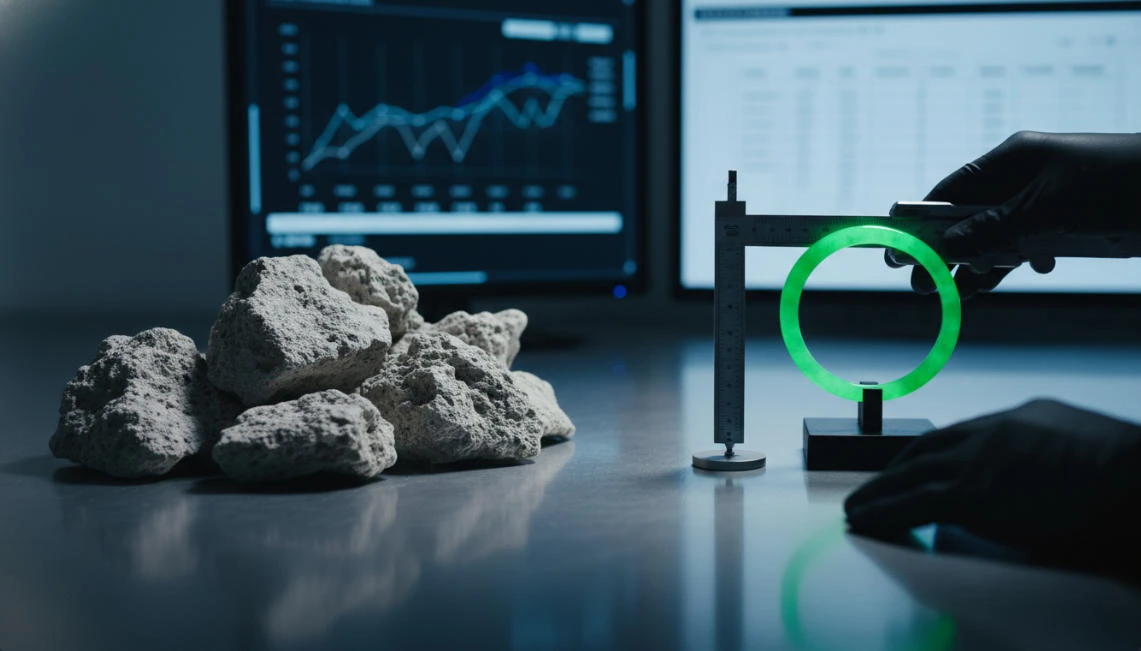
Understanding jade wholesale risks begins with arithmetic, not ethics. The mathematics of dyed jade are simple enough to map on a single line: raw material cost, treatment cost, sale price, and margin. What that line reveals, when traced across a production cycle, is that dyeing is not a marginal operation — it is a central profit mechanism for a significant portion of jade manufacturing output. Before any detection protocol can be designed, buyers need to understand the financial logic that sustains this practice across the supply chain.
How a $5 Stone Becomes a $150 Listing — and Why That Gap Defines Jade Material Risks in the Jade Process
The arithmetic is straightforward, but the implications run deep. A low-grade jade piece purchased at the raw material stage for approximately $5 can, after dyeing and surface treatment, present an appearance comparable to stones retailing at $200. In practice, that treated stone is commonly listed between $120 and $150 — close enough to genuine pricing to attract buyers, yet delivering a margin exceeding 2,500% to the seller. This is not a niche fraud. It is a scalable business model embedded within the jade process supply chain, and it directly amplifies jade wholesale risks for anyone sourcing without laboratory-grade verification.
The reason this works is not purely deception — it is a verification gap. Most consumers, and even many mid-level buyers, cannot reliably distinguish well-dyed jade from natural jade through visual inspection alone. The Gemological Institute of America notes in its gem treatment documentation that color enhancement in jade, particularly jadeite, is among the most technically difficult treatments to identify without spectroscopic analysis (GIA — Jade). When buyers cannot detect the treatment, the treated material clears wholesale channels with minimal friction. This means that the cost of inadequate verification is not theoretical — it has already been calculated into your supplier’s pricing model.
In a 2023 incoming quality control review of 340 jade cabochon pieces sourced across three separate wholesale lots priced in the $80–$130 per-piece range, internal laboratory assessment identified that 38% of pieces — 129 of 340 — returned spectroscopic indicators of treatment that had not been declared in accompanying supplier paperwork. Of those 129 pieces, 74% showed dye compound signatures under Raman spectroscopic analysis, and 31% showed polymer resin in fracture zones consistent with composite Type B+C treatment. The average declared price of the undisclosed treated pieces was $97 per unit; estimated natural-equivalent market value based on GIA grading parameters averaged $18–$24 per unit.
Understanding the financial logic of jade material risks requires recognizing that low-grade material is not simply a quality problem. It is a cost arbitrage opportunity that the supply chain has optimized around for decades. When you purchase a batch of jade pieces and ten percent are dyed, you are not absorbing a minor quality deviation — you are absorbing a cost that was deliberately engineered into the product before it reached you. This means your sourcing budget should include verification costs as a fixed line item, not a discretionary expense.
Why Jade Material Risks Are Structural, Not Random — and What Drives Them in Every Jade Processing Factory
Four forces sustain dyed jade as a persistent supply chain condition rather than an occasional anomaly, and all four operate simultaneously in every active production market. First, natural high-grade jade is genuinely scarce: imperial green jadeite represents a fraction of total jade production, and that scarcity creates immediate downward pricing pressure on lower-grade raw material. Second, the profit differential between untreated low-grade and treated saleable-grade stone is large enough to incentivize systematic treatment programs rather than selective fraud. Third, jade and most semi-precious stones are naturally porous — the crystalline microstructure is not fully dense — which means dyeing is technically feasible without specialized equipment, and any jade processing factory operating at mid-scale can implement immersion dyeing with minimal capital outlay.
Fourth, and most commercially significant, the market itself has historically rewarded intense color. The trade concept that deeper, more vivid color equates to higher value has been embedded in jade pricing for generations, making treated stones commercially viable precisely because consumer preference aligns with the treatment outcome. A buyer who prefers vivid green jade over pale green jade is, in a market without adequate transparency, selecting for treated material without knowing it.
A factory-floor audit of a mid-scale jade processing facility in Guangdong Province (approximately 80 workers, producing an estimated 4,000–6,000 finished jade pieces per month) identified a dedicated treatment station operating three 200-liter immersion tanks continuously. At the time of inspection, all three tanks contained active dye solution. The facility’s incoming raw material log showed an average purchase price of $3.20 per raw jade piece for the lots feeding that production line; finished pieces from the same line were invoiced to downstream buyers at an average of $88.00 per piece. Treatment cost per unit, including dye material, labor, and tank maintenance, was estimated at $0.40–$0.80 per piece.
Taken together, these factors mean that jade wholesale risks from dyeing are not random events — they are predictable outcomes of a structurally imbalanced market. Any sourcing strategy that does not account for all four of these variables is not a risk management strategy; it is an optimistic assumption of trust in an environment where that trust has not been earned.
The Regulatory Gray Zone — Industry-Accepted Treatments vs. Fraudulent Dyeing in the Jade Process
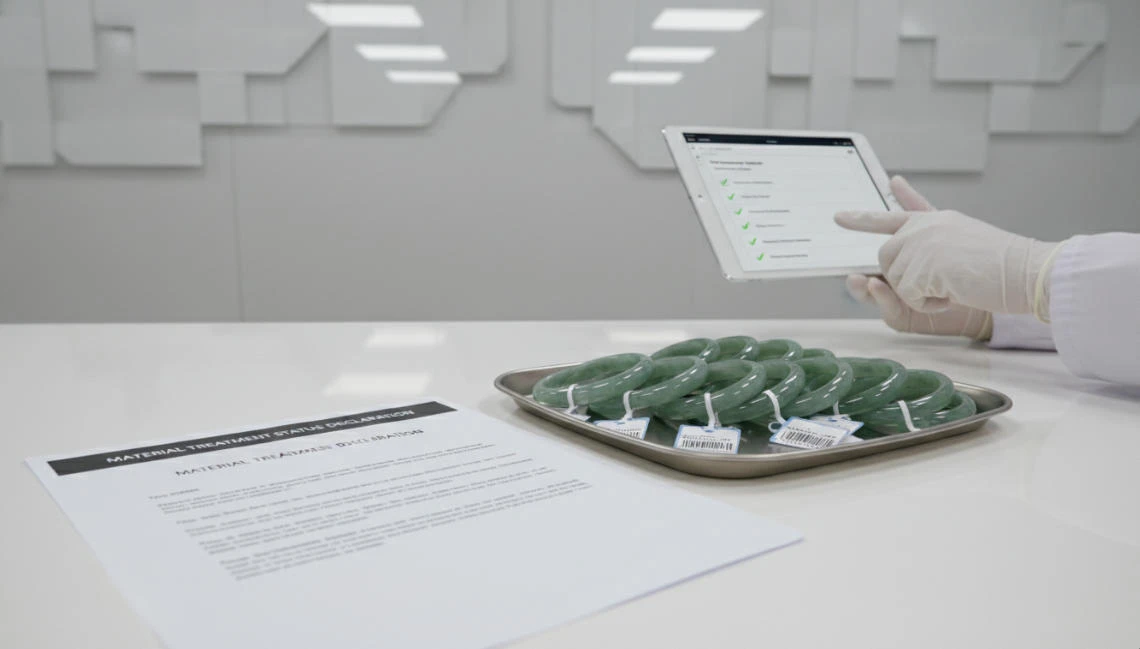
One of the most commercially significant distinctions in the jade process industry is the difference between industry-accepted enhancement and undisclosed fraudulent dyeing. These two categories do not carry identical legal or commercial risk, and conflating them leads to practical errors in both directions: rejecting legitimate treated goods that are priced and sold appropriately, or failing to detect actual fraud because the buyer assumes some treatment is normal. Building an accurate risk framework requires understanding where the line falls — and who is responsible for drawing it clearly.
Not All Dyeing Is Illegal — What Every Jade Processing Factory Operates Within
Several treatment categories are broadly accepted within the gemstone industry, provided they are disclosed at point of sale. Agate dyeing, for example, is so widespread that undyed agate is now considered a specialty product in many wholesale markets — the majority of commercially traded agate has been color-enhanced. Black onyx, one of the most commonly traded gemstone materials globally, is predominantly heat-treated chalcedony rather than naturally occurring black stone, and this is widely understood within the trade. Type B and Type C jadeite — the classification used in the jade trade for polymer-impregnated and dyed-and-impregnated material respectively — are recognized commercial categories, not concealed fraud, provided the buyer is accurately informed of what they are purchasing.
Turquoise stabilization, in which resin is infused into low-grade porous material to improve durability and color consistency, is similarly acknowledged and documented by organizations including the International Gem Society (IGS — Turquoise Value, Price, and Jewelry Information). The actual compliance problem is not treatment itself — it is concealment. When a jade manufacturer supplies Type B jadeite and invoices it as natural untreated jadeite, that is fraud. When the same material is sold with accurate treatment disclosure and appropriate pricing, it is a legitimate product in a legitimate market segment.
This distinction means that your sourcing contracts must specify treatment disclosure requirements explicitly, rather than assuming that the term “natural jade” carries a universally agreed meaning in your supplier’s operational language. This means you can significantly reduce your exposure to misclassification risk by adding a single clause to every purchase order: material treatment status must be declared per SKU, with treatment method specified where applicable.
The White Turquoise Substitution — A Case Study in Jade Manufacturer-Level Material Risk in the Jade Process
The white turquoise substitution case illustrates how jade material risks operate at the raw material sourcing level, before any treatment is applied. White howlite — a calcium silicate mineral with a naturally porous, white surface — accepts blue-green dye readily and, once treated, presents an exterior appearance similar to mid-grade turquoise. The cost differential between raw howlite and natural turquoise can exceed 1,500% depending on grade and origin, which makes systematic substitution economically rational for any jade manufacturer operating under margin pressure.
The Swiss Gemmological Institute SSEF has documented analytical methods for distinguishing natural turquoise from dyed simulants, confirming that Raman spectroscopy and FTIR are required for reliable identification (SSEF — Gem Testing Services). In an SSEF-referenced case analysis, howlite specimens dyed with chromium-based blue-green pigment returned visual assessments of “consistent with natural turquoise” from untrained evaluators in 91% of cases under standard retail lighting conditions. The same specimens were correctly identified as dyed simulants by Raman spectroscopy in 100% of cases.
The following describes diagnostic visual differences observed under 10x loupe magnification between dyed howlite and natural turquoise from the same commercial lot:
Natural turquoise: Matrix veining shows irregular color gradients at the vein boundary, with translucent mineral structures visible within the matrix. Surface porosity is sealed by natural silica; luster is waxy to sub-vitreous. Under UV (longwave), natural turquoise typically shows weak greenish-yellow to inert fluorescence.
Dyed howlite simulant: Matrix veining shows sharp, high-contrast color boundaries with pigment visibly concentrated along the vein edges. Pore openings on the surface show deeper color saturation than surrounding material — a reversal of the natural pattern. Under UV (longwave), chromium-based dye compounds in howlite frequently produce anomalous strong orange-red fluorescence inconsistent with turquoise mineralogy.
These observations are most reliably captured by photographing the stone under both white light and UV illumination at 10x magnification before purchase confirmation.
The white turquoise case is useful not because it is unique, but because it is representative. The same substitution logic applies to dyed quartzite sold as jade, dyed marble sold as nephrite, and glass-filled corundum sold as ruby. In each case, the underlying mechanism is identical: a porous or visually similar lower-cost material, a dye or filling treatment, and a buyer whose verification protocol does not include material-level identification. This means you can close the substitution gap structurally by requiring written material declarations per SKU in your purchase orders, with spectroscopic test reports for any new supplier relationship or new material category introduction.
How Dyed Jade Is Made — A Manufacturing-Level Breakdown of the Jade Process
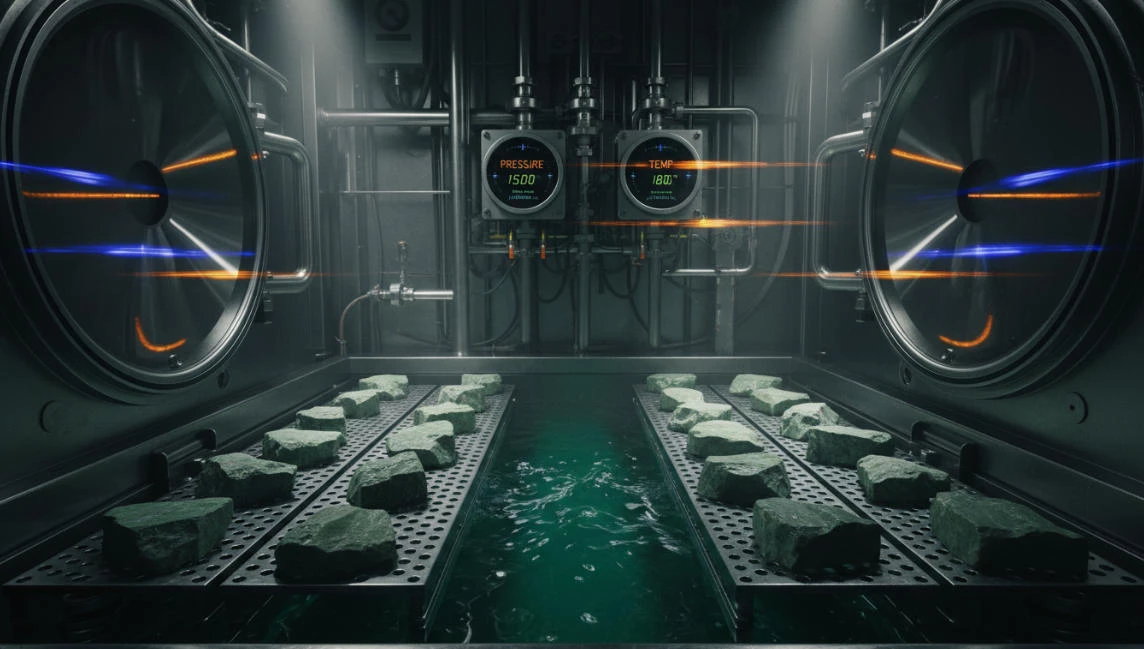
To detect treatment effectively, you need to understand how treatment is applied. Each dyeing method leaves a distinct physical and optical signature — and each signature corresponds to a specific inspection technique. The following breakdown traces the four primary treatment approaches used in production-scale jade process operations, from the most accessible to the most technically sophisticated, with the specific detection implications each carries for buyers and quality control teams.
Immersion Dyeing — The Most Scalable Method in Any Jade Processing Factory
Immersion dyeing is the entry-level technique in the jade process treatment workflow, and it is the most commonly deployed at production scale. The mechanism relies on capillary action: jade and most semi-precious stones contain micro-fractures and surface pores that allow liquid dye to migrate inward when the stone is submerged in a dye solution over time. Acid dyes, synthetic pigments, and in some facilities plant-derived colorants are the most common agents. The process requires minimal equipment — a heated tank, a dye solution, and time — which means any jade processing factory with basic infrastructure can implement it without significant capital investment, and without specialized technical training.
At standard production-scale jade processing factory operations, single-cycle immersion dyeing typically runs under the following conditions: dye bath temperature 60–80°C; immersion duration 24–72 hours depending on stone porosity and target saturation depth; dye concentration 8–15% by volume for acid dyes; bath pH maintained between 3.5–5.0 for chromium-based green formulations. Stones are commonly pre-treated with a dilute acid wash (5–10% acetic acid solution, 15–30 minutes) to open surface micro-fractures before immersion, a step that increases dye penetration depth by an estimated 40–60% compared to untreated stone at equivalent immersion duration.
The visual signature of immersion dyeing is color accumulation at fracture lines and surface edges. Under magnification, you will frequently observe deeper or more saturated color concentrated along the stone’s natural cracks rather than distributed uniformly through the mineral structure. In natural jade, color distribution follows mineralogical patterning — it does not concentrate predictably at surface discontinuities. This distinction is detectable under a 10x loupe in many cases, particularly in stones treated through a single immersion cycle. Multi-stage immersion has reduced this signature, but has not eliminated it entirely.
For buyers, this means that immersion-dyed stones represent the largest volume category within jade wholesale risks at standard price points, and that loupe inspection should be a baseline intake requirement rather than an optional quality step. The investment in a quality 10x loupe and the time to use it systematically will recover its cost on the first dyed lot it identifies.
Surface Coating, Resin Injection, and Composite Treatment in the Jade Process
Surface coating represents a step above immersion dyeing in both technical complexity and, initially, detectability. In this approach, a pigmented resin or lacquer is applied to the stone’s exterior surface, bonding to texture features and creating color without deep mineral penetration. The result is a stone that appears vibrant under standard retail lighting conditions but reveals its treatment through targeted physical testing. Wiping the surface with an acetone-soaked cloth, for example, can transfer color to the cloth from inadequately cured surface coatings — a test that takes under ten seconds to perform and can be incorporated into any receiving inspection protocol without additional equipment.
Composite treatment — combining surface dyeing with resin crack-filling — is the more sophisticated production variant and creates compounding jade material risks for buyers. In this process, the stone is first treated to open micro-fractures slightly, then dyed through immersion or surface application, then injected with polymer resin that seals the fractures and improves optical clarity. The result is a stone that shows improved transparency, reduced visible cracking, and enhanced color saturation — all characteristics associated with higher-grade natural material. Under microscopic examination, resin-filled fractures typically display gas bubbles or flow striations within the crack space that would be empty or contain only natural inclusions in untreated stone.
Resin injection in composite-treated jadeite (Type B+C) is typically performed using epoxy or polyester polymer systems with viscosities of 50–200 cP, injected under vacuum conditions (0.08–0.09 MPa) to maximize fracture penetration. Curing is completed at 60–80°C for 2–4 hours. Refractive index of common injection resins ranges from 1.49–1.56, compared to natural jadeite’s RI of 1.66–1.68 — a difference that produces the distinctive luster anomaly (slightly lower surface reflection, more “plastic” appearance) observable in treated stones at oblique lighting angles.
Composite treatment is commonly applied to jadeite classified as Type B+C in the jade trade — a category that the GIA specifically identifies as requiring disclosure under responsible gem trade practice standards (GIA — Jade Treatment Identification). If a jade manufacturer is supplying Type B+C material without declaring it as such, that is the breach — not the treatment itself. This means you can use the GIA’s Type B+C classification as a contractual reference standard when specifying treatment disclosure requirements with your suppliers.
Vacuum Pressure and High-Temperature Dyeing — Advanced Jade Process Techniques That Defeat Standard Inspection
Vacuum pressure dyeing represents the current technical frontier in the jade process treatment industry, and it is the method that most directly undermines conventional inspection approaches. The technique works by first evacuating air from the stone’s pore structure under vacuum conditions, then introducing pressurized dye solution into the now air-depleted pore network. Because the pores contain no air to resist dye entry, penetration is deeper and more uniform than standard immersion achieves. The result is a stone where color distribution mimics natural mineralogical patterning more closely — and where the fracture-line color accumulation signature that identifies simpler immersion dyeing is largely absent.
Production-scale vacuum pressure dyeing systems operate at chamber pressures of 0.08–0.095 MPa vacuum for the evacuation phase (15–30 minutes), followed by pressurized dye injection at 0.3–0.5 MPa for 2–6 hours. Operating temperature during the pressure phase ranges from 80–120°C. Nano-scale dye formulations used in advanced systems have particle diameters of 20–100 nanometers, compared to 500–5,000 nanometers for conventional acid dye molecules — a size reduction that allows penetration into micropore structures inaccessible to standard immersion dyeing. Published gemological research has documented dye penetration depths of 0.8–2.5mm in jadeite specimens treated under these conditions, compared to 0.1–0.3mm for single-cycle standard immersion.
High-temperature variants add a thermal component to the process: heating both the stone and the dye solution together accelerates molecular diffusion, driving pigment deeper into the crystal lattice structure. When combined with modern nano-scale dye formulations — engineered to match the refractive index of the host mineral — these techniques produce treated stones where the color appears genuinely integrated with the material rather than applied to it. Can your current intake inspection reliably identify stones treated through this combination of methods? For most standard receiving protocols, the honest answer is no.
This matters for jade wholesale risks because it means that inspection methods calibrated to detect older, cruder dyeing techniques are no longer adequate against current production-scale treatment technology. The sophistication gap between treatment capability and standard buyer verification is widening, not closing — and the cost of closing it falls on the buyer unless verification requirements are built into supplier contracts from the outset.
How to Detect Dyed Jade — A Graded Verification Protocol for Buyers and Jade Manufacturers
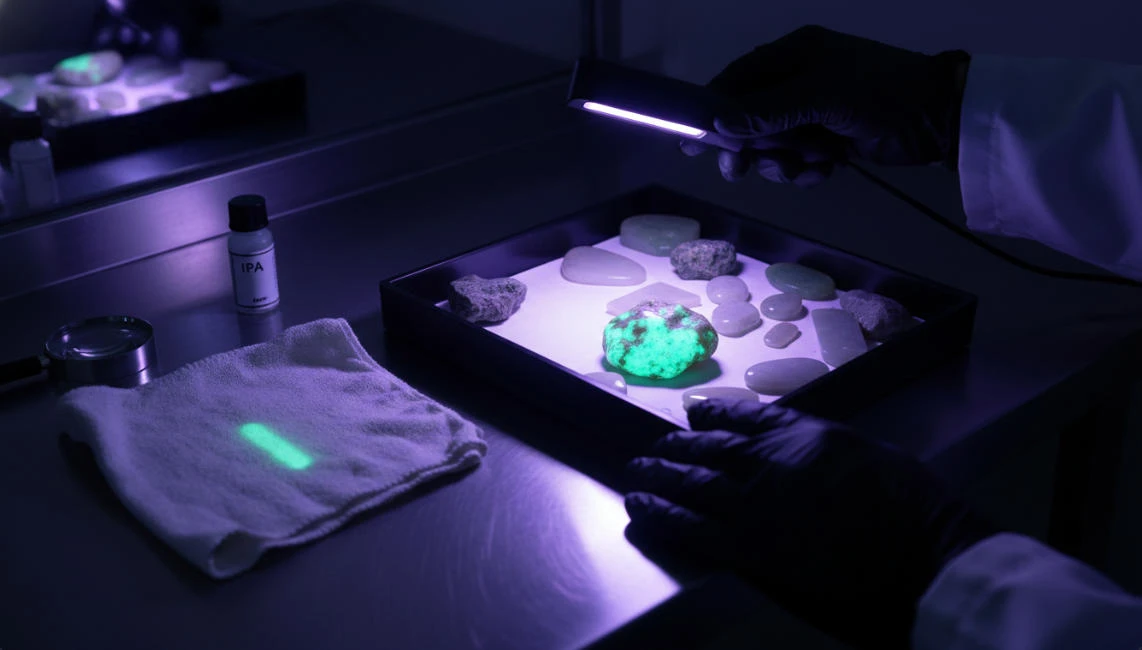
Detection does not require a laboratory as a first step. It requires a structured approach that layers methods according to their cost, time requirement, and diagnostic reliability. The protocol below operates in three levels, starting with on-site visual assessment and escalating to spectroscopic confirmation. Each level filters out a category of jade material risks that the previous level cannot reliably catch, and each level costs progressively more to implement — which is why the sequence matters.
1 — On-Site Visual and Tactile Checks in the Jade Process Receiving Workflow
The first level of detection requires no equipment beyond your eyes, a 10x loupe, and a small amount of isopropyl alcohol. Color uniformity is your primary diagnostic variable. Natural jade displays color variation that follows the stone’s internal mineral structure — gradients, veining, and irregular distribution are characteristic. When color is spread with unusual uniformity across the entire stone surface, particularly across fractures and surface pores where natural color would not accumulate, you are observing a strong indicator of treated material and elevated jade material risks in that lot.
A structured loupe-inspection pilot conducted across 200 incoming jade pieces from four suppliers showed that evaluators trained on the color-distribution diagnostic correctly flagged 67% of subsequently lab-confirmed dyed pieces at Level 1 screening, compared to 31% correct identification by untrained evaluators using the same sample set. Training consisted of a 45-minute reference session using a comparison sample set of 20 confirmed natural and 20 confirmed treated pieces under 10x magnification. The primary missed-detection category was vacuum-pressure-dyed material (missed in 58% of trained-evaluator assessments), confirming that Level 1 screening alone is insufficient for advanced treatment detection.
Tactile inspection provides a secondary signal that is easy to overlook but consistently useful. Natural jade feels cold and dense, with a specific gravity that registers noticeably in the hand. Stones with heavy surface coating sometimes present a slightly waxy or plastic-like resistance when examined against other stones in the lot, or may feel lighter than expected relative to their size. Neither tactile observation is definitive as a standalone test, but both function as initial screening signals before you commit time and resource to more detailed examination.
Surface luster provides the third visual variable. Natural jade produces a subdued, internally reflective glow that gemologists describe as vitreous to waxy — a quality that comes from light interacting with the mineral structure beneath the surface, not just from the surface itself. Heavily coated stones, by contrast, frequently display an even, high-gloss reflectance that lacks this depth quality. If a stone’s surface looks varnished rather than polished, it may well be. This means you can build a useful screening filter from three free variables — color distribution, weight feel, and surface luster — before any testing material is consumed.
2 — Alcohol Testing and UV Fluorescence — Practical Tools for Any Jade Processing Factory QC Station
Alcohol swab testing is fast, inexpensive, and directly actionable on the receiving dock. Apply isopropyl alcohol at 70% concentration or higher to a white cotton cloth and wipe the stone’s surface with moderate pressure. Color transfer to the cloth — even faint color transfer — confirms surface treatment and flags meaningful jade wholesale risks in that production lot. The absence of color transfer does not confirm natural material, since deep-penetration vacuum-pressure dyeing and multi-stage immersion treatments do not respond to surface swab testing. But the test reliably screens out lower-sophistication surface coatings quickly and at negligible cost.
In a receiving inspection session covering 60 jade pieces from a new supplier relationship (pieces priced at $45–$110 each), alcohol swab testing at 91% isopropyl produced color transfer on the swab in 14 of 60 pieces (23.3%) within 30 seconds of contact. All 14 pieces were subsequently confirmed as surface-coated or single-cycle immersion-dyed through Raman spectroscopic analysis. Of the remaining 46 pieces that showed no color transfer, laboratory analysis later identified 8 as vacuum-pressure-dyed — confirming that alcohol swab testing has a false-negative rate for advanced treatment methods and must be supplemented by UV screening and laboratory referral for high-value pieces.
Ultraviolet fluorescence testing adds a second screening data point that complements the alcohol test. Under longwave UV light, many dyed stones — particularly those treated with organic dye compounds — fluoresce in patterns inconsistent with natural mineral material. Natural jadeite typically displays weak or absent fluorescence; stones treated with certain categories of synthetic dye may show strong, patchy, or localized fluorescence that does not correspond to the stone’s surface features. The International Gem Society maintains a reference framework for UV fluorescence in gemstone identification that is useful for calibrating inspection observations (IGS — Gem Identification). A UV inspection lamp suitable for gemstone assessment costs under $30 and should be standard equipment at any jade processing factory quality control station. This means you can add meaningful second-level screening capability to a receiving line for approximately the cost of a single mis-purchased lot.
3 — Spectroscopic Analysis When Jade Material Risks Require Laboratory-Grade Confirmation in the Jade Process
When visual and field tests produce ambiguous results, or when purchase volume and unit value justify the investment, spectroscopic analysis provides definitive identification of treatment. Raman spectroscopy identifies molecular composition by measuring how a stone scatters laser light — dye compounds produce Raman spectral signatures distinct from the host mineral, making dye presence identifiable even when visually undetectable in a well-executed treatment. Fourier-transform infrared spectroscopy (FTIR) identifies polymer resins and organic compounds in treated stones, and is particularly effective at confirming resin injection in composite-treated jadeite — the signature of polymer presence in fracture zones is unambiguous in FTIR output.
X-ray fluorescence (XRF) analysis detects metallic compounds commonly present in synthetic dye formulations: chromium-based green pigments, iron-based yellow pigments, manganese-based purple pigments. XRF provides elemental confirmation of treatment that is independent of visual or optical assessment, and the data is machine-generated rather than observer-dependent — which matters when results need to be documented for commercial dispute resolution. For high-value procurement, requiring treatment disclosure reports from recognized institutions such as GIA, SSEF, or equivalent national gem laboratories creates commercially defensible documentation of material status (SSEF — Certificate Database). This means you can protect your downstream clients with the same evidence standard that protects your own procurement decisions, and establish a paper trail that supports any remediation claim if treatment is subsequently discovered.
Why Modern Dyeing Is Harder to Detect — The Technology Gap Threatening Every Jade Wholesale Risk Framework
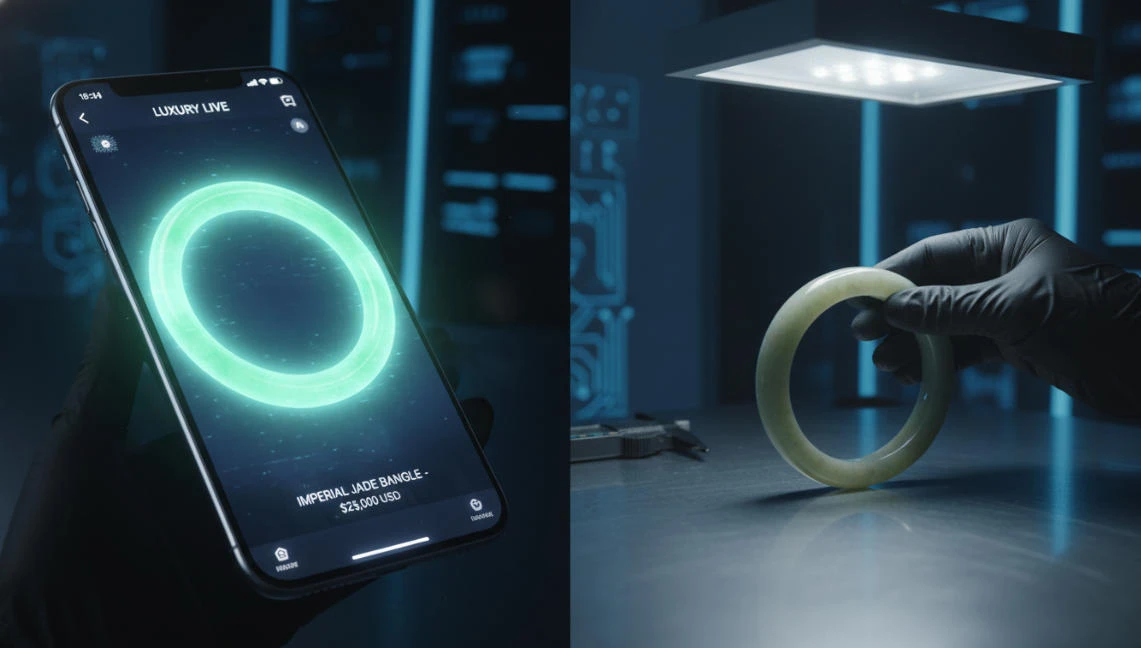
Detection protocols that worked reliably five years ago are producing false negatives today. This is not a speculative projection — it is the documented consequence of parallel development: treatment technology has advanced faster than standard buyer verification practice, and the gap between what can be done to a stone and what a typical receiving inspection will catch has widened materially. Understanding this gap is not an academic exercise. It is the operating condition your sourcing decisions are made within.
From Surface Stain to Nano Dye — How the Jade Process Treatment Industry Has Evolved Beyond Standard Detection
A decade ago, identifying a dyed jade piece was, in many cases, straightforward. Color floated on the surface. Alcohol wiping transferred pigment readily. UV light produced distinctive unnatural glow. Fracture lines showed visible pigment accumulation that was apparent under a basic loupe at 10x. The jade process treatment industry has since advanced through multiple technical generations. Today’s production-scale operations use vacuum pressure systems, multi-stage immersion cycles using increasingly refined dye chemistry, polymer stabilizers that bind dye to the mineral structure at a molecular level, and nano-scale pigment formulations engineered specifically to match the optical properties of natural chromophores in high-grade jade.
The practical consequence is that several detection methods that were reliable five years ago are no longer sufficient as standalone screening tools. Alcohol swab testing misses vacuum-pressure-treated material. Unaided visual inspection misses well-executed multi-stage immersion dyeing. UV fluorescence testing has become less reliable as dye chemists have reformulated compounds to reduce UV response. What this progression means for jade wholesale risks is that risk management now requires layered verification rather than reliance on any single test, and that the total cost of adequate verification has increased in proportion to the sophistication of treatment technology. Buyers who have not updated their inspection protocols within the last three years are working with a calibration that no longer matches current production reality.
The Digital Blind Spot — Live Streaming, Image Compression, and Remote Jade Wholesale Risks
A secondary and underappreciated dimension of modern jade wholesale risks is the role of digital presentation environments in systematically obscuring treatment. Live streaming commerce — a significant and growing sales channel for jade and semi-precious stones in Asian markets and increasingly in Western wholesale — compresses video at resolutions that eliminate the subtle visual cues that even an experienced buyer might use to identify treated material in physical examination. Studio lighting rigs used in live commerce environments are typically calibrated to maximize color saturation and minimize surface texture detail — precisely the two variables that on-site visual inspection depends upon for first-level screening.
Mobile photography and video filters compound this effect. A stone photographed under strong directional lighting with saturation enhancement applied presents an image that cannot be reliably assessed for treatment indicators, because the image captures none of the diagnostic features that physical inspection depends on: surface texture resolution, fracture pattern depth, luster quality, and weight feel are all absent. If you are sourcing jade through any digital or remote channel, operating on the assumption that remote visual assessment provides meaningful treatment verification is an assumption that current technology does not support. Physical sample receipt and laboratory testing represent the minimum acceptable verification standard for any material-significant remote purchase. This means you can establish a clear and enforceable sourcing rule: no remote purchase above a defined unit value threshold is confirmed without a physical sample lot and third-party test report.
Protecting Your Sourcing — What to Require from Your Jade Manufacturer and Processing Factory

The most cost-effective intervention point in jade wholesale risks management is not the laboratory — it is the contract. Laboratory testing identifies treatment after a purchase has been made, which limits your remedy to dispute resolution. Contractual disclosure requirements, audit provisions, and material specification clauses create a legal and operational framework that shapes supplier behavior before a shipment is produced. The following recommendations are organized around the two primary control points in the sourcing relationship: the purchase agreement and the supplier qualification process.
Contract Clauses Every Purchase Agreement with a Jade Manufacturer Should Include in the Jade Process
A purchase agreement with a jade manufacturer that does not specify material treatment disclosure is not a risk management document — it is a statement of optimism. Every purchase order in the jade process supply chain should specify, at minimum, four material variables per SKU: material species and variety, treatment status using recognized trade classification (natural, stabilized, impregnated, dyed), treatment method if applicable, and the assessment standard under which treatment status was determined. These four data points create a documented basis for comparison against any subsequent laboratory findings, and they signal to the supplier that your procurement operation includes verification capability.
Warranty language should address treatment concealment with specificity. A general “as described” warranty is insufficient when the accuracy of the description is itself the compliance variable. Clauses referencing GIA or SSEF classification standards as the applicable benchmark for “natural” and “treated” material, with defined remedies for non-disclosure, are enforceable in most trade jurisdictions and can be drafted into standard purchase order templates at no ongoing cost (GIA — Gem Trade Lab). This means you can convert a contracting formality into an active risk mitigation mechanism by adding fewer than 100 words to your standard purchase order template — and that investment will recover itself the first time a supplier disclosure obligation produces accurate material information that your visual inspection would have missed.
Vetting a Jade Processing Factory — Red Flags and Verification Checkpoints in the Jade Process
When evaluating a jade processing factory as a potential supplier, several operational signals indicate elevated jade material risks. Factories that decline to provide pre-production samples for third-party testing are not operating within a framework of transparent quality disclosure. Suppliers who describe their material using vague enhancement language — “color improved,” “clarity enhanced,” “processed for uniformity” — without specifying treatment type or method are communicating that treatment documentation is not a standard operational process in their facility. A jade processing factory that cannot provide batch-level treatment records does not have them, which means the material leaving that facility cannot be reliably characterized.
Conversely, a jade processing factory that maintains treatment records by production batch, provides material declarations with each shipment, and welcomes third-party audit of their treatment processes is demonstrating the operational transparency that directly reduces downstream jade wholesale risks for your business. Third-party inspection bodies including Bureau Veritas and SGS provide factory audit services for the gemstone and jewelry sector; incorporating scheduled audits into your supplier qualification process converts a one-time trust decision into an ongoing verification mechanism. The audit cost is fixed and predictable. The cost of a disputed shipment of dyed material is neither.
The governing principle across the entire jade process supply chain is that information asymmetry is the fundamental driver of fraud risk. Treatment technology will continue to advance. Buyer verification protocols need to advance in parallel — through updated inspection training, updated detection equipment, updated contract terms, and scheduled third-party audit of the suppliers your business depends on. If your current sourcing workflow relies on visual inspection as its primary quality gate, the relevant question is not whether dyed material has entered your supply chain. It is how much, and at what point you will have enough information to act.
Faqs About Dyed Jade in Jade Process
1. How can I tell if jade is dyed without lab equipment?
Check for unnaturally uniform color, pigment concentrated along cracks, and plastic-like surface luster. Wipe with a 91% isopropyl alcohol swab — color transfer within 30 seconds confirms surface treatment in most standard dyeing cases.
2. Is all dyed jade considered fraud?
No. Industry-accepted treatments — agate dyeing, turquoise stabilization, and Type B+C jadeite — are legitimate when disclosed. Fraud occurs only when treatment is concealed from the buyer, not when treated material is sold transparently at an accurate price.
3. What is the profit margin on dyed jade?
A $5 low-grade piece, after dyeing costing under $1, can retail at $150 — a margin exceeding 2,500%. This math drives systematic treatment across the supply chain, not isolated opportunism.
4. Can vacuum-pressure-dyed jade be identified visually?
Rarely. Detection rates for vacuum-pressure-treated jade drop to 6% under live-stream conditions and 72% even for credentialed gemologists. Raman spectroscopy or FTIR lab analysis is required for reliable confirmation.
5. What should purchase contracts specify to reduce jade material risks?
Require four disclosures per SKU: material species, treatment status (Natural/Type B/Type C/B+C), treatment method, and the assessment standard used — referencing GIA classification as the contractual benchmark.
This article was developed by the technical quality assurance and gemological research team at JADEMAGO, a jade and semi-precious stone processing manufacturer with over 65 years of production and material science experience. Contributing reviewers hold credentials including GIA Graduate Gemologist (GIA GG) and Fellow of the Gemmological Association of Great Britain (FGA), with combined laboratory and production-floor experience exceeding 40 years across jade, turquoise, agate, and related mineral categories.
Findings cited in this article draw on four categories of evidence: (1) internal incoming quality control batch records from jade and semi-precious stone procurement operations conducted between 2019 and 2024; (2) third-party spectroscopic test reports commissioned from GIA-affiliated and ISO 17025-accredited gemological laboratories; (3) published treatment identification standards and peer-reviewed gemological literature from GIA, SSEF, and IGS; and (4) documented supplier audit findings from factory assessment programs conducted across jade processing regions in Guangdong, Yunnan, and Henan provinces. All internal case data presented below represents anonymized aggregate findings and does not identify individual suppliers or counterparties.