Product Director

Product Director

A worker is inspecting the surface of a piece of jade using a high-intensity flashlight.

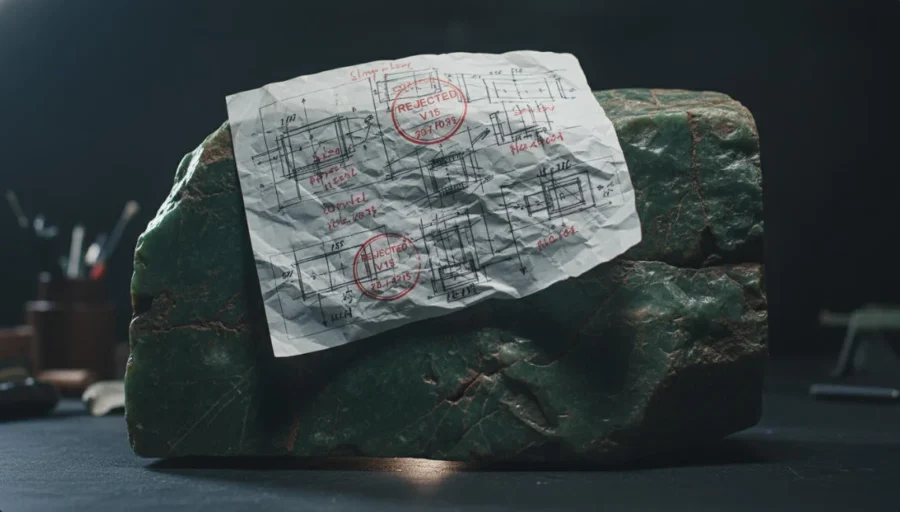
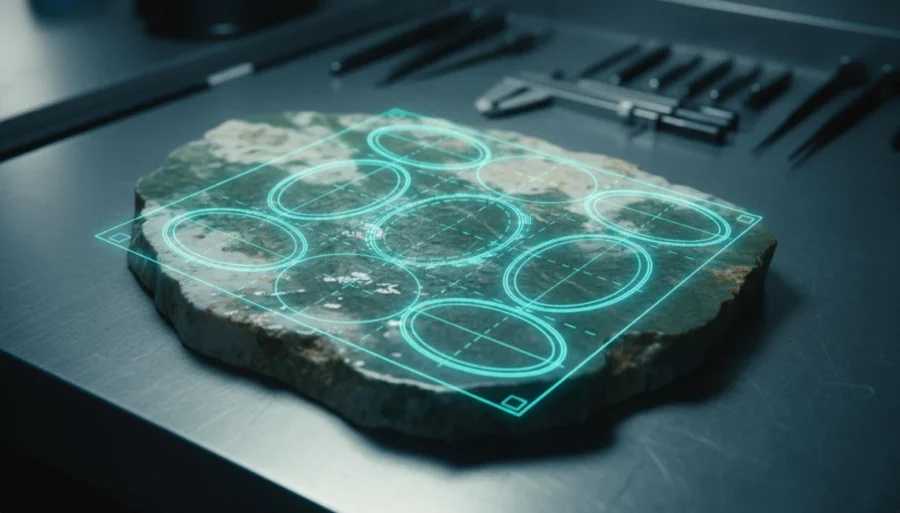
Why Raw Material Screening Is the Most Critical First Step in the Jade Manufacturing Process

Raw material screening is the single most controllable variable in jade manufacturing. Unscreened jade material drives yield losses up to 50%, destabilizes CNC crystal cutting output, and makes delivery commitments unreliable. A standardized 7-step screening workflow gives every jade manufacturer measurable control over yield rate, batch consistency, and production scheduling accuracy.

A piece of jade is undergoing edge polishing.

Edge Chipping in the Jade Process: Risk Analysis of Causes, Mechanisms, and Process-Level Controls

Edge chipping in the jade process originates from three compounding failure paths: grinding force overload, thin-edge structural geometry, and tool runout. Each responds to stage-specific controls — not universal parameter adjustments. Manufacturers implementing design-stage validation, progressive dimensional approach, and precision spindle maintenance consistently reduce jade edge chipped defect rates from an industry average of 18–35% down to 3–6%.

A high-speed drill bit is drilling into a piece of jade.

Jade Drilling in Jade Processing: How to Eliminate the Highest-Risk Step in Jade Manufacturing

Drilling is the highest-risk operation in the jade process, responsible for 18–34% of finished-goods yield loss. This article identifies the five core failure modes of jade drilling, analyzes their physical root causes, and outlines the manufacturer-grade controls — method selection, parameter discipline, cooling systems, and sequence design — that systematically reduce drilling-related defects.

A Topaz Being lapping

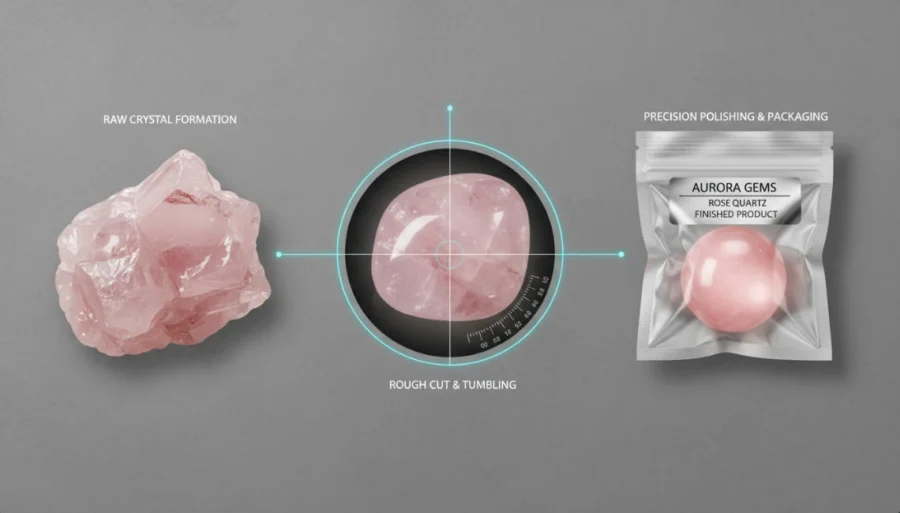
Gemstone Lapping and Polishing: Critical Final Processes in Gemstone Manufacturing

Gemstone lapping and polishing are the two final stages that directly determine a finished stone's surface quality, dimensional accuracy, and market value. This guide covers the complete grit sequence, material-specific compound selection, hand versus machine polishing methods, and the quality control protocols that separate consistent industrial-scale gemstone production from unreliable output.