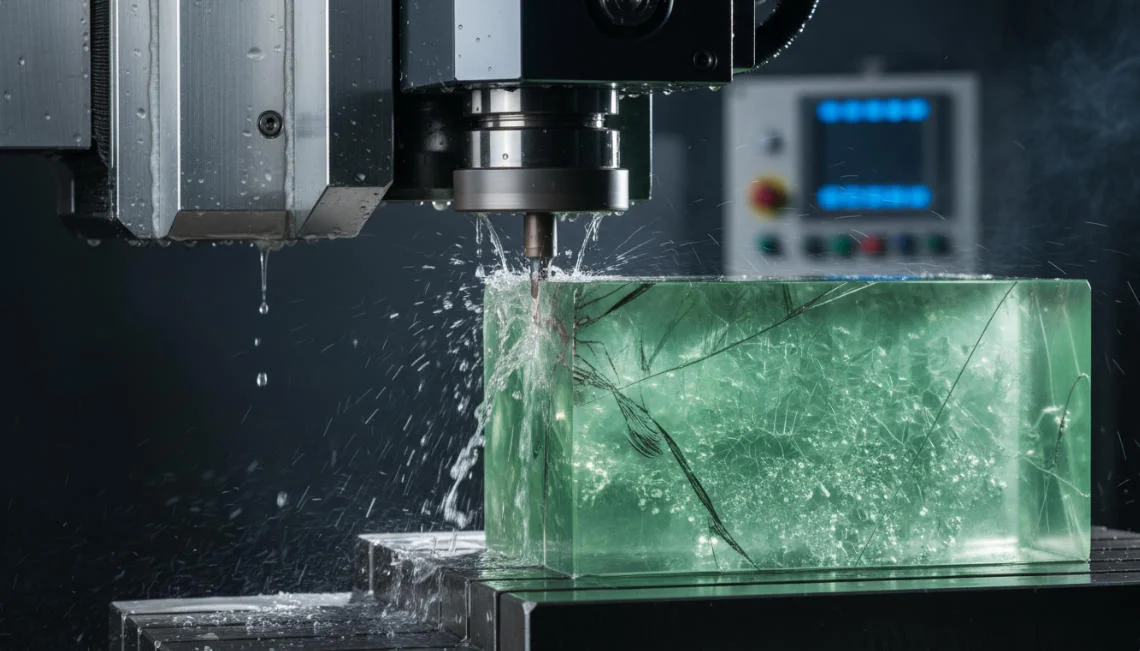

If the last shipment of jade parts you received included cracked or fractured units, the cause is almost certainly not what your supplier told you. Based on JADEMAGO’s internal production audit conducted across 2025 jade process operations — spanning thousands of finished jade components — 36.5% of all jade parts crack events originate from natural internal material defects that are present in the raw stone before any cutting tool makes contact. Another 21.3% trace directly to structural design decisions made during product development, not on the production floor. The uncomfortable reality of jade processing is this: cracking cannot be reduced to zero. It can only be managed — systematically, at every stage of the jade part process — by a manufacturer who understands why it happens and has built operational responses to each cause. This guide provides that framework, drawn from 65 years of jade part manufacturer experience, so you can evaluate suppliers, structure your design specifications, and make sourcing decisions with the actual risk profile in view.
Table of Contents
The Core Reality of Jade Parts Crack: A Multi-Causal Engineering Challenge, Not a Quality Control Failure
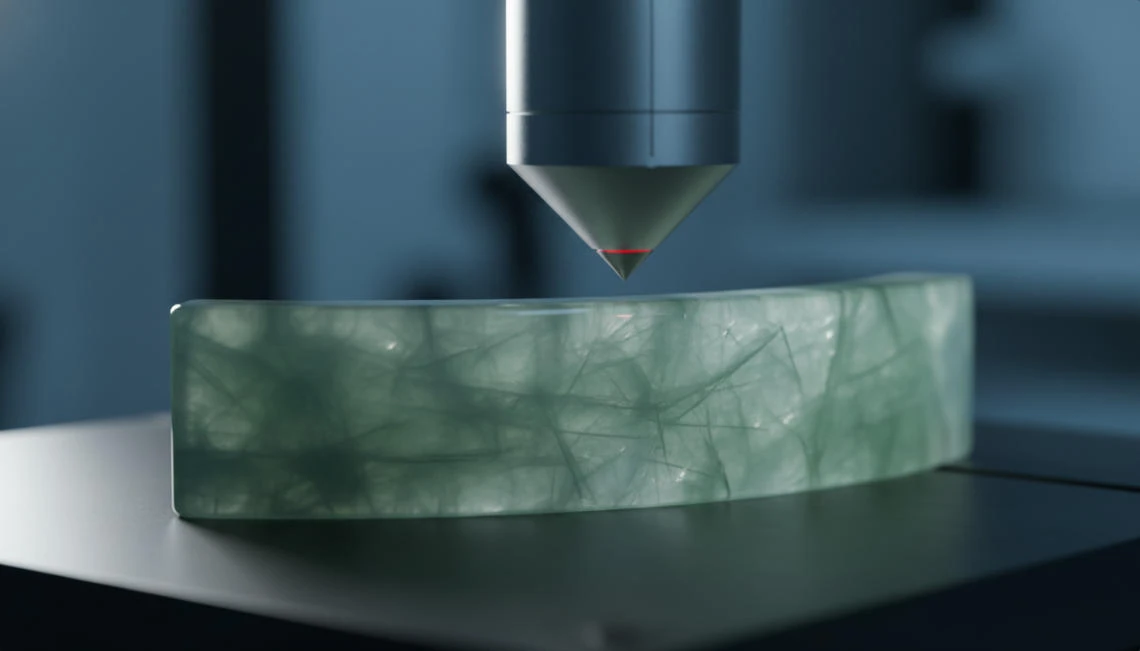
When jade parts crack during machining, most buyers reach for the obvious attribution: the jade part manufacturer failed. In some cases that is correct. In the majority of cases, it is incomplete. Jade processing presents a fundamentally different category of manufacturing challenge than metal or polymer fabrication, because the raw material is structurally heterogeneous at the microscopic level. The GIA (Gemological Institute of America) documents that natural jade — whether nephrite or jadeite — consists of interlocking fibrous or granular crystals whose grain boundary strength, orientation, and directional mechanical properties vary significantly within a single billet. This is not a defect in the jade; it is the defining characteristic of the material.
The practical consequence for your procurement process is that the question to ask a jade manufacturer is not “can you guarantee zero cracks?” That question has no honest answer. The question that generates useful information is: “Do you have a documented, multi-stage system to reduce crack probability at every step of the jade part process, and can you show me the data?” A supplier who answers the first question with a guarantee and deflects the second is carrying risk they are not disclosing.
Understanding Why Jade Processing Carries Structural Risk That No Equipment Can Eliminate
The mechanical behavior of jade under cutting stress is governed by brittle fracture mechanics. When localized stress at any point in the material exceeds the tensile strength of the local grain boundary or micro-fracture interface, crack propagation is immediate and irreversible. Unlike ductile metals, jade cannot redistribute that stress through plastic deformation — there is no yield zone, no work-hardening mechanism, no local stress relief. The crack either initiates or it does not, depending on whether the local stress intensity crosses the fracture threshold. This threshold is not uniform across the material, because the material is not uniform. That is the root of the challenge that makes jade part process planning a discipline that rewards decades of experience over equipment investment alone.
What JADEMAGO’s 2025 Data Reveals About Jade Parts Crack Origins
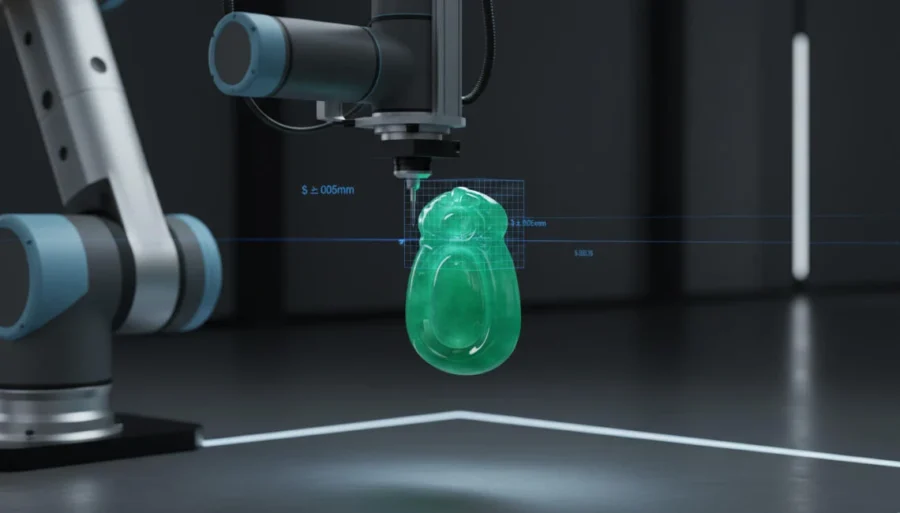
JADEMAGO’s 2025 production audit recorded crack events by root cause across all jade component categories — including precision industrial jade parts, decorative components, and jade carving wholesale production items. The seven-factor causal model that emerged from that analysis applies uniformly across product types, because the underlying material physics does not change based on the application. A jade carving board with a thin working edge is structurally analogous to a mechanical jade part with an unsupported thin wall: both will fracture under the same category of machining stress, for the same reason. If you source jade carving wholesale at volume, you are operating within the same crack risk framework as any industrial jade parts buyer, and the same diagnostic questions apply to your supplier evaluation.
Internal Material Defects (36.5%): The Largest Single Source of Jade Parts Crack Events in Jade Process
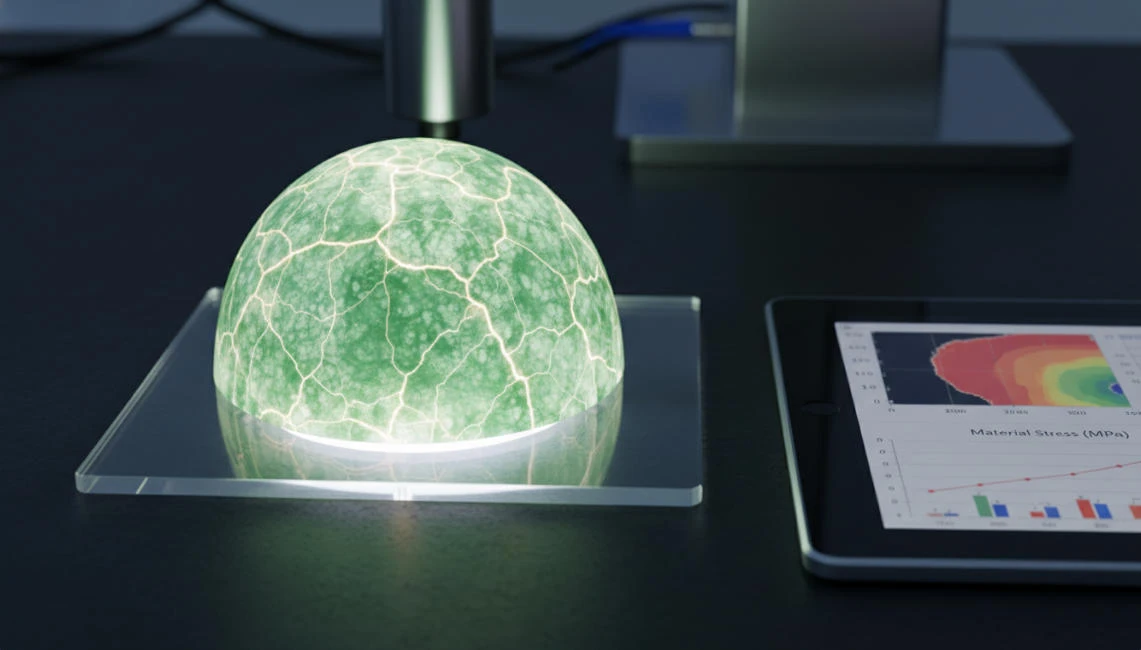
The single largest contributor to jade parts crack events in JADEMAGO’s 2025 dataset is not a machining error, a parameter miscalculation, or a design flaw. At 36.5% of all recorded failures, it is a characteristic of the raw material. Natural jade, as classified by the Swiss Gemmological Institute SSEF, is a polycrystalline aggregate — a mosaic of mineral crystals bonded at grain boundaries whose mechanical strength varies with crystal orientation, grain size, and mineralogical composition. Micro-cracks, mineral interface separations, and inclusion clusters are distributed throughout the material in spatial patterns that surface examination cannot detect and that aesthetic grading criteria do not capture. The material that looks structurally sound from the outside may contain a network of internal fracture paths that will become active failure sites the moment a cutting tool applies directional stress.
When a cutting tool initiates contact during the jade part process, the stress field does not distribute uniformly through the billet. It follows the path of lowest fracture resistance — propagating along grain boundaries, mineralogical interfaces, and pre-existing micro-fractures in preference to propagating through intact crystal domains. The result can be immediate visible fracture, but it can also be internal damage with no surface manifestation — a condition sometimes called a blind crack or subsurface delamination. This type of failure passes visual inspection and surface hardness assessment, and it manifests only under service stress, thermal change, or subsequent processing operations. For buyers, this failure mode is particularly costly because it escapes detection at the jade part manufacturer’s quality gate and enters your downstream supply chain.
How Jade’s Crystal Microstructure Creates Invisible Failure Zones During Jade Processing
The International Gem Society (IGS) identifies the fibrous interlocking crystal structure of nephrite jade as the source of its characteristic toughness — its resistance to impact fracture. That same structure, however, does not confer resistance to crack propagation under sustained directional stress, which is the dominant load mode in CNC jade processing. Toughness and fracture resistance are not the same property, and the distinction matters in practice. A material that resists impact can still fracture readily under controlled, sustained cutting forces if those forces are applied to a geometric feature that creates stress concentration. This is why jade’s reputation as a tough material does not translate into a prediction of low crack rate during machining — the crack mechanism is different, and the material’s toughness provides no protection against it.
The unpredictability compounds further when you consider that grain boundary strength varies directionally within the same billet. Two identical cuts made at different orientations relative to the crystal structure can produce completely different fracture outcomes: one is clean, one initiates a crack that propagates along a grain boundary plane. This directional sensitivity is why experienced jade part manufacturers adjust cut orientation relative to material structure for critical features — and why manufacturers without that experience produce inconsistent results.
Pre-Machining Inspection: What Jade Parts Suppliers and Industrial Buyers Must Both Require
The most effective single intervention for managing the 36.5% material-defect fraction of jade parts crack events is pre-machining defect inspection through transillumination. This technique — passing a high-intensity light source through the jade billet in multiple orientations — reveals internal fracture networks, inclusion clusters, and structural discontinuities that surface examination cannot access. For any jade part manufacturer handling precision components or high-volume jade carving wholesale production, transillumination of incoming material before machining assignment is not optional. It is the primary mechanism by which the largest crack cause category is partially controllable.
Material grading by structural integrity — separate from aesthetic grading by color, translucency, or patterning — allows the jade manufacturer to route billets with documented internal defect density toward applications with lower structural demands. This routing decision reduces crack probability across the production run without requiring any change to machining parameters or equipment configuration. JADEMAGO’s data indicates that consistent transillumination screening at incoming material reduces material-related crack events by approximately 40–60% in subsequent production stages. That means you can expect a meaningfully lower crack rate from any jade part manufacturer who has this process in place — and a measurably higher one from any supplier who does not.
Design-Induced Cracking (21.3%): The Most Preventable Category of Jade Parts Crack Events
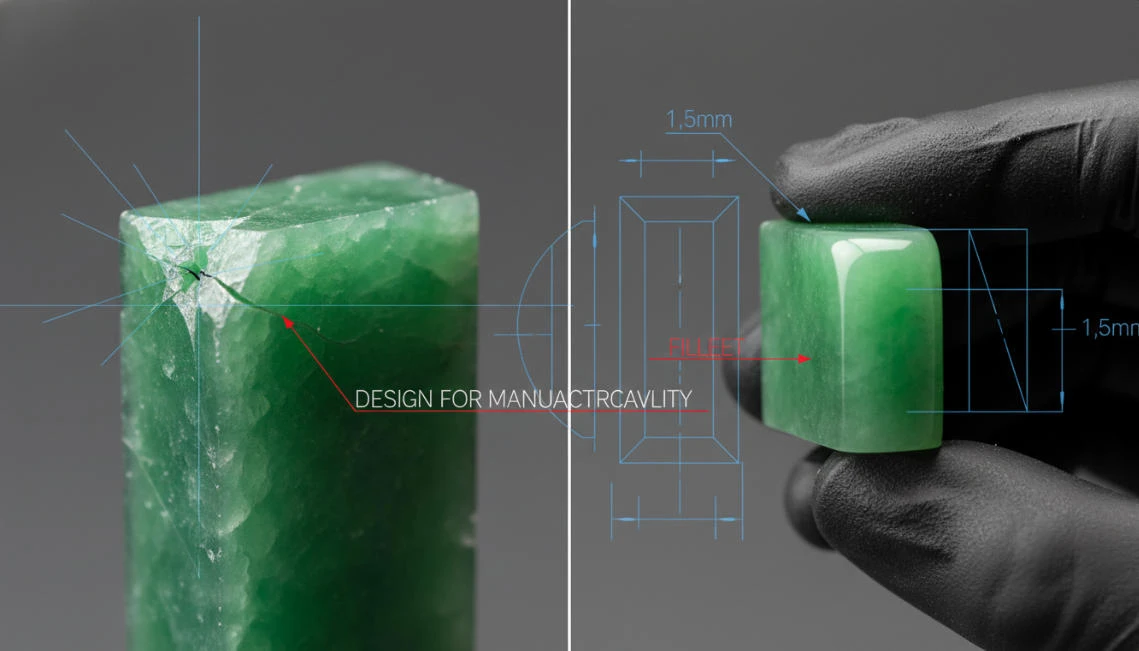
Design-induced cracking represents 21.3% of all jade parts crack events in JADEMAGO’s 2025 production data, making it the second-largest cause category. Every crack in this group originates from a geometric specification that was structurally incompatible with jade’s mechanical behavior from the moment it was drawn — not from a material flaw, not from a process error, and not from any failure at the jade manufacturer’s end. This is the crack cause category that is most entirely within your control as a buyer or product designer, and it is the category where early engagement with an experienced jade part manufacturer produces the highest return on pre-production investment.
The underlying issue is brittleness combined with stress concentration geometry. Jade fails in brittle fracture — it does not deform plastically before breaking. When a design specifies a geometric feature that creates a local stress concentration, and the peak stress at that concentration exceeds jade’s local tensile strength, fracture is instantaneous. No machining technique, no parameter adjustment, and no tooling selection can prevent this outcome once the geometry is specified. The jade part process can mitigate but not overcome structural design incompatibility with the material. This is why design review — conducted before production begins — is the highest-leverage intervention available to any buyer sourcing jade components at volume.
Three Structural Features That Guarantee Jade Part Process Failure
There are three geometric configurations that appear repeatedly in designs submitted by clients who have not previously worked with jade or stone-class materials, and all three generate crack events at rates that make production to specification impossible without design modification.
The first is the sharp internal corner — any concave geometry with an included angle below approximately 90 degrees and no radius transition. In ductile metal fabrication, a sharp internal corner is a stress concentration point that the material’s yield behavior partially compensates for. In jade, it is a crack initiation site that will fail in the majority of machining attempts. The second is the thin wall — any section with insufficient thickness to carry machining loads without deflecting into the tool path or fracturing under the resulting bending stress. Wall thickness thresholds vary by material grade and section length, but sections below approximately 1.5–2mm in the thinnest dimension represent elevated risk in most jade processing contexts. The third is the small-radius fillet or transition — any radius below approximately 1.5mm at a section transition or feature termination. All three features create localized stress intensity that jade’s brittle structure cannot absorb.
DFM Principles for Custom Jade Part Manufacturer Engagements
Design for Manufacturability (DFM) in jade processing means applying geometric constraints at the design stage that keep all stress concentrations within jade’s local fracture threshold during the jade part process. For industrial precision parts, the applicable DFM principles converge rules: replace sharp corners with radii of at least 1.5mm, specify minimum wall thicknesses appropriate to the material grade and feature span, eliminate unsupported projections that cannot be backed by fixture contact, and review all feature terminations for stress concentration geometry before the design is released to production.
Equally critical is prototype validation before volume commitment. For any jade component — a validated prototype batch of 5 to 10 pieces, machined to full production parameters, establishes a realistic crack rate baseline. If that baseline is above acceptable threshold, design modification and re-validation is the correct response. The cost of a prototype iteration is a fraction of the cost of a failed production run, and a jade part manufacturer who pushes back on prototype requirements before proceeding to volume is not acting in your interest.
Machining Stress Concentration, Parameter Mismatch, and Thermal Stress: The Process-Induced Jade Parts Crack Categories
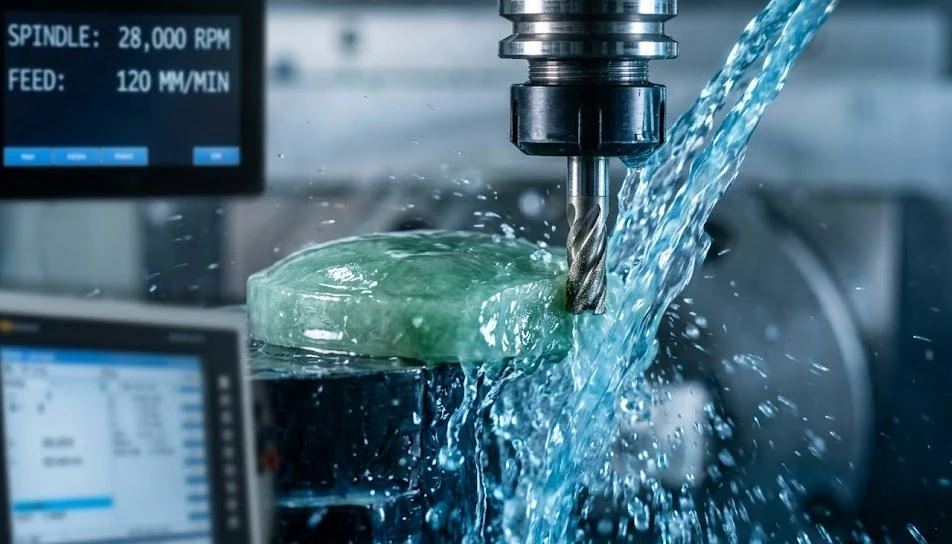
The three process-induced cause categories in JADEMAGO’s 2025 data — machining stress concentration (13.5%), tool and parameter mismatch (9.8%), and thermal stress (8.0%) — together account for 31.3% of all jade parts crack events. Individually smaller than the material and design categories, they share a defining characteristic: they are entirely within the jade part manufacturer’s operational control. Their occurrence in a supplier’s production data is a direct indicator of process engineering discipline and equipment management quality.
How CNC Jade Processing Creates Localized Stress Hotspots at Feature Transitions
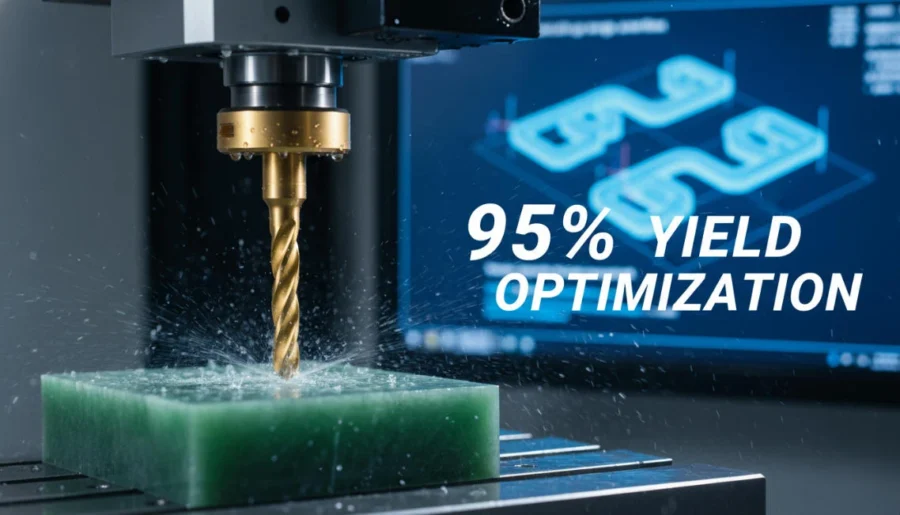
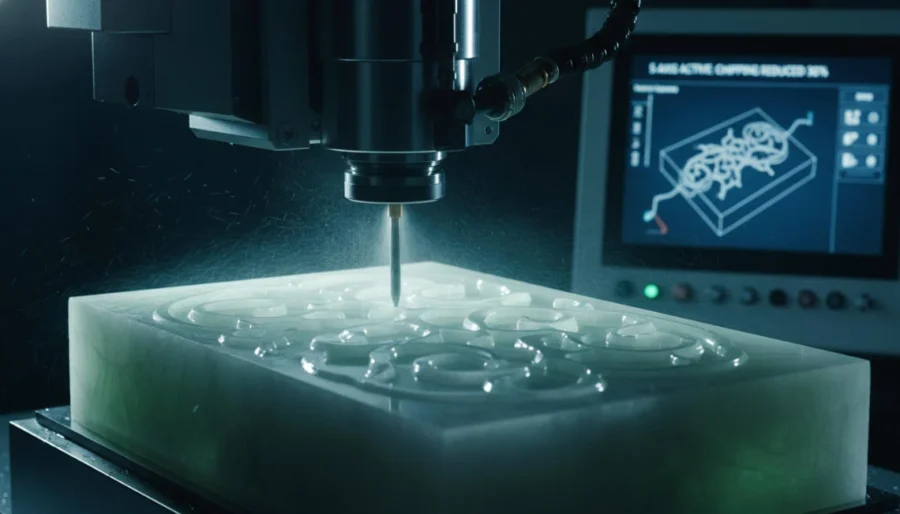
In CNC jade processing, the tool contact area is geometrically small relative to the part cross-section. This geometric constraint concentrates cutting force into a high-stress zone immediately adjacent to the contact point. For ductile materials, local yielding dissipates this stress concentration. For jade, there is no yield behavior — the local stress either falls below the fracture threshold or exceeds it. When it exceeds it, fracture initiates immediately and propagates along the lowest-resistance path through the material’s grain structure. This mechanism is amplified at feature transitions, re-entrant corners, and any location where the tool path direction changes, because these points experience multiple stress cycles as the tool traverses the geometry. Each cycle accumulates grain boundary damage, and the failure point may not be the first cycle — it may be the fifth or the twentieth, which means the crack appears unpredictably during the jade part process rather than at the predictable first contact.
Cutting Parameter Optimization in Jade Part Process: How Feed Rate and Spindle Speed Determine Failure Mode
The relationship between cutting parameters and crack probability in jade processing is threshold-dependent rather than linear. Below a critical feed rate and above a minimum spindle speed, the tool removes material in a controlled shear mode that applies force progressively and maintains manageable stress intensity at the contact zone. Above the critical feed rate or below the minimum spindle speed, the cutting action transitions from shear to impact — the tool compresses and fractures the material ahead of the contact zone rather than removing it in a controlled chip. This is not metaphorical; it is the mechanical distinction between a controlled jade part process and one that generates crack events through impact loading.
The parameter envelope for jade processing typically targets feed rates 30–50% below equivalent settings for comparable ceramic materials, combined with elevated spindle speed to maintain cutting velocity at reduced feed. Tool condition is equally critical and operates as an independent variable: a worn cutting edge presents a larger effective contact radius, increases the compressive stress component, and reduces shear efficiency — exactly the parameter configuration that promotes impact loading. Does your current jade part manufacturer track tool wear per component count and enforce replacement before wear reaches a critical threshold? That operational question has direct consequences for your production crack rate.
Thermal Stress in Jade Processing: Why Intermittent Cooling Is More Damaging Than Continuous Exposure
Thermal stress accounts for 8.0% of jade parts crack events in JADEMAGO’s 2025 data — a figure that represents almost entirely preventable failures, occurring when cooling system performance is inadequate or inconsistently applied. During high-speed jade processing, frictional heat generation at the cutting interface is significant. Jade’s low thermal diffusivity means that the temperature gradient between the heated cutting zone and the cooler surrounding material builds rapidly and dissipates slowly. This differential creates thermal expansion stress that compounds the existing mechanical cutting stress, pushing marginally stable micro-cracks over their propagation threshold.
The more damaging configuration is not sustained heat but thermal cycling — the pattern produced by intermittent coolant application. Each heat-cool cycle generates a stress reversal at grain boundaries, and repeated reversal fatigues the material’s internal interfaces progressively. A jade manufacturer whose cooling system delivers coolant in pulses or only at selected stages of the jade part process is generating more grain boundary fatigue per unit time than a supplier who applies no cooling at all in some configurations. Continuous, uninterrupted coolant flow to the cutting interface throughout all active machining sequences is the engineering requirement for thermal crack risk management in jade processing. This is not a quality upgrade; it is a process prerequisite.
Clamping Stress and Moisture Content: Two Hidden Pre-Stressors That Jade Part Manufacturers Must Control
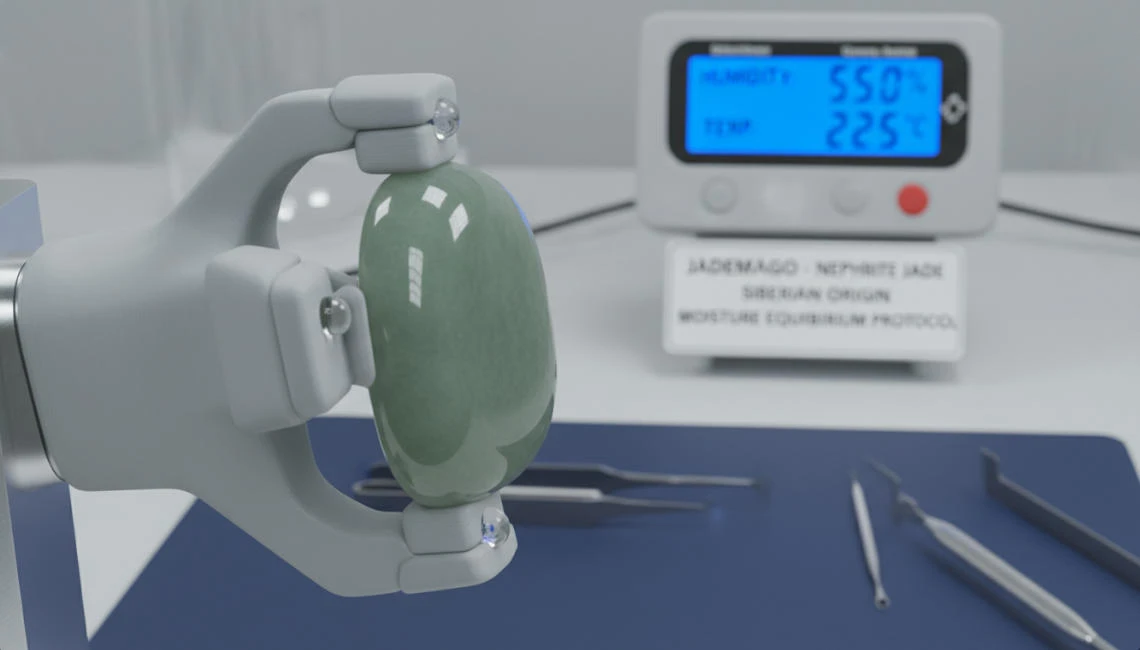
Clamping-induced pre-stress (6.5%) and moisture-related internal state change (4.4%) are the two smallest individual categories in JADEMAGO’s 2025 jade parts crack data. Together they account for approximately one crack event in ten — a proportion that is significant at production volume — and both are attributable to process control gaps that are straightforward to close in a disciplined jade part manufacturer operation.
Fixture Design and Clamping Protocol in Jade Part Process Operations
Clamping a jade workpiece for machining introduces mechanical pre-stress into the material before the cutting tool makes contact. If the fixture applies uneven clamping force — particularly through point contact rather than distributed face contact — the jade billet will contain internal stress gradients that are invisible to standard inspection and unmeasurable without specialized equipment. When the jade part process subsequently removes material from adjacent sections, the structural support for those pre-stressed zones decreases, and the stored elastic energy releases as a fracture. This mechanism is particularly acute for thin-walled jade parts and for asymmetric geometries where section stiffness is non-uniform across the clamped volume.
The engineering solution is a fixture design approach that distributes clamping force across the maximum available contact area and limits clamping pressure to the minimum required for positional stability during machining. Jade part manufacturers who design geometry-specific fixtures for each part configuration — rather than adapting generic vice or collet setups — produce measurably lower clamping-induced crack rates. When you evaluate a jade manufacturer, request fixture design examples for part geometries comparable to your application. A supplier who designs bespoke workholding for each new component demonstrates a level of process engineering investment that directly correlates with lower crack rates from this cause category.
Internal Moisture and Structural State Changes in Natural Jade: A Crack Risk That Varies by Material Source
Natural jade — particularly nephrite from alluvial or river-deposit sources — contains micro-level water inclusions and structural pore networks that standard gemological testing does not identify and that material grading criteria do not capture. These internal moisture reserves are in equilibrium with the material’s ambient storage environment under normal conditions. When the material enters the machining environment — where cutting friction generates localized heat, compressed air delivers drying effect, and coolant contact creates rapid surface cooling — the equilibrium is disrupted. Moisture migrates toward thermal gradients, local volume changes occur, and the resulting internal stress can initiate or extend existing micro-fractures.
The GIA’s jade research documentation confirms that nephrite’s water content and structural porosity vary significantly with geological source and deposit type. This variation means that the moisture-related crack risk is not uniform across jade materials — it is highest in materials from certain deposit types and lower in denser, more crystalline specimens. For your material sourcing decisions, this underscores why geological source transparency from a jade part manufacturer is a relevant procurement data point, not merely an aesthetic or provenance concern. The material’s origin correlates with its internal moisture profile, which correlates with its production crack rate in this cause category.
The 4-Step Crack Mitigation Protocol for Jade Part Manufacturers
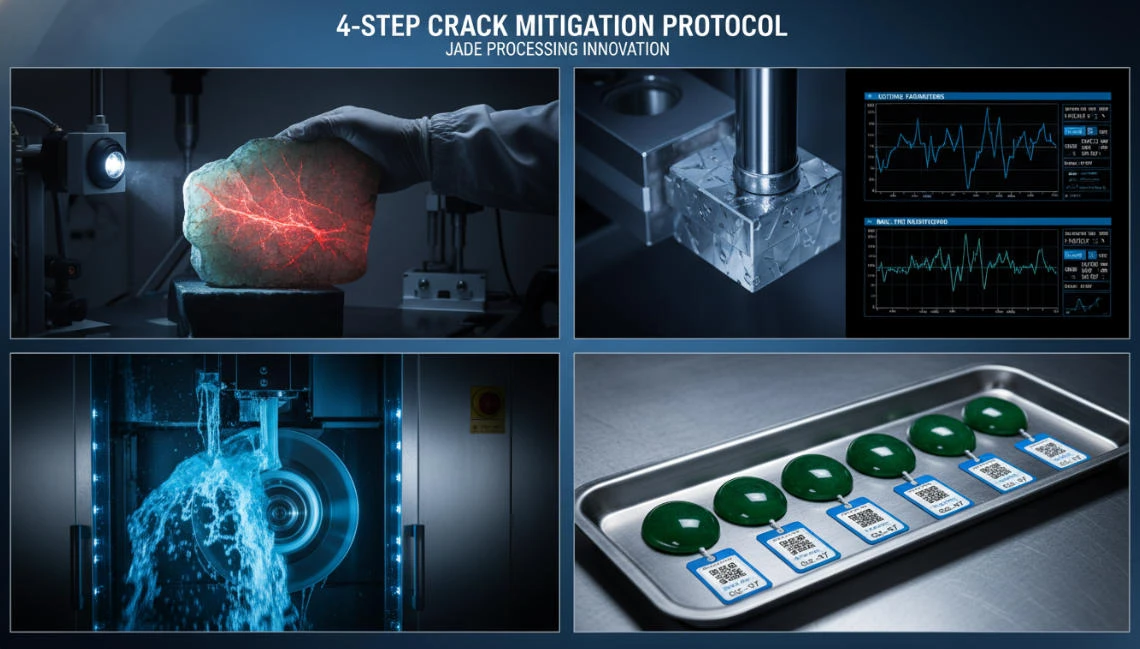
No protocol eliminates jade parts crack events entirely. What the following four steps accomplish — when applied consistently across a jade part manufacturer’s operations — is to reduce crack probability to the minimum achievable level for a given material grade, part geometry, and production volume. You can use this protocol as a supplier evaluation framework, asking each candidate jade manufacturer to describe their operational approach to each step and assessing the specificity and documentation quality of their answers.
1-2 — Material Grading and Cutting Parameter Control in Jade Processing
The first step is material grading and pre-machining inspection. Every billet entering the jade part process should be subjected to transillumination inspection in at least two orientations, with findings documented and used to assign material to appropriate design applications. Billets with visible internal fracture networks or dense inclusion clusters should be downgraded or rejected before machining begins, not after a crack event occurs mid-process. JADEMAGO’s internal data shows that consistent application of transillumination-based grading reduces material-related crack events by 40–60% in subsequent machining stages — a reduction that flows directly to your production yield and unit cost.
The second step is cutting parameter optimization, validated empirically for each combination of material grade, tooling configuration, and part geometry. The general parameter direction for jade processing is well-established: reduce feed rate below equivalent ceramic parameters, elevate spindle speed to maintain surface cutting velocity, and enforce tool replacement schedules based on wear measurement rather than elapsed time or cycle count. For complex jade components with re-entrant features, thin walls, or tight radius transitions, parameter validation may require three to five iterations and should be budgeted as an engineering cost, not treated as unnecessary delay.
3-4 — Thermal Management and Design Validation for Industrial Jade Components
The third step is continuous forced cooling throughout all active machining sequences. This is a mechanical requirement for thermal crack risk management in any jade part process operation, not an optional enhancement. The cooling system must deliver consistent coolant flow to the cutting interface at calibrated flow rate and temperature, without interruption between tool passes or between machining operations on the same part. A jade part manufacturer whose cooling infrastructure cannot sustain continuous delivery throughout a full production cycle cannot credibly manage the 8.0% thermal crack fraction that JADEMAGO’s data identifies.
The fourth step is design validation through prototype production before volume commitment. For any new jade component — a prototype batch of 5 to 10 units, machined to full production parameters on production equipment, establishes the realistic crack rate baseline for that specific design-material-process combination. If the prototype crack rate is above the acceptable threshold for your application, design modification, parameter adjustment, or material upgrade are the correct responses — not proceeding to volume production with the expectation that results will improve. A jade part manufacturer who advocates for skipping the prototype stage, for any reason, is managing their short-term production schedule at the expense of your production reliability.
JADEMAGO’s 2025 Crack Distribution Data: What the Numbers Tell You About Jade Part Manufacturer Risk Management
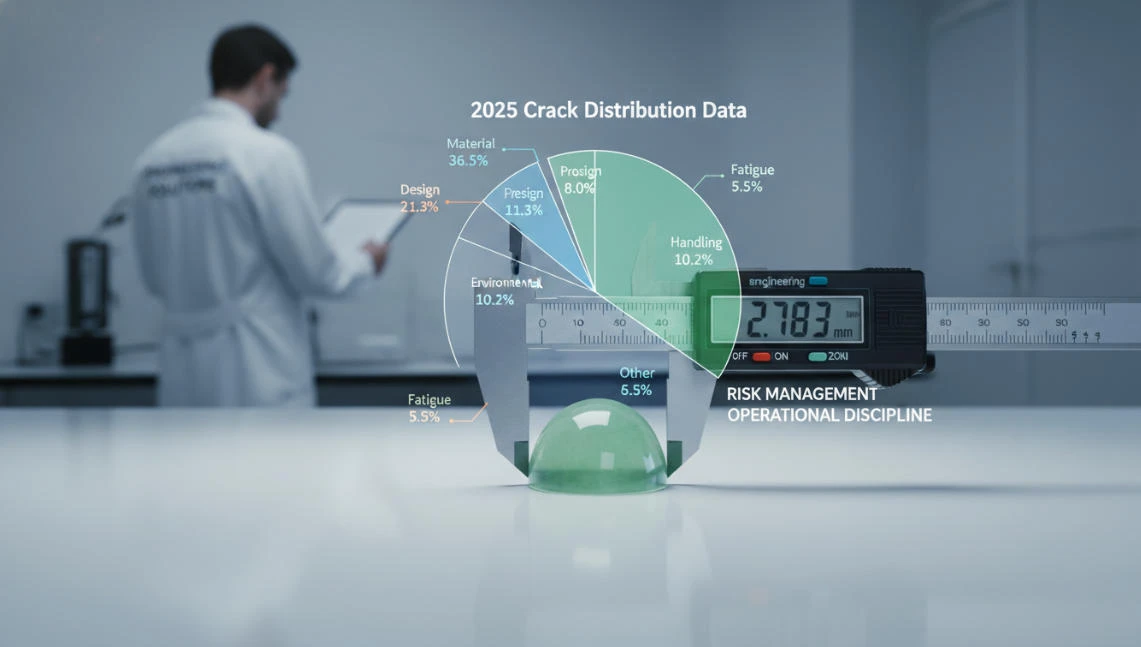
The following causal distribution reflects JADEMAGO’s internal crack event analysis across 2025 jade part process operations. It is presented as a reference framework and a supplier evaluation tool — not as an industry standard or a benchmark against which other manufacturers should be measured without their own equivalent data. Crack distribution varies across jade part manufacturers based on material sourcing geography, equipment configuration, process discipline, and design review practices. The value of this data is not the specific percentages but the structure of the analysis: seven distinct cause categories, each with an identified operational response, each measurable through documented production records.
The distribution: Internal material defects account for 36.5% of jade parts crack events. Design-induced structural failure accounts for 21.3%. Machining stress concentration accounts for 13.5%. Tool and parameter mismatch accounts for 9.8%. Thermal stress accounts for 8.0%. Clamping-induced pre-stress accounts for 6.5%. Moisture and internal state change accounts for 4.4%.
Two observations in this data have direct implications for your procurement decisions. First, the two categories where your design and specification choices are the primary driver — design-induced cracking (21.3%) and clamping-related cracking (6.5%) — together account for 27.8% of all jade parts crack events. Your product geometry and your fixture requirements influence more than one quarter of the crack risk in production. Second, the 36.5% material-defect category is the single strongest argument for selecting a jade manufacturer with a documented, systematic incoming material inspection process, because it represents the largest available lever for reducing total production crack probability.
How to Use This Data When Evaluating Any Jade Part Manufacturer
The seven-factor model in JADEMAGO’s 2025 data functions as a structured interview framework for prospective jade manufacturer qualification. For material defects (36.5%): ask the supplier to describe their incoming material inspection protocol, including the inspection method, the grading criteria applied, and how inspection findings are recorded and used in production routing. For design-induced cracks (21.3%): ask how they conduct DFM review for client designs, and request an example of a design they recommended modifying before production. For process-induced factors (13.5% + 9.8% + 8.0%): ask how cutting parameters are documented and validated for new geometries, how tool condition is tracked, and how the cooling system is configured and monitored during jade processing. For clamping and moisture factors (6.5% + 4.4%): ask about fixture design philosophy and material storage protocols.
A jade part manufacturer with specific, documented, and consistent answers to all seven categories has an operational risk management framework. A supplier who answers two or three questions specifically and provides generalities for the rest is carrying unmanaged crack risk that will materialize in your production runs.
Partnering With a Jade Part Manufacturer Who Treats Crack Risk as an Engineering Problem, Not a Marketing Promise
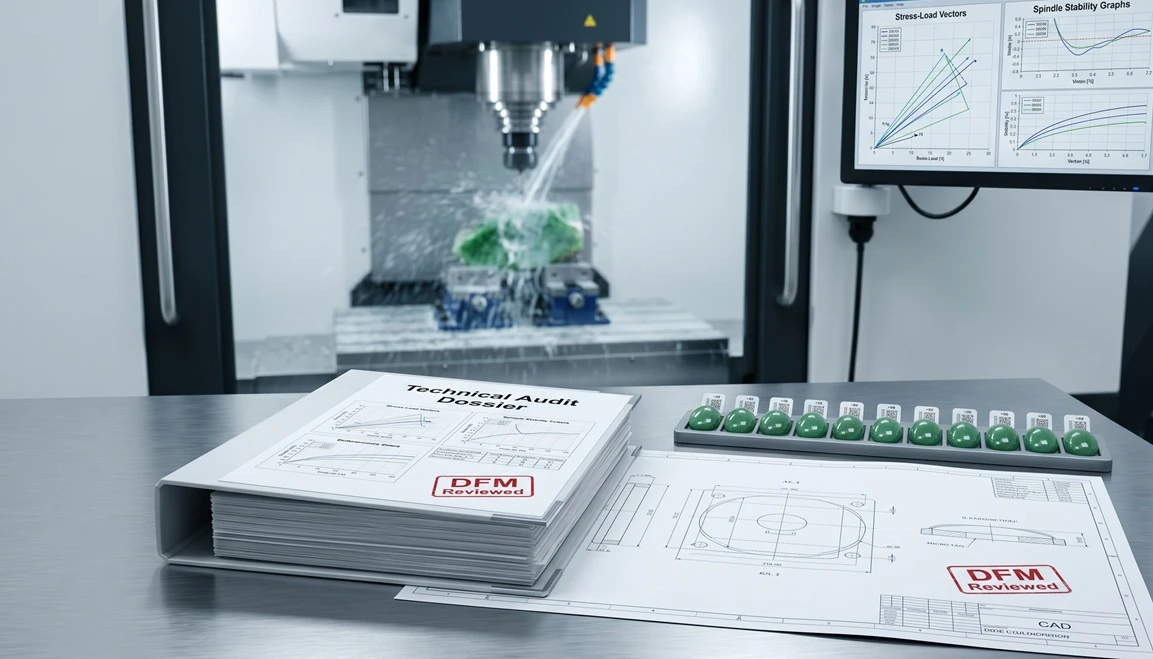
The conclusion of this analysis is not that jade processing is too risky to engage with at volume. It is that jade parts crack risk is a distributed, multi-causal phenomenon that responds to systematic engineering intervention at each stage of the jade part process — and that your exposure to that risk is directly determined by the quality of the jade manufacturer you choose and the depth of technical engagement you establish before production begins.
JADEMAGO’s 2025 data is not a perfect production record. It is a documented, transparent accounting of where crack events occur and in what proportions across 65 years of accumulated jade processing operations. That accounting is the foundation of a real risk management system — one that identifies the largest causal categories, quantifies their relative contribution, and assigns operational responses to each. If you are sourcing jade parts wholesale items at volume and your current or prospective supplier cannot provide comparable documentation, you are accepting unquantified production risk.
What to Ask Your Jade Parts Supplier Before the First Production Order
Before committing to volume production of any jade component, there are five technical questions that a qualified jade part manufacturer should be able to answer with operational specificity. How do you inspect incoming jade material for internal defects, and how do you document findings and use them in production routing? What is your DFM review process for client-provided designs, and at what stage do you identify and communicate structural incompatibilities? How do you validate cutting parameters for new part geometries, and what is your tool wear monitoring and replacement protocol? How is your cooling system configured, and is coolant delivery continuous or intermittent during active jade processing sequences? And what does your prototype validation process look like before a new design is released to volume production?
These five questions, grounded in the causal analysis in this article, function as a technical qualification filter for any jade manufacturer you evaluate. A supplier who answers all five with specific procedures, documented records, and verifiable examples is a supplier whose production crack risk is managed. A supplier who answers with product descriptions, general capability claims, or guarantees that the questions reveal cannot be kept is a supplier whose crack rate will exceed your expectations — in the wrong direction.
For technical consultation on your specific jade part design, JADEMAGO’s engineering team provides design feasibility assessment and material suitability review as part of the pre-production qualification process. The goal of that engagement is to determine whether what you need to produce can be produced to your structural requirements — before you invest in tooling, material, or production scheduling.
FAQs for Why Jade Parts Crack During Machining
1. Why do jade parts crack during machining?
Jade parts crack because the material is naturally brittle and structurally non-uniform. Cracks can originate from internal defects in the raw stone, stress concentration caused by design geometry, or excessive mechanical and thermal stress during machining. Unlike metals, jade cannot absorb or redistribute stress, so once the local limit is exceeded, fracture occurs immediately.
2. Can jade cracking be completely prevented in production?
No, jade cracking cannot be fully eliminated. Due to its natural microstructure and inherent defects, there is always a baseline failure rate. However, experienced manufacturers can significantly reduce cracking through systematic control, including material grading, optimized machining parameters, proper cooling, and design validation before production.
3. What is the most common cause of jade part cracking?
The most common cause is internal material defects, which account for the largest portion of crack events. These include micro-cracks, inclusions, and weak grain boundaries that are often invisible from the surface but become failure points once machining stress is applied.
4. How does product design affect jade cracking risk?
Design plays a critical role in crack formation. Features such as sharp internal corners, thin walls, and small radii create stress concentration zones that exceed jade’s fracture limit. Applying Design for Manufacturability (DFM) principles—like adding radii, increasing wall thickness, and avoiding unsupported structures—can significantly reduce cracking risk.
5. What machining factors increase the risk of jade cracking?
Several process-related factors can trigger cracking, including excessive feed rates, low spindle speeds, worn tools, and poor cooling systems. In particular, intermittent cooling and uneven clamping can introduce additional thermal and mechanical stress, making cracks more likely during machining.
Data Source Disclosure: All percentage figures cited in this article (36.5%, 21.3%, 13.5%, 9.8%, 8.0%, 6.5%, 4.4%) represent JADEMAGO’s internal 2025 production audit results. They are specific to JADEMAGO’s material sourcing, equipment configuration, and operational context. They are not industry-wide benchmarks and should not be represented as such.
External References: GIA Jade Resource | SSEF Jade Services | IGS Jade Profile | GIA Laboratory Report Verification