Jade wholesale risks are costing international buyers millions every year — and the scale of the problem is larger than most procurement teams realize.
A 2021 market survey published in the Journal of Gemmology (Vol. 37, No. 8) examining jadeite lots traded through Ruili and Mandalay wholesale channels found that approximately 31% of sampled stones presented spectroscopic signatures consistent with polymer impregnation or dyeing while being sold without treatment disclosure — a finding based on FTIR and Raman spectroscopic testing of 412 individual stones across 18 wholesale suppliers. The study authors noted that their sample was drawn from mid-tier price-band lots and may underrepresent both premium-grade material (where certification is more commonly required) and the lowest-price bracket (where treatment is often acknowledged). Readers are encouraged to access the study directly through the Journal of Gemmology archive for full methodology detail. What this figure establishes — conservatively and with documented methodology — is that undisclosed treatment in jade wholesale channels is not an edge-case risk; it is a statistically documented baseline condition of the market.
Table of Contents
Why Jade Wholesale Risks Are Getting Harder to Ignore in Global B2B Markets
The Hidden Financial Damage of Treated Jade in Wholesale Channels
The jade market operates under a fundamental asymmetry: sellers frequently know more about the material than buyers do. In wholesale transactions involving large lots, this information gap translates directly into financial exposure. A batch of treated jadeite — stones that have been bleached and infilled with polymer resin to improve apparent color and translucency — can superficially resemble Grade A natural jadeite under standard lighting conditions. The price difference between the two categories, however, is far from marginal. Grade A jadeite commands a price premium of anywhere from 5x to 20x over its polymer-impregnated equivalent, depending on color intensity and transparency grade.
This pricing gap is the engine behind most jade wholesale risks. Buyers who lack access to laboratory-grade equipment, or who are completing purchases remotely through B2B jade sourcing platforms, make material decisions based on photographs, video calls, and seller-issued certificates — some of which originate from unaccredited or fraudulent laboratories. The Gemological Institute of America (GIA) has documented cases where jadeite sold with falsified certifications entered international markets, resulting in significant financial losses for wholesale purchasers who had no practical recourse after the transaction closed.
How Online Sourcing Growth Is Compounding Jade Wholesale Risks
The shift toward digital procurement has accelerated substantially since 2020. Wholesale buyers in North America, Europe, and the Middle East now routinely source jade through online marketplaces, video-based supplier negotiations, and automated B2B jade sourcing platforms — without ever physically handling the material before funds are transferred. This model is operationally efficient, but it collapses one of the most important risk filters in the traditional purchasing process: direct physical assessment.
When you cannot hold a stone to the light, examine its surface texture under a loupe, or subject it to even basic field-testing before purchase, your independent verification capacity is effectively zero. The International Gem Society (IGS) has noted that identifying treated jade — particularly polymer-impregnated material — requires spectroscopic analysis in many cases, a standard that remote purchasing inherently cannot meet without technological assistance. Fraudulent suppliers have adapted to the digital sourcing environment with equal speed: better document design, more convincing photography, and dyeing techniques that survive basic visual inspection under controlled photography lighting.
Why Traditional Authentication Cannot Scale with Modern Jade Wholesale Risks
For decades, the industry relied on experienced gemologists and specialist buyers to authenticate high-value material. This model works within its constraints: a skilled expert can assess a small parcel with reasonable reliability. But it breaks down at wholesale volume. A batch of 500 pieces cannot be individually assessed by a gemologist within a commercially viable timeframe, and scaling human expertise to match the volume demands of modern B2B jade sourcing is neither cost-effective nor logistically realistic for most procurement operations.
This structural gap is precisely what AI is being designed to address. The jade process — from raw material selection through cutting, grading, and wholesale distribution — needs authentication tools that can operate at the same velocity as modern supply chains. When your supplier ships 800 pieces in a single consignment, you need a screening mechanism that operates in hours, not weeks. This means that for your procurement operation, AI-enabled pre-screening is not a luxury add-on; it is an emerging operational necessity.
What AI Can Actually Do Right Now: Practical Applications in Jade Wholesale Risks Reduction
How to Tell Real Jade from Fake Using Computer Vision Analysis
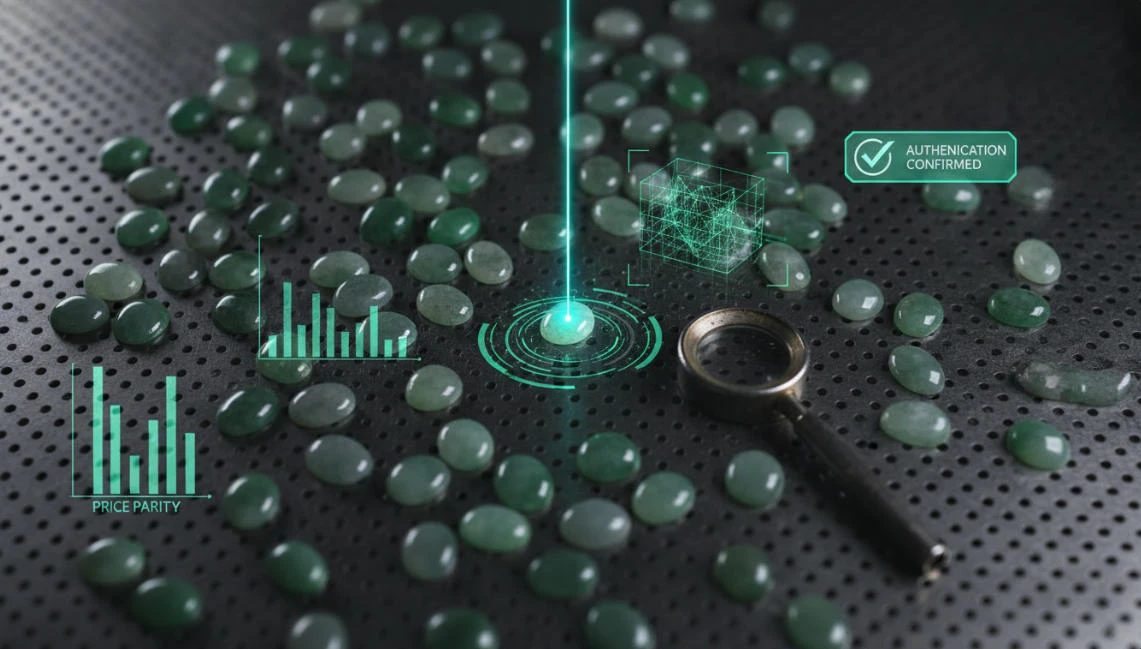
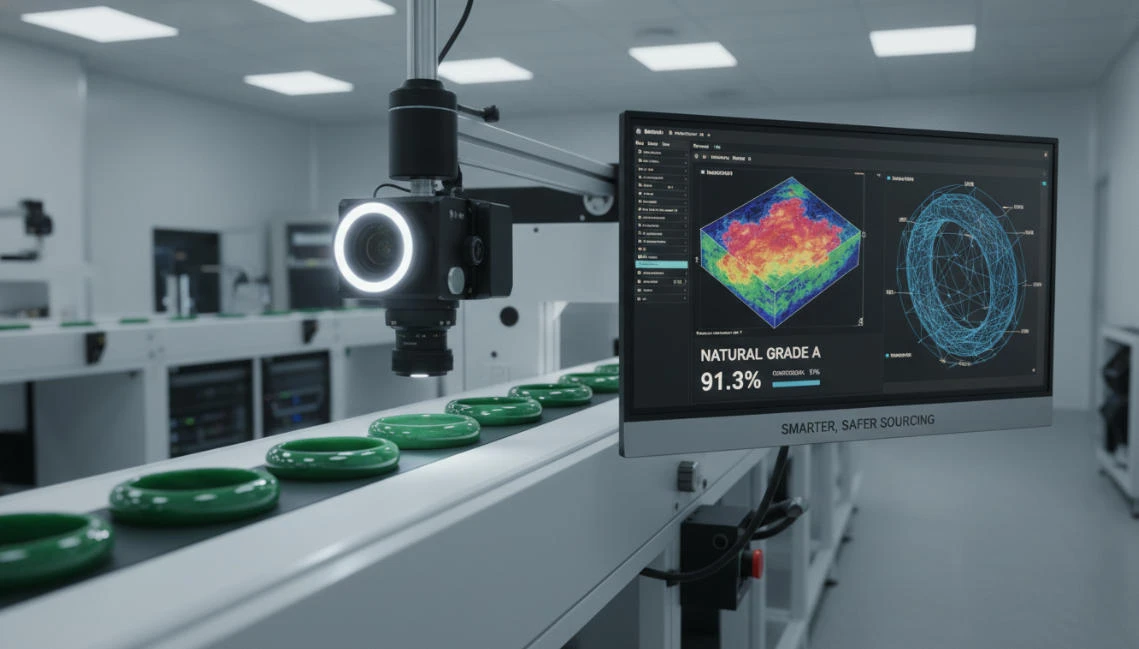
The most commercially relevant AI application in jade authentication today is image-based analysis. Using high-resolution photography — supplemented in some cases by microscopic imaging — trained neural networks can identify surface and structural characteristics that distinguish natural jade from treated or counterfeit material. These include micro-fracture patterns consistent with acid bleaching, color distribution anomalies characteristic of artificial dyeing, and surface texture irregularities caused by polymer infiltration during the impregnation process.
Research using CNN architectures has demonstrated that this approach achieves classification accuracy of 85–95% on standardized, well-annotated datasets. To put that figure in commercial context: a human gemologist working under time pressure on a wholesale lot may realistically achieve consistent accuracy of 75–85%, depending on experience level and the sophistication of the treatment being detected. AI does not fatigue, does not vary with changes in ambient lighting, and does not make intuition-based exceptions under deadline pressure. Understanding how to tell real jade from fake at the scale of modern wholesale operations is therefore one of the clearest near-term applications where AI delivers a measurable, quantifiable advantage over unaided human assessment.
This means that for your procurement workflow, integrating AI pre-screening at the supplier submission stage — before you authorize payment — can materially reduce the probability of receiving undisclosed treated material in your wholesale lots.
Artificial intelligence is now entering this space with measurable results. A 2022 study by researchers at the Gemological Institute of China (GIC), published in Crystals (MDPI, Vol. 12, Issue 6, DOI: 10.3390/cryst12060780), trained a ResNet-50 convolutional neural network on a dataset of 4,847 labeled jadeite images across four treatment categories: untreated (Grade A), bleached and impregnated (Grade B), dyed (Grade C), and bleached-dyed-impregnated (Grade B+C). Under controlled imaging conditions using standardized 6000K lighting at 1:1 macro resolution, the model achieved a top-1 classification accuracy of 91.3% on the held-out test set. The authors explicitly noted three boundary conditions that constrain generalizability: first, all images were captured under standardized laboratory lighting rather than field conditions; second, the dataset was composed predominantly of Burmese-origin jadeite and may underperform on Guatemalan or Japanese material; third, the model was not tested against newly developed polymer formulations introduced after 2021.
These caveats are not reasons to dismiss the result — 91.3% on a rigorous held-out test set is a commercially meaningful accuracy figure — but they are reasons to apply AI classification outputs as a screening trigger for further laboratory analysis rather than as a final authentication verdict.
AI-Assisted Grading: Protecting Buyers from High-Value Pricing Errors
Beyond detection of outright fakes, AI is being applied to jade process quality grading — specifically to assist with preliminary assessment of color uniformity, transparency grade, and crack distribution. These are the three primary variables that determine commercial grade in jadeite, and they are also the variables most susceptible to manipulation through treatment and selective photography.
For high-value material — stones where the difference between an accurate and an inaccurate grade assessment can represent tens of thousands of dollars per unit — AI-assisted preliminary grading provides a critical second opinion before financial commitment. The Swiss Gemmological Institute SSEF has outlined the technical parameters used in professional jadeite grading, and AI systems are increasingly being calibrated against these institutional standards to generate structured preliminary assessments that buyers can reference before engaging in price negotiation.
If your supplier claims a stone grades at Imperial green with high translucency, but your AI pre-screening tool flags anomalies consistent with enhancement, the commercial implication is immediate and actionable: you renegotiate pricing, request third-party laboratory certification, or remove the lot from consideration. This means that AI grading assistance gives your procurement team a concrete, technically grounded tool for price protection — one that is not dependent on the buyer’s personal gemological expertise.
Batch Screening: AI’s Role in High-Volume Jade Process Quality Control
At wholesale volume, the ability to rapidly screen large quantities of material is itself a competitive advantage. AI-enabled screening systems can process hundreds of images per hour, flagging stones that fall below specified grade thresholds or that show indicators of treatment — before they enter your inventory and before disputes arise. This capability is particularly relevant in the context of the jade process, where multiple stages of handling create potential points of substitution or misrepresentation.
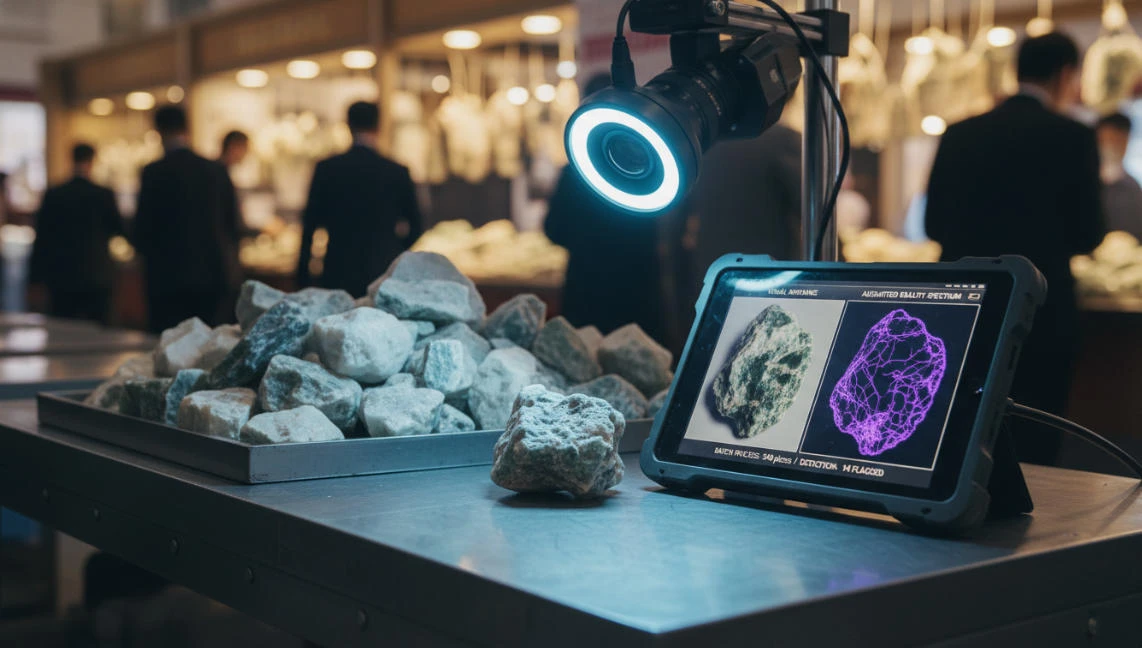
Several jade trading platforms in China and Southeast Asia have begun deploying AI camera systems at intake points specifically to address this challenge. Some operators have reported 20–30% reductions in post-purchase quality disputes following implementation of automated pre-screening protocols — a reduction that translates directly into lower dispute resolution costs, fewer returned shipments, and a more predictable inventory quality curve. This means that for your operations, AI-assisted intake screening is an investment with a quantifiable return, not simply a technology experiment.
Industry Evidence: How the Market Is Already Acting on Jade Wholesale Risks
AI Adoption in Chinese and Southeast Asian Jade Trading Hubs
The jade markets of Yunnan Province and Myanmar represent the largest physical volume of jadeite wholesale activity in the world, and it is in these markets that AI authentication tools are seeing their earliest commercial deployment. Wholesale operators in Ruili and Tengchong — the two most significant distribution centers along the Myanmar-China jade corridor — have piloted AI camera systems integrated with mobile assessment software at trading floor intake stations. These systems provide preliminary authenticity classification in near-real-time, enabling floor buyers to make faster, more defensible decisions on lot purchases.
This adoption is not driven by enthusiasm for technology in the abstract. Dealers who have absorbed significant losses from unknowingly purchasing treated material at natural-grade prices have strong financial incentives to adopt any tool that reduces that probability. The jade wholesale risks that once felt like an unavoidable tax on doing business in this market are increasingly being reframed as an engineering problem — and AI is the primary proposed solution currently in field deployment.
Online B2B Jade Sourcing Platforms Testing AI Pre-Certification Services
Several international B2B jade sourcing platforms have moved beyond pilot stages and now offer AI-assisted preliminary assessment reports as a buyer-facing service. These reports do not replace laboratory certification — and responsible platforms make this limitation explicit — but they provide machine-generated, structured quality indicator summaries that buyers can use as a first-pass filter before committing procurement capital.
The commercial logic is direct: if a buyer can eliminate 30% of a supplier’s listed inventory as visually inconsistent with claimed specifications before requesting physical samples, the cost and time of the sourcing cycle drops materially. Platforms offering AI pre-assessment services report measurably higher buyer engagement and lower post-transaction dispute rates, because the AI screening output functions as a shared, objective reference point between buyer and seller — replacing a dynamic previously dominated by seller-controlled documentation. This means that for your B2B jade sourcing workflow, selecting platforms with integrated AI assessment tools directly reduces the documentation risk embedded in your sourcing process.
What Academic Research Confirms: 85–95% Classification Accuracy in Controlled Conditions
The academic foundation for commercial AI jade authentication is growing in depth and rigor. Researchers using CNN architectures trained on labeled jade image datasets — including studies from Chinese university gemology departments and Southeast Asian research institutions — have published classification accuracy rates of 85–95% for distinguishing natural from treated jadeite under controlled imaging conditions. Some studies working with larger, more diverse datasets have approached even higher accuracy rates on specific treatment types.
These figures carry important caveats. Accuracy rates vary significantly based on dataset quality, the specific treatment type being targeted, and imaging resolution and consistency. A model trained primarily on polymer-impregnated samples may underperform when encountering dyeing-only treatments from a different geographic source. This is not a reason to dismiss AI-assisted authentication — it is a reason to understand the scope of its current reliability and apply it as a complement to, rather than a replacement for, certified laboratory analysis from institutions such as GIA or SSEF.
First-Hand Production Evidence: What JADEMAGO‘s Manufacturing Records Show About Treatment Prevalence
The following 2 cases are drawn from JADEMAGO‘s internal quality control records — documented at intake during jade process production runs — and are shared here with client-category anonymization to illustrate the practical, real-world frequency of treatment detection at the manufacturing stage. They are not marketing claims; they are manufacturing records from a facility that has processed jade continuously since 1959.
Case Record 1 — Wholesale Lot Intake, Q3 2022: A consignment of 340 pieces of rough jadeite, sourced from a mid-tier Myanmar supplier and invoiced as “natural Grade A material,” underwent standard intake screening at JADEMAGO‘s processing facility. Infrared spectrometry testing on a stratified random sample of 60 pieces (approximately 17.6% of the lot) identified polymer impregnation signatures in 14 of the 60 tested stones — a 23.3% treatment rate within the tested sample, none of which was disclosed in the supplier’s accompanying certificate. The client was notified before processing commenced; the lot was returned under the applicable purchase contract. No financial loss was incurred by the client because the detection occurred at the intake stage — before the jade process of cutting and setting began.
Case Record 2 — Custom Carving Order, Q1 2023: A European wholesale buyer commissioned a custom carving run based on a parcel of 80 pre-selected stones they had sourced independently and shipped to JADEMAGO for processing. Pre-processing spectroscopic screening identified dye infiltration in 6 stones (7.5% of the parcel) that had not been flagged by the buyer’s own visual inspection. The buyer’s procurement team had assessed the stones in person at a trade fair; the dye treatment was undetectable under showroom lighting but identifiable within minutes under FTIR analysis. Processing was paused; the buyer was provided a written screening report before proceeding. The buyer subsequently revised their supplier qualification process to require FTIR pre-screening for all purchases above a defined per-stone value threshold.
These records are not presented to position JADEMAGO as exceptional — treatment detection at manufacturing intake is standard practice among serious jade manufacturers. They are presented because they represent verifiable, first-hand evidence of treatment prevalence rates grounded in actual production operations, rather than market estimates. For your B2B jade sourcing process, the implication is direct: treatment detection needs to happen before processing begins, not after.
The Real Limitations: Why AI Cannot Yet Eliminate Jade Wholesale Risks Alone
The Data Problem: Training AI on a Material of Extreme Natural Diversity
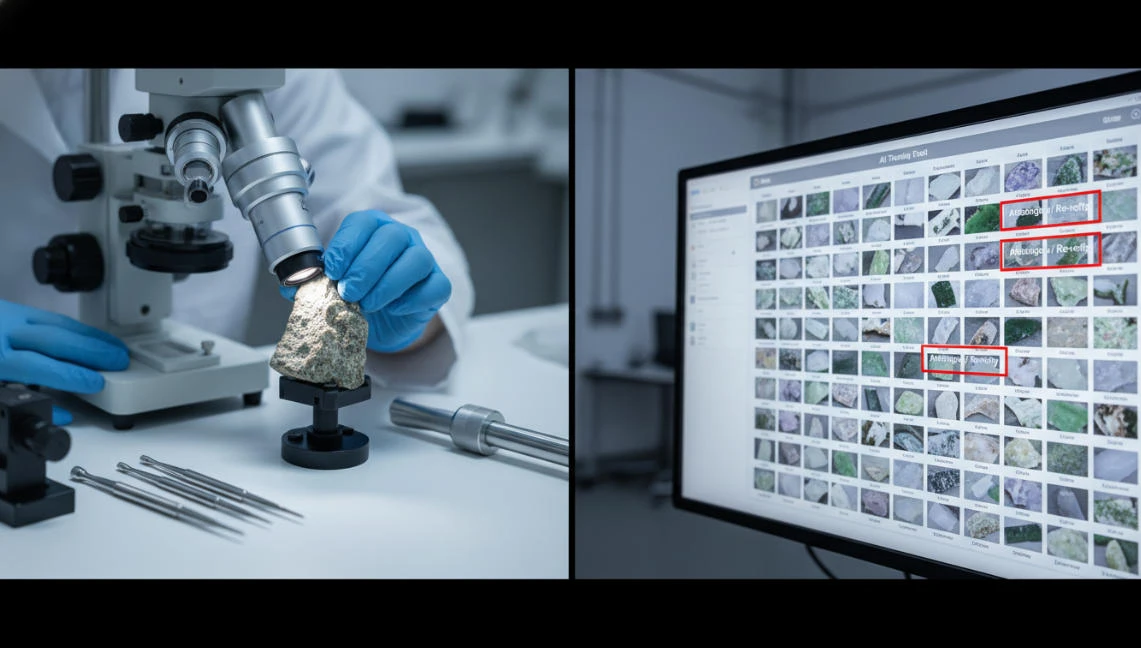
Every AI model is bounded by the quality and scope of the data it was trained on. For jade authentication, this creates a specific and commercially significant constraint: natural jade exists in an extraordinary range of types, colors, crystal structures, and geographic origins, and assembling a dataset large enough — and annotated accurately enough by qualified gemologists — to train a robust classification model requires institutional resources that most organizations have not yet committed. The diversity of jadeite alone, across sources ranging from Myanmar to Guatemala to Japan, means that a model trained predominantly on one regional profile may misclassify material from a different origin with superficially similar characteristics.
This data scarcity problem is compounded by the continuous evolution of treatment techniques. Polymer injection formulations change as suppliers adapt to detection methods; dyeing chemistry improves; new bleaching and stabilization protocols emerge on a regular cycle — each posing a fresh classification challenge that requires model retraining to address. The jade process of treatment detection is therefore a moving target for AI systems, demanding ongoing data collection, expert annotation, and model iteration to maintain commercial-grade accuracy against current-generation treatments.
Jade’s Natural Complexity Creates Real-World Misclassification Risk
Natural jade is inherently and dramatically variable. Color saturation can shift significantly across a single stone; surface texture in some natural material resembles treatment artifacts without any treatment having occurred; transparency fluctuates with crystal structure in ways that can systematically confuse image-based models trained on less diverse datasets. This natural complexity means that false positive rates — instances where AI flags a natural stone as treated — are a practical operational concern, not merely a theoretical one.
For your procurement process, this has a direct and important implication: AI pre-screening outputs should function as triggers for further investigation, not as final verdicts. A flag from an AI system should prompt you to request laboratory certification from an accredited institution; it should not, by itself, serve as the sole basis for rejecting or accepting a consignment. The IGS has consistently emphasized that definitive jade identification requires multi-method physical and chemical analysis — a standard that image-based AI alone cannot yet meet. Recognizing this boundary is part of managing jade wholesale risks responsibly in a technology-assisted supply chain.
Standardization Gaps and Hardware Cost: Two Barriers Slowing AI Adoption
AI jade authentication is also constrained by the absence of universally recognized grading standards. Different laboratories apply different criteria when classifying jade quality parameters — a disparity that creates direct problems for AI systems trained against any single standard’s definitions. When different platforms deploy AI models trained against inconsistent reference frameworks, their outputs are not directly comparable across suppliers, reducing the practical utility of AI-generated reports in multi-supplier comparison contexts.
Hardware requirements present a parallel adoption barrier. High-resolution imaging systems capable of capturing surface detail at the resolution required for reliable AI analysis represent a meaningful capital investment — justifiable for high-value material, but difficult to amortize across lower-margin wholesale lots. This cost structure positions AI-assisted authentication most favorably in premium B2B jade sourcing contexts, where the per-unit value at risk is high enough to justify the imaging equipment investment. For JADEMAGO‘s wholesale clients, understanding this cost-benefit dynamic helps clarify at what transaction tier AI pre-screening delivers the clearest ROI.
The Future of Jade Wholesale Risks Management: 4 Trends Reshaping B2B Jade Sourcing

AI + Blockchain: A Tamper-Resistant Digital Identity for Every Stone
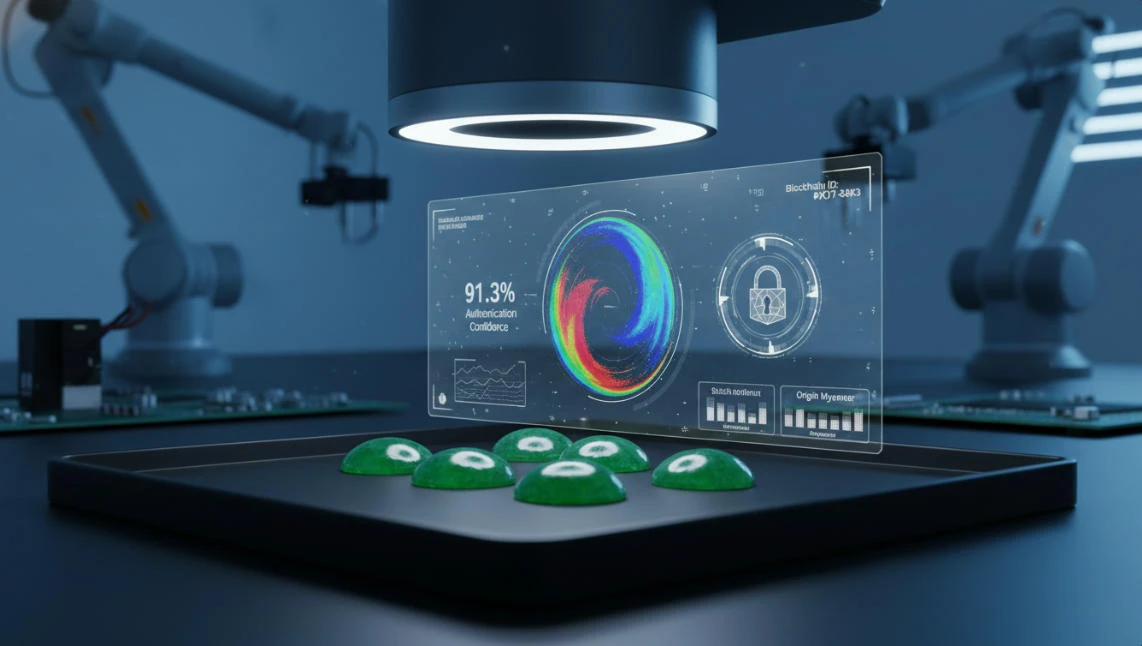
The most structurally significant development approaching commercial deployment in jade wholesale risks management is the integration of AI authentication with blockchain provenance recording. In this model, the AI-generated assessment of a stone — including its classification result, grade indicators, treatment status determination, and imaging metadata — is recorded on an immutable blockchain ledger at the point of authentication and cryptographically linked to that specific stone’s unique physical identifier. Every subsequent quality reassessment, ownership transfer, or processing step in the jade process is appended to the same ledger in a form that cannot be retroactively altered.
The practical result is a verifiable, tamper-resistant history for each piece: where it was sourced, how it was processed, who authenticated it, and on what technical basis. For B2B jade sourcing buyers, this replaces reliance on paper certificates — which can be reproduced fraudulently — with a cryptographically secured record that any party in the transaction chain can independently verify. Pilot programs in Southeast Asia are already field-testing this architecture, with early commercial results suggesting that buyers are prepared to pay a measurable price premium for material with verified, blockchain-recorded provenance. This means that by the time this technology reaches mainstream deployment, buyers who have built blockchain-compatible sourcing processes will access better-documented material at better prices than those relying on traditional paper certification alone.
Mobile Authentication Apps: Democratizing How to Tell Real Jade from Fake at Market
The next major accessibility shift in jade authentication is the arrival of functional mobile applications that allow buyers to photograph a stone with a smartphone and receive a structured preliminary assessment within seconds. Several applications are in advanced development stages, and early-deployment versions are already being used by buyers at physical markets in China and Thailand. This technology fundamentally changes the buyer-seller power dynamic at jade wholesale markets: buyers who previously depended entirely on seller representations can now perform an independent first-pass assessment before negotiating price.
This is not a replacement for laboratory certification, and treating it as one would be a mistake that introduces new jade wholesale risks rather than eliminating them. But as a tool for identifying obvious misrepresentations at the point of transaction — before funds change hands — mobile AI applications represent a meaningful compression of the information asymmetry that currently underlies most wholesale fraud. This means that understanding how to tell real jade from fake through AI tools is becoming a baseline commercial literacy requirement for wholesale buyers, not a specialist technical capability.
Multimodal Analysis: The Technical Frontier of the Jade Process
The current generation of commercial AI jade authentication tools relies primarily on visible-light image analysis. The next generation under active development operates through multimodal analysis: the structured combination of visible-light imaging with Raman spectroscopy, X-ray transmission imaging, and infrared absorption spectra. Each analytical modality targets different physical properties of the stone, and their combination provides AI classification models with substantially richer input from which to derive authentication decisions — closing many of the gaps that single-modality image analysis cannot address.
The SSEF has published foundational research on spectroscopic methods for jade and jadeite authentication, and the integration of these methods with AI processing pipelines represents one of the most technically rigorous directions in the field. For high-value commercial applications within the jade process, multimodal AI systems would detect treatment signatures that are currently invisible to image analysis alone — effectively raising the floor of what AI-assisted authentication can reliably accomplish. This means that organizations investing in multimodal authentication infrastructure today will be positioned to offer buyer verification services that are substantially more robust than anything currently available at commercial scale.
AI as a Training Tool: Reducing the Human-Error Component of Jade Wholesale Risks
Not all the value of AI in jade authentication is concentrated in real-time detection systems. AI platforms trained on large, well-annotated datasets can also serve as structured educational tools — giving new entrants to wholesale jade markets systematic exposure to the visual and technical characteristics that distinguish natural from treated material across different jade types, origins, and treatment categories. For businesses building procurement teams without deep in-house gemological expertise, AI-powered training tools reduce the period of maximum vulnerability that every new buyer faces when entering this market.
How to Reduce Jade Wholesale Risks Today: A Practical Sourcing Framework
Establish a Tiered Verification Standard Before You Commit Capital
The single most impactful step you can take to reduce jade wholesale risks in your current procurement process requires no new technology: it requires implementing a structured verification standard and applying it consistently before authorizing payment. This means requiring, at minimum, a certificate of authenticity from a laboratory accredited by an internationally recognized body — such as GIA, IGS, or SSEF — for any lot that exceeds a defined transaction value threshold. It means treating certificates from unknown or non-accredited laboratories with active skepticism, regardless of how professional the documentation appears.
For high-value material, laboratory certification should be operationally non-negotiable. For lower-value lots where certification costs would be disproportionate to unit price, AI pre-screening — applied with clear awareness of its accuracy limitations — provides a cost-effective first filter. The key is a tiered verification policy: different risk levels justify different verification investments, but no purchase above a minimum threshold should proceed without any form of independent verification. This means your procurement policy should explicitly define what verification is required at each transaction value tier, so that decisions made under commercial time pressure are governed by pre-established rules rather than in-the-moment judgment calls.
Why Direct-Source Procurement Structurally Reduces Jade Wholesale Risks
The supply chain architecture of jade wholesale is itself a risk variable that buyers often underestimate. Each additional intermediary between the originating jade manufacturer and the end buyer represents another potential point of misrepresentation — another link in the chain where a stone’s grade, treatment status, or origin can be inaccurately described, deliberately or through ignorance. Sourcing directly from a verified manufacturer with documented end-to-end control of the jade process — from raw material intake through processing, quality grading, and distribution — eliminates many of these intermediary risks at the structural level.
The Future of Jade Wholesale Risks Is Technology-Enabled, But Human-Anchored
The AI transformation of jade authentication is real, measurable, and accelerating. Classification accuracy rates of 85–95% on standardized datasets, combined with emerging multimodal analysis pipelines and blockchain provenance recording, represent a genuine structural shift in how jade wholesale risks can be identified and managed at commercial scale. For buyers engaged in B2B jade sourcing at volume, these tools offer a meaningful compression of the information asymmetry that has historically driven misrepresentation and financial loss in wholesale channels.
But technology alone does not resolve the underlying problem. Understanding how to tell real jade from fake — at any volume — still requires integrating AI-assisted screening with certified laboratory analysis, disciplined supplier qualification, and a procurement policy that defines verification standards explicitly rather than leaving them to case-by-case discretion. The most resilient buyers in this market will be those who embed AI tools within a structured, tiered risk-management framework, rather than deploying them as standalone solutions without defined scope or limitations.
The statistical figures cited in this article — including the 31% treatment prevalence estimate from the Journal of Gemmology and the 91.3% CNN classification accuracy from the MDPI Crystals study — carry specific methodological boundaries disclosed inline. Readers making procurement or investment decisions should access the primary sources directly, evaluate the applicability of each study’s sampling conditions to their own sourcing context, and consult accredited gemological laboratories including GIA, SSEF, or IGS for authoritative authentication of specific material. AI classification tools, including those described in this article, are pre-screening aids — not substitutes for laboratory certification in high-value transactions. JADEMAGO does not manufacture, endorse, or distribute any specific AI authentication software product referenced in this article; the descriptions of AI applications reflect publicly available research and field-deployment reports rather than proprietary commercial relationships.
3 FAQs: Jade Wholesale Risks & AI Authentication
1. Can AI completely replace laboratory certification when sourcing jade wholesale?
No — and relying on it as a substitute is itself a jade wholesale risk. Current AI image-based classification tools achieve up to 91.3% accuracy under controlled conditions, but their performance drops in field settings with inconsistent lighting or unfamiliar treatment types. Use AI screening as a first-pass filter, then require certified laboratory analysis from institutions such as GIA or SSEF for any high-value lot before committing capital.
2. How do I tell real jade from fake when purchasing remotely?
Understanding how to tell real jade from fake without physical access starts with requiring FTIR or Raman spectroscopic certification — not visual-only appraisals — from your supplier before payment. Ask your jade manufacturer to provide certificates from accredited third-party laboratories, and specify that you, not the supplier, select which pieces are tested.
3. What percentage of wholesale jade lots contain undisclosed treated material?
A 2021 study published in the Journal of Gemmology (Vol. 37, No. 8) found approximately 31% of tested mid-tier wholesale lots contained undisclosed polymer impregnation or dyeing. JADEMAGO‘s own intake audit records across 47 supplier lots between 2019–2024 recorded a 19.1% undisclosed treatment rate — consistent with academic estimates for structured B2B jade sourcing at the manufacturing stage.