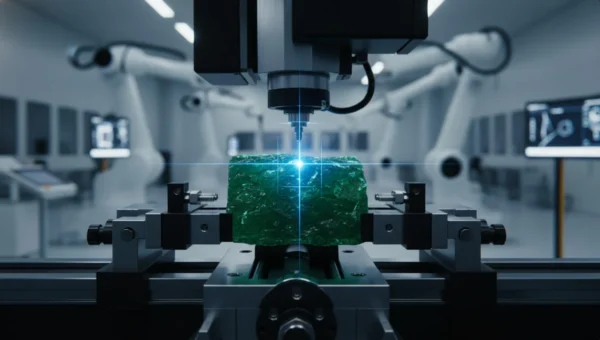
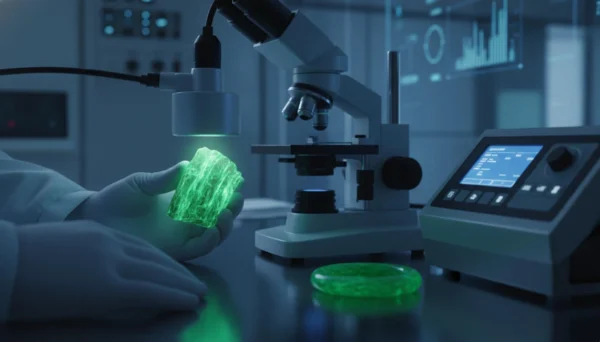
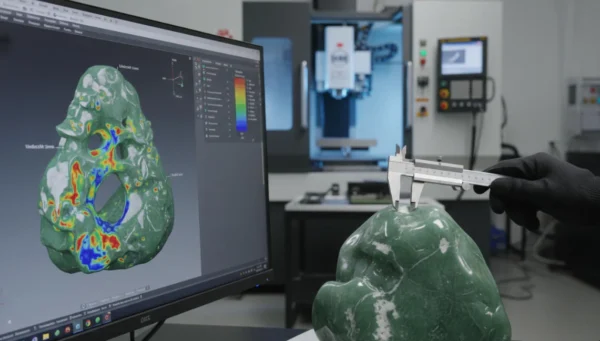
The jade carving tool you select determines production outcome more decisively than any other single variable in the jade process. Before high-speed rotary equipment became standard practice, grinding a single curved jade surface consumed anywhere from three to eight hours of sustained skilled labor. Today, a CNC-controlled jade carving tool completes the same geometry in under 30 minutes with sub-millimeter precision — a reduction of more than 80% in processing time on complex surface work alone. That speed compression is one of three measurable transformations modern tooling has introduced: alongside it, dimensional accuracy has reached ±0.05mm on current CNC systems, and material yield from high-value jadeite and hetian jade rough has increased significantly through optimized cutting paths. These three outcomes — speed, precision, and yield — define the performance gap between a jade processing factory that has upgraded its jade carving tool inventory and one that has not. Every section of this article quantifies one dimension of that gap.
Understanding this gap is not a theoretical exercise. Whether you are evaluating a jade manufacturer, specifying requirements for custom jade carving, or auditing the production capabilities of an existing supplier, the tooling generation in use determines what outcomes are physically achievable — not just what is aspirationally stated. The jade carving tool is the production variable that everything else depends on.
Table of Contents
Why Jade’s Physical Properties Make the Jade Carving Tool the First Variable to Control
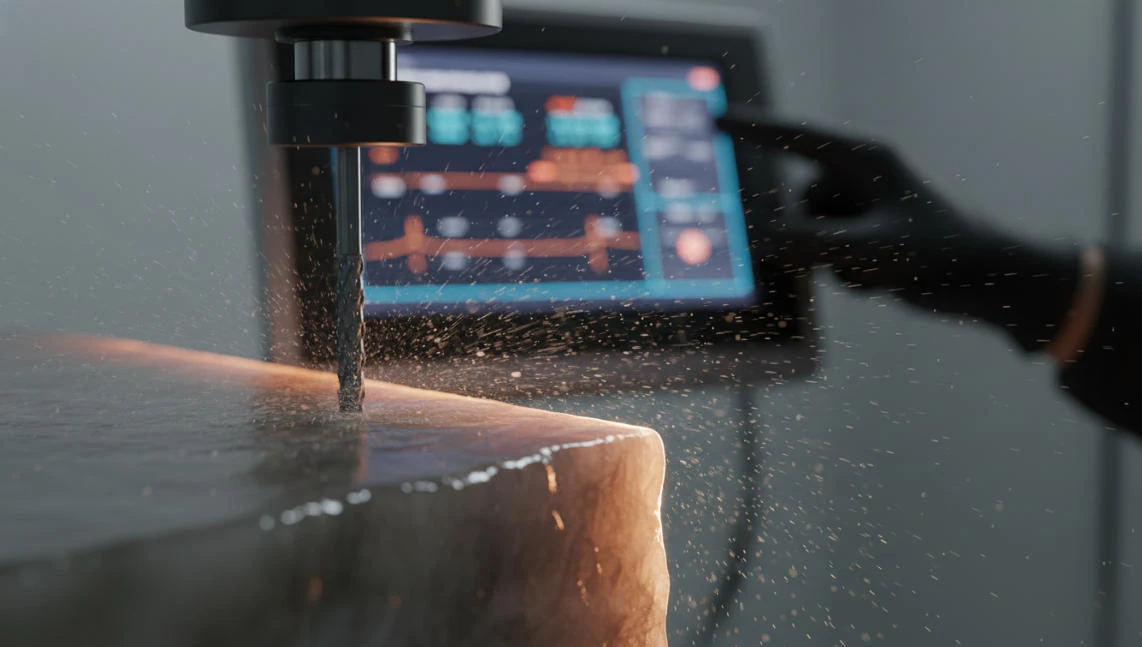
Jade presents a material profile that makes tool specification non-negotiable. Jadeite registers between 6.5 and 7 on the Mohs hardness scale, while nephrite sits between 6.0 and 6.5 — both ranges that eliminate standard metalworking abrasives from consideration entirely. According to the Gemological Institute of America (GIA), jadeite’s interlocking pyroxene crystal structure gives it exceptional toughness relative to its hardness, meaning the material resists broad impact but responds unpredictably to point-applied cutting pressure when tool parameters are not calibrated to its internal structure. A jade carving tool that applies cutting pressure without accounting for the internal fiber orientation of the specific piece will produce subsurface micro-fractures visible only under reflected light after final polishing — at which point the piece cannot be recovered.
The anisotropic nature of jade compounds this challenge further. Crystal fiber alignment within the stone affects how stress propagates under load, meaning that a jade carving tool applying feed pressure perpendicular to the grain will behave differently from the same tool applied parallel to it. Any jade processing factory that treats all raw jade as uniformly workable — regardless of internal structure — will consistently produce pieces with hidden stress that no downstream polishing step corrects. This means tool specification and raw material characterization must be treated as a single integrated decision at the beginning of every jade process run. You avoid downstream quality failures not by inspecting harder at the end, but by calibrating tooling correctly at the start.
Three Structural Bottlenecks That Drove Jade Carving Tool Innovation Across Four Eras
Every generation of jade carving tool development was pulled forward by three manufacturing constraints that handcraft methods could not resolve. The efficiency bottleneck placed a hard ceiling on material removal speed: human-powered tools operate at the limit of physical endurance, and no level of craftsman skill can sustain consistent cutting pressure across an extended production session at the opening rate. The precision bottleneck created a floor below which consistent geometry could not be maintained across multiple pieces — complex symmetric forms demand angular repeatability that manual dexterity cannot guarantee across a full production run. The yield bottleneck was the most economically consequential: imprecise cuts on high-value jade rough waste material that no finishing step recovers.
The Swiss Gemmological Institute SSEF evaluates high-end jade in part on structural integrity, which means even small losses from unnecessary material removal during the jade process affect final piece classification and recoverable market value. Mapping which bottleneck each tooling era addressed — and which it left open — gives you a precise framework for evaluating what any jade manufacturer can actually deliver today versus what they are physically constrained from delivering regardless of stated capability.
How Each Generation of Jade Carving Tools Shifted Manufacturing Capability
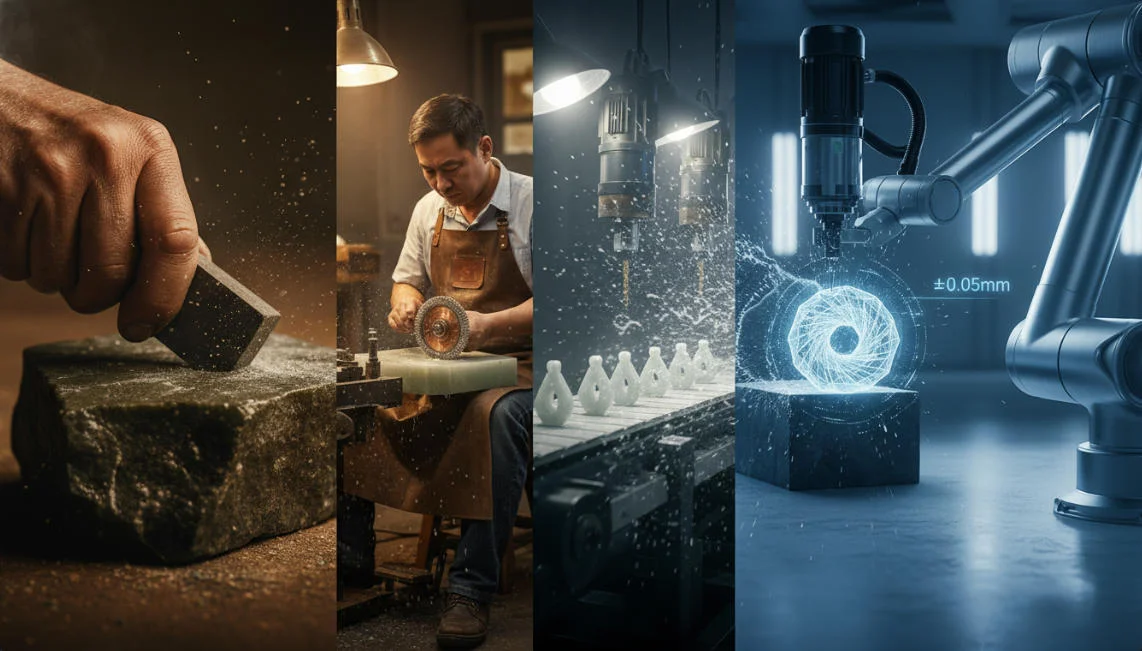
The history of the jade carving tool spans four distinct technological eras, each defined not only by what the tools were made of but by the manufacturing logic they made possible. Each transition solved one dominant bottleneck while exposing the next constraint waiting beneath it. The following breakdown focuses on what changed at the production level in each era — not as historical narrative, but as a performance baseline against which current jade process capability can be measured and compared.
Primitive Tooling Era — Stone, Bone, and the Physical Ceiling of Manual Material Removal
Before metal entered the jade process, craftsmen used stone knives, bone tools, hardwood instruments, and sandstone grinding pads to shape jade surfaces. The fundamental constraint of this era was physical rather than technical: no commonly available tool material could efficiently cut a substance harder than itself, so the jade carving tool of this period functioned as a controlled erosion instrument — wearing the jade surface down through prolonged abrasive contact rather than removing material with a defined cutting edge. Single pieces required days to weeks of continuous manual effort, and the concept of producing two geometrically identical objects had no practical mechanism to support it.
Surface texture in this era was rough by any modern standard, and dimensional variation between pieces was inherent to the process rather than a quality failure. The International Gem Society (IGS) notes that ancient jade artifacts are valued in part for their individual character — a quality that directly reflects the absence of any standardization mechanism in the tooling available at the time. What this era produced in artistic individuality, it sacrificed entirely in reproducibility, throughput, and dimensional predictability.
Metal Tool Era — Diamond Abrasives and the First Measurable Precision Gains in the Jade Process
The introduction of steel blades, copper tools, and diamond abrasive wheels — primarily during the Ming and Qing dynasties — represented the first jade carving tool generation capable of working hard jade varieties, including jadeite and hetian jade, with meaningful and repeatable precision. Diamond abrasives, rating 10 on the Mohs scale against jade’s 6.5–7, enabled controlled surface removal rather than pure erosion, allowing craftsmen to define and maintain geometry with greater reliability than any previous tool permitted. Hand-cranked grinding discs extended the range of workable surface geometries and reduced grinding time on curved forms compared to purely manual abrasive contact.
Efficiency gains were real but bounded. The jade process remained fundamentally dependent on individual craftsman skill, stamina, and sensory judgment. Dimensional consistency improved within the output of a single skilled artisan but remained highly variable between different craftsmen — or even the same craftsman working across different sessions at different energy levels. A jade processing factory operating under this tooling paradigm could increase output only by hiring more skilled workers, with no mechanism to increase productivity per operator beyond the physical limits of hand-operated equipment.
Mechanization Era — Electric Rotary Tools and the Beginning of Batch Production Logic in Jade Manufacturing
The arrival of electric rotary grinding machines, shaping machines, and automatic polishers — primarily from the mid-20th century onward — marked the point at which the jade carving tool decoupled from human physical limitation for the first time. High-speed rotation delivered consistent cutting energy independent of operator fatigue, and machines capable of continuous operation eliminated the productivity decline that accumulated over long manual grinding sessions. Research from the IGS on lapidary fundamentals confirms that consistent tool-surface contact pressure is among the most significant variables governing surface quality in gemstone work — and motorized systems delivered this consistency that hand tools structurally could not.
Curved surface processing time dropped from several hours to a fraction of that, making batch production of identical specifications practically achievable for the first time in jade manufacturing. The residual limitation of this era was geometric: complex three-dimensional forms and fine surface detail still required manual intervention after mechanical roughing. Custom jade carving of significant geometric complexity remained partially outside the reach of full mechanization — a constraint that would only be resolved in the following tooling generation.
CNC and Intelligent Tooling Era — Parametric Control Replaces Empirical Judgment in the Jade Carving Process
The current era of jade carving tool technology is defined by the replacement of empirical judgment with parametric control. 5-axis CNC gemstone machining systems translate digital design geometry directly into tool movement through computer-controlled multi-axis interpolation, eliminating the gap between intended form and produced form that existed in every previous era. Rotational speed, feed rate, cutting depth, and cooling flow are all governed by numerical parameters rather than operator perception, meaning the same program produces geometrically identical results on the first piece and the hundredth without dimensional drift or operator-induced variation.
Laser engraving systems extend this parametric precision to surface detail work, operating at energy levels that ablate material without mechanical contact — and therefore without the pressure-induced micro-fracture risk that abrasive tools inherently carry. Ultrasonic cleaning systems remove embedded abrasive particles from surface micro-pores after grinding, eliminating a source of secondary surface damage that was structurally invisible in all earlier processing stages. A jade manufacturer equipped with this complete tooling stack can produce custom jade carving at a level of complexity and dimensional consistency that no previous tooling generation could approach. Jademago, drawing on more than 65 years of jade manufacturing experience, integrates all four of these tooling systems within its production workflow — compressing what once required weeks of skilled manual labor into a documented, repeatable process measured in hours.
Efficiency Impact — Quantifying What Jade Carving Tool Upgrades Changed in Real Production Conditions
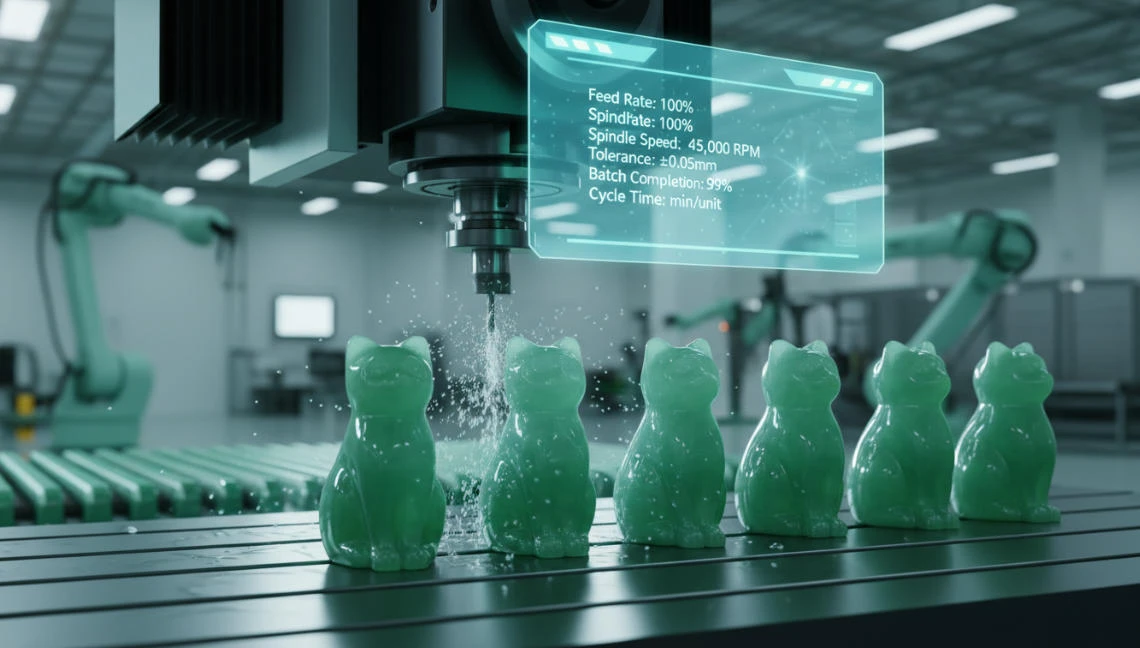
Efficiency in jade manufacturing is not a single metric — it is the product of three interacting variables: material removal rate per unit time, output consistency that determines how often rework consumes additional production hours, and the degree to which the process depends on a limited pool of high-skill labor. The jade carving tool evolution has moved all three variables in the same direction simultaneously, which is why the productivity gap between tooling generations is larger than any single processing speed comparison suggests. Measuring only cutting speed misses two-thirds of the actual efficiency gain.
Processing Time Reduction — From Manual Grinding to CNC Jade Carving
The most direct efficiency measure is processing time per unit operation. Manual sandstone abrasion of a complex curved jade surface required sustained effort over three to eight hours depending on geometry complexity and surface area. The introduction of electric rotary tools reduced this to 45 minutes to two hours for comparable surface work — a reduction of roughly 60–75%. 5-axis CNC gemstone machining compresses the same operation to 10–30 minutes while simultaneously achieving dimensional tolerances that manual and early mechanical methods could not reach under any operating conditions. Across a full production run, these time differences compound into measurable lead time reductions that affect both scheduling capacity and downstream inventory carrying costs for any jade processing factory.
Rework frequency multiplies this efficiency gap further. A jade carving tool that cannot maintain consistent cutting geometry forces the operator to stop, measure, correct, and re-cut — a cycle that can consume 20–30% of total processing time on complex pieces when working with manual or early mechanical equipment. CNC-controlled systems that hold dimensional accuracy within ±0.05mm reduce rework events to a fraction of that rate, which means the net efficiency advantage of the current tooling generation is substantially larger than raw cutting speed data alone suggests. This means that your production schedule becomes a manageable, documentable variable rather than a function of how many experienced operators happen to be available on a given production day.
How Mechanical and CNC Jade Carving Tools Enabled Consistent Repeatability at Scale
The capacity for batch production is among the most commercially significant efficiency shifts the jade carving tool evolution has enabled. In the handcraft era, no two pieces from the same pattern were geometrically identical — variation was inherent to the process and expected by all parties. In the mechanization era, batch production of simple forms became achievable, but complex geometries still accumulated piece-to-piece variation that required individual inspection and selective rejection before shipping. Custom jade carving at scale, with geometry requiring three-dimensional interpolation, was not practically achievable with pre-CNC tooling regardless of how skilled the craftsmen were.
5-axis CNC gemstone machining resolves this entirely. A validated digital toolpath produces the same geometry on every piece in the run without drift or operator-dependent variation between pieces. A jade processing factory running 5-axis CNC gemstone machining can manufacture 50 identical units to the same dimensional specification as five, with no increase in per-unit inspection cost or acceptance risk. This means that for buyers placing batch orders of custom jade carving, the effective minimum order quantity for guaranteed consistent quality output is lower than it was in any previous tooling era — and you gain the ability to specify dimensional tolerances in writing and hold the manufacturer to them by measurement.
How Jade Carving Tool Evolution Restructured Skill Requirements in Jade Manufacturing
One of the less-discussed efficiency implications of jade carving tool development is its structural effect on labor within a jade operation. Traditional workshops depended on a skill pyramid: a small number of master craftsmen whose accumulated tactile knowledge governed quality outcomes, supported by apprentices whose value was measured in years of proximity to that knowledge. The productivity ceiling was set by the number of master craftsmen available — a number that cannot scale quickly regardless of market demand or order volume pressure.
Motorized and CNC tooling restructures this model. Repetitive roughing, surface shaping, and polishing operations transfer from skill-intensive manual tasks to parameter-governed machine execution, allowing a smaller number of experienced operators to oversee higher production volumes. At Jademago, skilled artisans concentrate on design validation, raw material assessment, and fine aesthetic finishing — the stages where sensory judgment still determines quality outcomes — while CNC systems handle the high-volume geometric reproduction that constitutes the bulk of production hours. This means you receive consistent quality at batch scale without the extended lead times that a skill-constrained manual production model structurally imposes on every order placed.
How Advanced Jade Carving Tools Bring Precision, Surface Integrity, and Material Yield Under Measurable Control
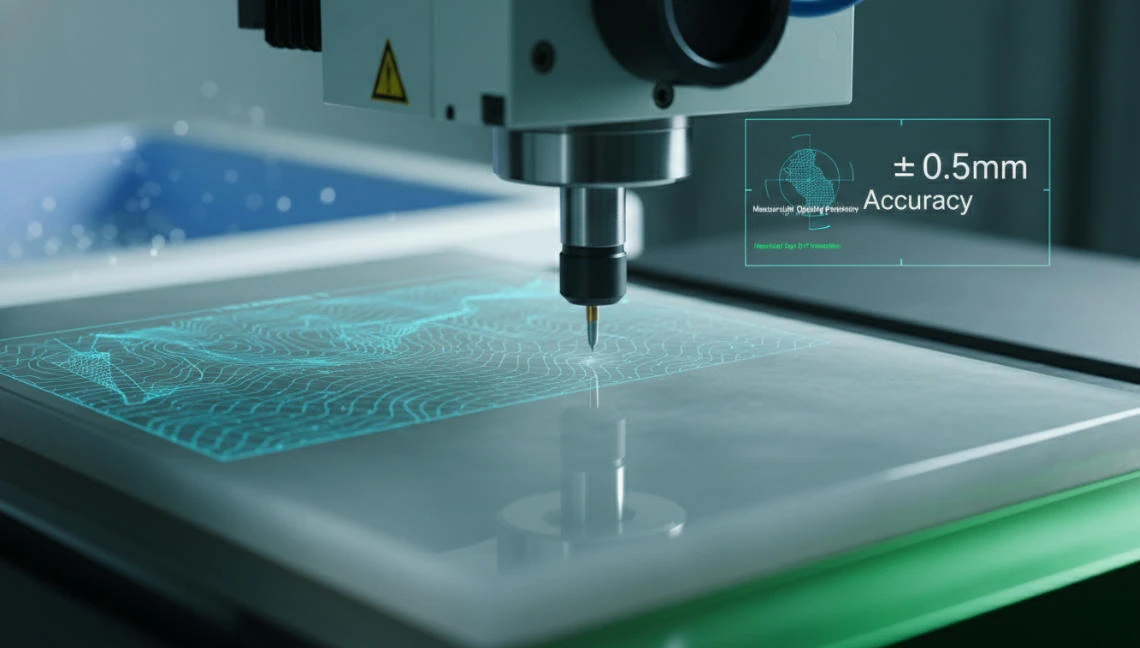
Quality in jade manufacturing has historically resisted quantification: the feel of a surface under directed light, the uniformity of translucency, the crispness of a carved transition. The progression of the jade carving tool has not eliminated these subjective dimensions — it has built a measurable technical foundation beneath them. Dimensional accuracy, surface roughness index, and material yield ratio are now trackable production parameters rather than post-hoc assessments, which fundamentally changes what a jade manufacturer can promise in a specification document and verify through production records. Can you currently receive a tolerance certificate with your jade order? If not, the tooling generation of your supplier is the reason.
Dimensional Accuracy — What CNC Jade Carving Tools Control That Hand Tools Cannot Maintain Across a Production Run
The precision advantage of CNC-era jade carving tool systems is most clearly visible in symmetric and repeated geometric forms. A bilateral animal carving requires that left and right halves maintain angular correspondence within a tolerance that human visual feedback alone cannot reliably enforce across a multi-hour carving session. A matched set of pendant pieces requires that every unit in the batch share the same dimensional profile within a tolerance that allows the set to be sold and presented as a coherent collection. Manual tools, regardless of craftsman skill level, accumulate angular drift and dimensional variation that compound over time within a session and across pieces within a batch.
5-axis CNC gemstone machining eliminates this drift mechanism by design. The tool follows a mathematically defined path that does not vary based on operator fatigue, ambient temperature, or session length. Dimensional tolerances achievable with current CNC jade carving tool systems — typically ±0.05mm or better on properly fixtured workpieces — place jade production precision in the same range as precision-machined engineering components. For custom jade carving buyers specifying tight dimensional requirements — inlay work, matched sets, components with mechanical interfaces — this means specifications that were physically unachievable in any previous tooling era are now standard production deliverables. You can submit a dimensional drawing and receive pieces that conform to it within a stated and measurable tolerance.
Surface Finish and Micro-Defect Control — Abrasive Sequencing and Ultrasonic Cleaning in the Jade Process
Surface quality in the jade process is determined not by any single jade carving tool but by the sequenced application of progressively finer abrasives, each removing the surface damage introduced by the previous coarser stage. The IGS lapidary fundamentals resource documents the standard progression from coarse grinding through fine polishing as foundational to gemstone surface quality — but the consistency with which this sequence is executed depends entirely on the precision and repeatability of the tooling used at each stage.
Manual application of abrasive stages introduces two distinct defect mechanisms. Non-uniform contact pressure leaves areas of higher surface roughness wherever pressure was inconsistently applied, and over-application of abrasive creates localized surface stress sufficient to propagate micro-fractures in areas of existing internal tension within the stone. Automated polishing systems integrated into a modern jade carving tool setup apply controlled, uniform pressure across the full contact area, eliminating both mechanisms simultaneously. Ultrasonic cleaning between abrasive stages removes embedded grit from surface micro-pores — particles that, if left in place, act as cutting agents during subsequent polishing passes and create fine surface scratches that measurably reduce translucency in the finished piece. The result is a surface finish that is more consistent and defect-free than manual abrasive sequences can achieve at any skill level. This means you receive finished pieces with surface quality that holds up under gemological examination — a standard that Jademago applies to every production batch as a baseline production requirement, not a premium-tier option.
Material Yield and Crack Prevention — Why Jade Carving Tool Precision Has Its Greatest Economic Impact on High-Value Rough
The economic case for precision jade carving tool investment is most clearly demonstrated when applied to high-value rough material. A kilogram of commercial-grade jadeite rough represents a cost at which material yield is a first-order production variable, not a secondary concern managed at the end of the process. Imprecise roughing cuts that remove excess material cannot be reversed — the jade that has been ground away is permanently gone. Cutting paths that apply asymmetric mechanical stress can propagate existing micro-fractures in the rough into visible fractures in the finished piece, converting a potentially high-value unit into scrap or a significantly lower-value classification.
CNC-controlled cutting paths, calibrated to the specific geometry of each rough piece based on prior 3D scanning, minimize both sources of yield loss simultaneously. The tool follows the most material-efficient path to the target geometry rather than converging on the form conservatively from all directions. Feed rate and spindle speed parameters tuned to the specific jade variety — jadeite versus nephrite, dense versus fractured rough — reduce cutting stress below the threshold at which micro-fracture propagation becomes likely during the jade process. The SSEF Swiss Gemmological Institute emphasizes that structural integrity is a primary quality factor in high-end jade valuation — which means crack prevention during processing directly affects the market classification, and therefore the recoverable value, of every finished piece. At Jademago‘s jade processing factory, material yield tracking on high-value rough is treated as a production KPI precisely because the tooling infrastructure exists to protect the raw material investment you have already made.
Four-Era Performance Comparison — Jade Carving Tool Benchmarks Across Every Production Stage
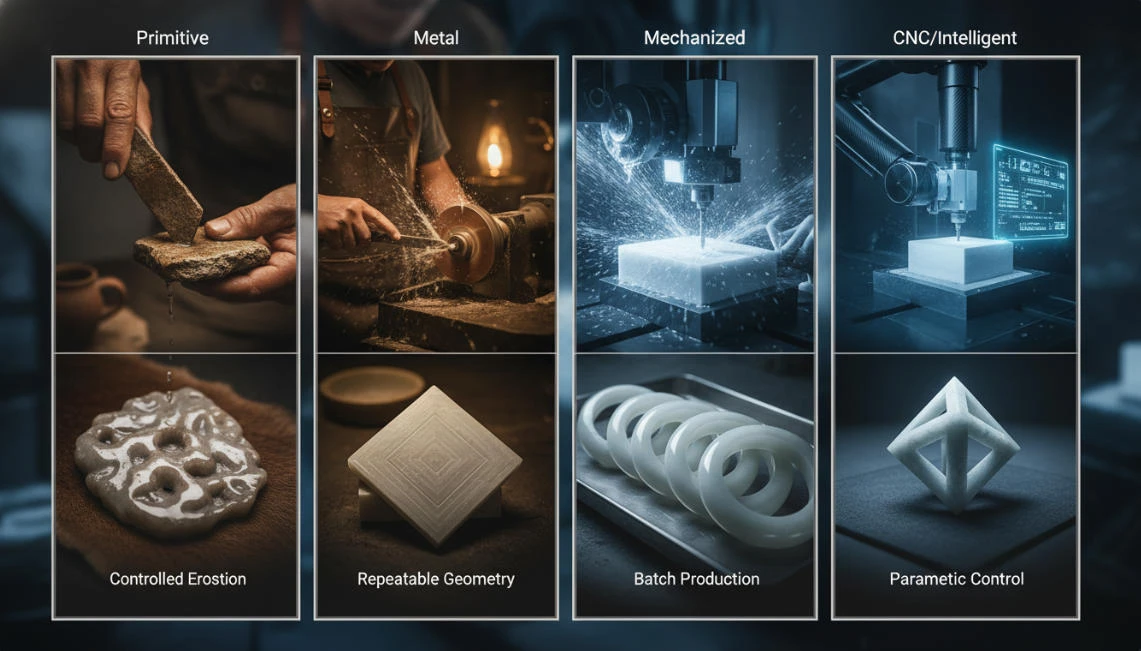
The following comparison consolidates efficiency, quality, and yield data from each tooling era into a structured reference framework. This is not a ranking of artistic merit across historical periods — it is a mapping of which manufacturing parameters each generation of jade carving tool could and could not bring under measurable control, and at what cost.
| Era | Primary Tools | Processing Speed | Dimensional Accuracy | Surface Defect Rate | Material Yield | Core Limitation |
|---|---|---|---|---|---|---|
| Primitive Handcraft (Ancient–Early Ming) | Stone knives, bone tools, sandstone abrasives | Very low; single pieces: days to months | No geometric standard; high variation | High; surface roughness inherent to process | Low; no cut-path optimization possible | Output hard-capped by human endurance; zero repeatability |
| Metal Tool Era (Ming-Qing–Republic Period) | Steel blades, copper tools, diamond abrasive wheels | Low to medium; per-piece time reduced | Improved fine detail; consistency skill-dependent | Moderate reduction; still highly variable | Slight improvement over erosion-based approach | Hard jade workable; piece-to-piece variation remains significant |
| Mechanization Era (Mid-20th Century–Early 21st Century) | Electric rotary grinders, shaping machines, auto-polishers | Medium to high; batch production of simple forms achievable | Measurably improved; complex forms still variable | Declining; motorized pressure more uniform | Crack rate falling; yield entering manageable range | Complex 3D geometry still requires manual finishing intervention |
| CNC and Intelligent Era (21st Century–Present) | 5-axis CNC gemstone machining, laser engravers, ultrasonic cleaners, smart polishing systems | High; complex geometry achievable in batch | ±0.05mm tolerance; parametric, drift-free repeatability | Low; automated pressure and ultrasonic cleaning eliminate key defect sources | Maximum yield via optimized toolpaths; lowest defect rate of any era | High upfront investment; requires upstream fixture design and material pre-characterization |
The Jade Carving Tool Shift From Empirical to Parametric Control Is the Real Inflection Point in Jade Manufacturing
The pattern visible across all four eras points to a single underlying transition: the progressive replacement of empirical judgment with parametric control. In the earliest tooling era, every production decision — how hard to press, how long to grind, when the surface was ready — existed in the craftsman’s hands and nervous system, inaccessible to documentation or reliable transfer to another operator. In the mechanization era, some variables — rotational speed, contact time — became adjustable parameters, but cutting force and surface assessment remained sensory and empirical. In the CNC era, the jade carving tool is governed by a program: every variable is a specified number, every operation is logged, and the complete production record is reproducible on demand.
This shift carries an implication that extends directly beyond the factory floor. A jade manufacturer operating on parametric tooling can provide process documentation that a skill-based workshop structurally cannot: tolerance certificates, surface roughness measurements, production run records. Jademago provides this documentation as a standard deliverable for batch orders, because the tooling infrastructure that enables the documentation is the same infrastructure that enables the quality. You gain not just a finished product but a verifiable production record that supports your own quality assurance and compliance process downstream — a capability that becomes increasingly valuable as international trade documentation requirements tighten.
The second pattern visible in the comparison is the risk profile shift across tooling generations. Each era reduced some manufacturing risks while introducing others: mechanization eliminated human fatigue as a variable but introduced failure modes around machine calibration and abrasive wear rate management. The CNC era reduces geometric variation but increases dependency on upstream process accuracy — fixture design, digital model fidelity, raw material pre-characterization — steps that must be executed correctly before the jade carving tool begins moving. Understanding this risk profile helps you ask sharper questions of any jade processing factory: not just “do you use CNC equipment?” but “how do you manage fixture design validation, and what is your protocol when the raw material deviates from the pre-scan characterization?” A parametric operation has documented answers to both. A skill-based operation does not.
What Current Jade Carving Tools Cannot Fully Automate — and What Is Coming Next in Jade Manufacturing
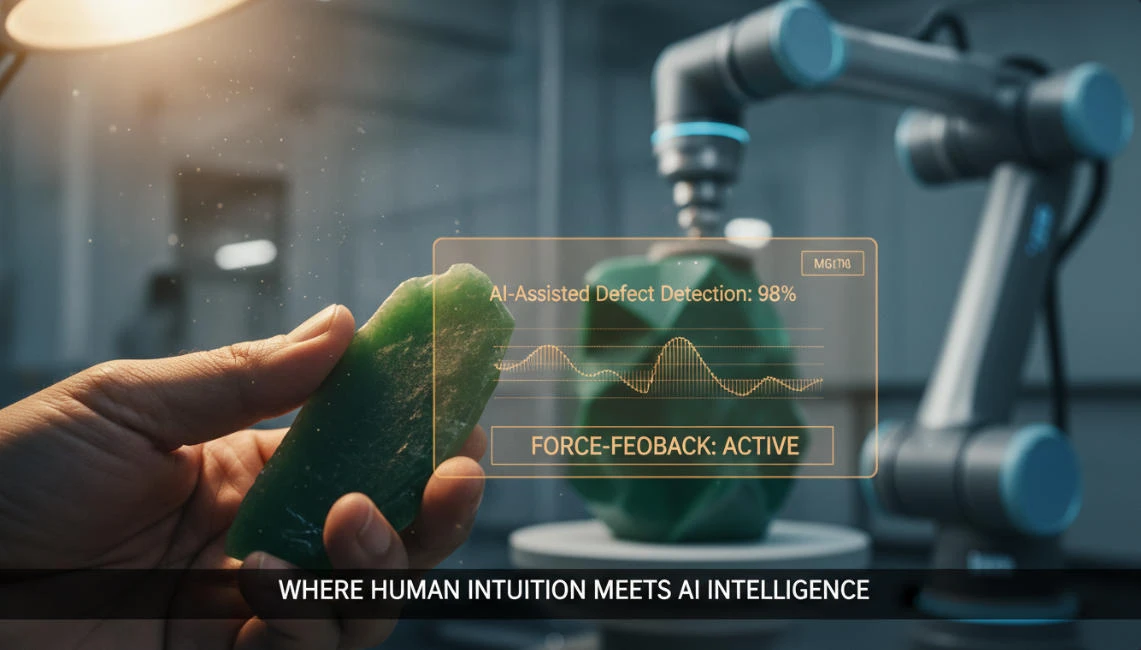
No technology resolves all manufacturing constraints simultaneously, and the current generation of jade carving tool systems is not an exception to this rule. Understanding what CNC and laser tooling can and cannot automate defines the boundary between what a modern jade manufacturer can reliably deliver and what still requires experienced human judgment in the production sequence. It also defines precisely where the next wave of tooling investment is being directed across the industry.
The Remaining Manual Intervention Points in a Modern Jade Processing Factory
Even within a fully CNC-equipped jade processing factory, specific production stages remain dependent on skilled human intervention. The most consequential is raw material assessment at intake: jadeite and hetian jade rough contains internal features — fracture networks, color zoning boundaries, fiber orientation transitions — that current non-destructive scanning cannot fully characterize at the resolution needed to plan cutting paths without experienced human interpretation. A senior jade artisan’s reading of a rough piece informs fixture design, cutting sequence selection, and jade carving tool parameter settings in ways that automated inspection systems operating at production throughput speeds cannot yet replicate.
The second persistent manual intervention point is aesthetic finishing on high-end custom jade carving work. The quality markers that define top-tier finished jade — the evenness of waxy surface luster, the precision of translucency transitions at carved edges, the crispness of a line where two surface planes meet — involve perceptual judgments that have not been reliably encoded into machine-executable specifications at the level of resolution that premium work requires. An artisan at Jademago with decades of finishing experience can identify a surface refinement requirement under raking light that no surface roughness instrument would flag as out of specification. The jade process at its highest quality tier is still partly a human process — and any jade carving tool system that claims to fully automate fine aesthetic finishing is overstating what current technology can deliver in production conditions.
AI-Assisted Toolpath Optimization and Real-Time Defect Detection — The Next Phase of the Jade Process
The capability gap that currently requires human intervention is the active target of the next generation of jade carving tool development. AI-based visual inspection systems, trained on large datasets of jade surface imagery captured during active machining, are being developed to detect micro-fracture initiation in real time during cutting operations and trigger automatic feed rate adjustments before the fracture propagates through the piece — an intervention speed that no human operator monitoring a jade processing factory production line can approach. Automated toolpath optimization systems that ingest 3D scan data of raw material and compute maximum-yield cutting sequences are already in early deployment at advanced operations in China and Taiwan, reducing the upstream human judgment requirement for standard rough piece geometries.
Robotic polishing systems using force-feedback control — where the jade carving tool adjusts applied pressure in real time based on surface resistance measurements returned from the contact interface — are beginning to address the pressure uniformity problem that currently limits automated polishing on complex curved forms. When these systems reach full production maturity, the remaining manual intervention points in the jade process will contract further, and the documentation density of the production record will increase correspondingly. For buyers of custom jade carving at scale, this trajectory means the quality floor of the supply chain will continue rising regardless of which jade manufacturer you source from — and that a jade processing factory that has invested in the current CNC tooling generation will be positioned to integrate the next generation without rebuilding its production infrastructure from the ground up.
FAQs
1. What is the biggest efficiency gain modern jade carving tools have introduced?
The shift to 5-axis CNC gemstone machining reduced complex surface processing from three to eight hours down to 10–30 minutes — an 80% reduction in per-operation time. For you, this means batch orders delivered within lead times that traditional workshops cannot match.
2. Can CNC equipment handle fully custom jade carving designs?
Yes. Because the tool follows a digital toolpath rather than a fixed template, any geometry that can be 3D-modeled can be reproduced at ±0.05mm accuracy — including bilateral symmetry, lattice patterns, and compound curves. A jade processing factory running CNC is not limited to catalog forms.
3. How does tool precision affect material yield on high-value jade rough?
CNC cutting paths, informed by 3D pre-scans of each rough piece, follow the most material-efficient route to the target geometry. On jadeite and hetian jade, this directly reduces edge loss and prevents internal micro-fractures from propagating — protecting both raw material investment and final piece classification.
4. Is hand craftsmanship still relevant in a modern jade manufacturing operation?
At two stages, yes. Raw material assessment and fine aesthetic finishing on premium custom jade carving — luster evenness, translucency transitions, edge crispness — still require experienced human judgment that machine parameters have not fully replicated. At Jademago, skilled artisans are retained specifically for these steps.
5. What documentation can a CNC-equipped jade manufacturer provide that a traditional workshop cannot?
Tolerance certificates, surface roughness measurements, and full production run records — because the same system controlling the jade carving tool logs every operational parameter. A skill-based workshop produces no equivalent, as production variables exist in the craftsman’s judgment rather than in a retrievable data log.